New York
Background
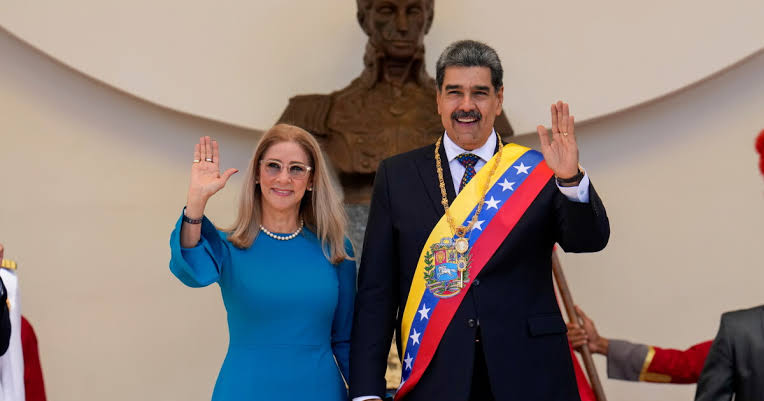
In papers filed in Manhattan federal court on Wednesday, September 2, lawyers for Nicolás Maduro asked US District Judge Alvin K. Hellerstein to dismiss the drug-trafficking indictment against the ousted Venezuelan president on the ground that he is immune from prosecution in any court but his own country's. His wife, Cilia Flores, filed a parallel motion the same day. The filings open the central legal argument of a case with no real precedent in American history: the criminal prosecution, in a US courtroom, of a man who was serving as the recognised head of state of a foreign country at the time the charges were brought — and who was taken into custody not by extradition but by military raid.
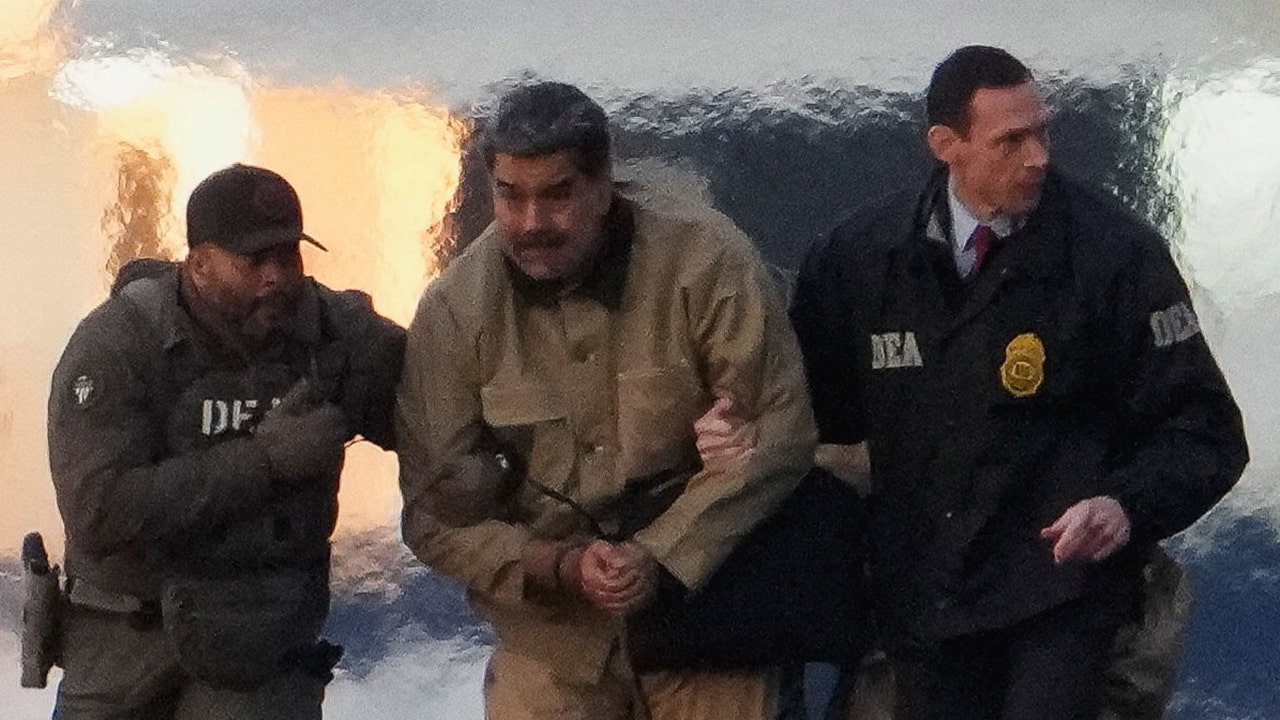
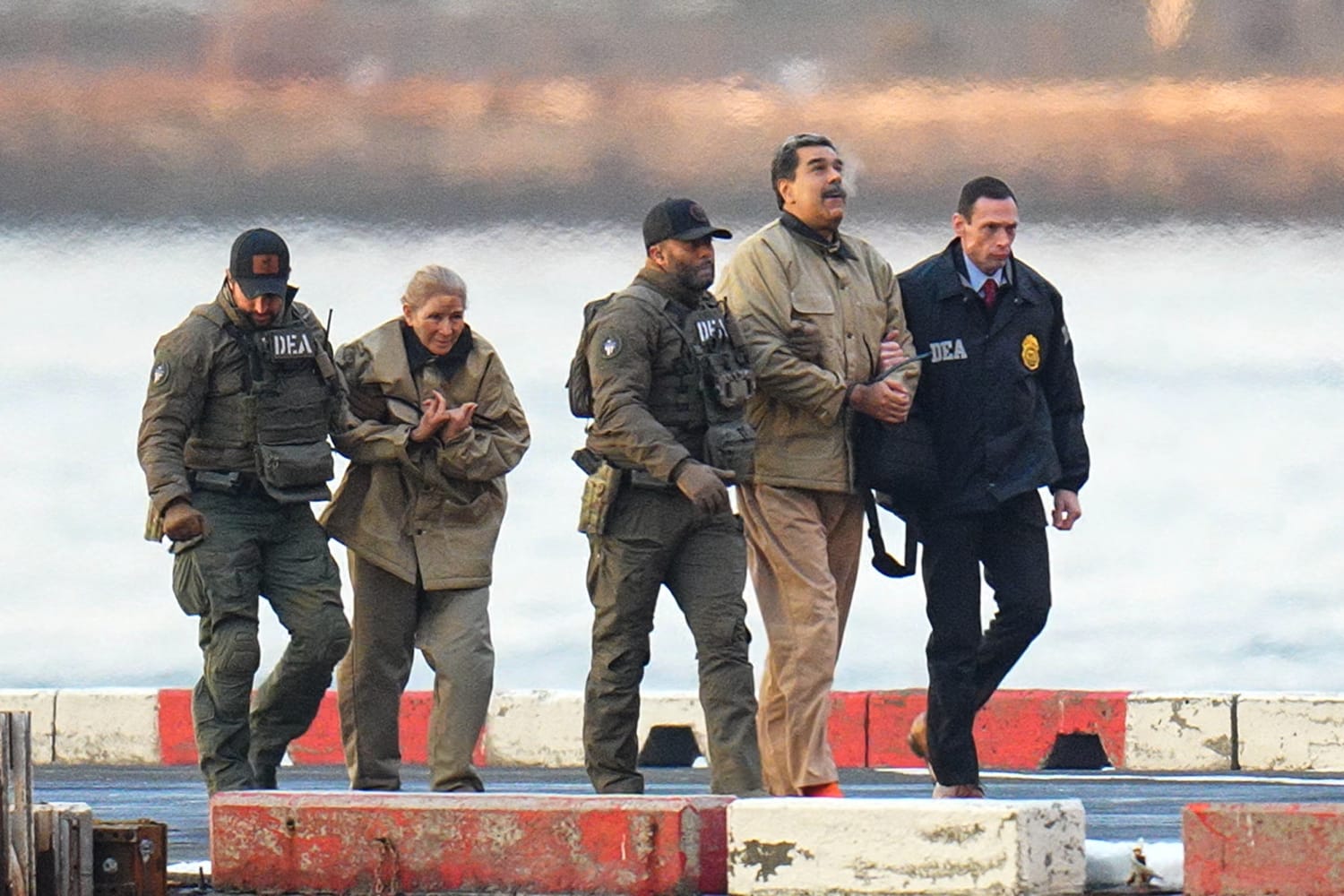
Maduro, 63, and Flores, 69, have been held at the Metropolitan Detention Center in Brooklyn since US forces seized them from their Caracas home in a middle-of-the-night operation on January 3. The charges that justified that raid were not new: they date to an indictment first returned six years ago naming Maduro alongside numerous alleged co-conspirators. Prosecutors allege he ran a conspiracy to move thousands of tons of cocaine into the United States, colluding with Venezuelan law enforcement to shelter drug kingpins. Both defendants have pleaded not guilty. Both face potential life sentences.
The eight months since the capture have transformed Venezuela's politics. Maduro's vice-president and long-time socialist ally, Delcy Rodríguez, has run the country as interim president and has deepened cooperation with the Trump administration to a degree few predicted. In late August, Washington and Caracas announced an oil arrangement that would give the United States effective control over a large share of Venezuela's reserves — the White House described it as the "biggest oil deal in history," while Reuters characterised it as the US taking over around one-fifth of Venezuela's oil reserves. Murals of Maduro in Caracas have quietly been painted over. Rodríguez's government, which in January and February still referred to him as Venezuela's legitimate head of state, has since gone silent on the question.
The Legal Argument
Maduro's lawyer, Barry Pollack, filed the motion by a deadline Hellerstein had set for Wednesday. His argument runs on two tracks. The first is status-based immunity: a sitting head of state cannot be criminally prosecuted abroad, full stop. "No American court has ever presided over the criminal trial of a foreign leader who was recognized by their own country as the sitting head of state at the time the charges were brought," the filing states. "That is not an accident of history. It reflects a rule older than the common law: heads of state are exempt from the criminal process of any national court but their own." Pollack framed the case as "an unprecedented prosecution" that "violates the absolute immunity from criminal jurisdiction to which heads of state and foreign officials acting in their official capacities have been entitled for hundreds of years."
The second track is conduct-based immunity: even if Maduro is not entitled to head-of-state immunity personally, the acts alleged in the indictment were carried out in an official capacity and are therefore attributable to the Venezuelan state rather than to him as an individual. On that theory Hellerstein would lack jurisdiction regardless of how the recognition question is resolved. Flores's lawyers made a related sovereignty argument in their own filing: immunity, they wrote, "is an attribute of Venezuela's sovereignty, and only Venezuela may surrender it" — a claim that puts the question of who currently speaks for Venezuela at the centre of the dispute.
Pollack also pressed a point about consistency. The United States has recognised and dealt with Delcy Rodríguez, who holds office only because Maduro appointed her vice-president. Pollack called it "incongruous" for Washington to accept Rodríguez's authority while denying that the man who conferred it was ever the legitimate head of state, and he cited statements by Rodríguez and her officials in January and February that still described Maduro as Venezuela's rightful leader. Beyond the jurisdictional arguments, the filings assert Maduro's innocence outright: he "vehemently denies the allegations," and "if this case were to proceed to trial, it would be apparent that he has been falsely accused."
Why the Motion Faces Long Odds
Legal experts who spoke to Reuters describe Maduro's path as steep. The decisive obstacle is recognition. The United States stopped recognising Maduro as Venezuela's president in 2019, after an inauguration that followed a 2018 election Washington called rigged; it also rejected his 2024 re-election as fraudulent. American courts have historically deferred almost entirely to the executive branch on the question of which foreign government or leader the United States recognises, treating it as a political determination rather than a judicial one. If Hellerstein applies that deference, the head-of-state argument collapses before the international-law question is ever reached.
The closest precedent is unhelpful for the defence. In 1990, a federal judge in Miami rejected former Panamanian military leader Manuel Noriega's assertion of head-of-state immunity, in part because Noriega had never formally held the title of president. Pollack tries to turn that distinction to his client's advantage, noting that unlike in Noriega's case, "the Executive Branch does not dispute that Mr. Maduro was Venezuela's head of state, but instead merely claims that, after 2019, he did not occupy that position legitimately." Whether a court will treat that as a meaningful difference — legitimacy versus title — is the question the November hearing will turn on.
There is a broader institutional tension here that the case exposes. Head-of-state immunity is a pillar of diplomatic practice precisely because it does not depend on whether a given government approves of the leader in question; its value lies in being unconditional. American courts, meanwhile, are generally reluctant to apply customary international law directly in criminal cases, and even more reluctant to second-guess the executive on recognition. Maduro's motion asks Hellerstein to do both.
Reactions
The Trump administration has consistently defended the January raid, describing it as a "surgical law enforcement operation" rather than an act of war — a framing that matters legally, since it casts the seizure as the execution of a valid indictment rather than a military decapitation. Maduro rejects that account entirely: he has called himself a prisoner of war and his capture a kidnapping.
He has also been visibly defiant from custody. On Sunday he posted photographs of himself from prison on social media, writing that he was "standing firm" and addressing his grandchildren directly: "I want you to know that we stand firm, with our hearts full of your love, that love that reaches us transformed into prayer, into constant action, into solidarity and true support." On Telegram he added, according to AFP: "We will remain strong, calm and confident: God is with us. God will provide. Venezuela will rise again."
A spokesperson for the Manhattan US Attorney's office did not immediately respond to a request for comment on the filings. In Washington, the case has become entangled with a separate and growing controversy over the legality of the Venezuela oil arrangements, which Democratic senators including Elizabeth Warren, Catherine Cortez Masto and Adam Schiff have criticised on grounds of cost, opacity and the propping up of an unelected interim government. Critics of the administration's Venezuela policy argue the prosecution and the commercial deal cannot be cleanly separated; supporters counter that the indictment predates the current administration by years.
What's Next
The calendar is now fixed. Federal prosecutors have until October 2 to file their response to the motions to dismiss. Judge Hellerstein will hear oral argument on November 17. If the motions fail, Maduro and Flores are scheduled to stand trial on June 1, 2027 — a proceeding that would be extraordinary by any measure: a former head of state, seized abroad by American troops, tried before a Manhattan jury on narcotics conspiracy charges carrying a possible life sentence.
Whatever Hellerstein decides is unlikely to be the last word. A ruling for Maduro would almost certainly be appealed by the government; a ruling against him gives the defence an immunity question of first impression to carry to the Second Circuit and, plausibly, to the Supreme Court. Either route stretches well past the scheduled trial date and into a period when the political circumstances that produced the case — an interim Venezuelan government cooperating closely with Washington, an American administration invested in the legitimacy of the raid — may look very different.
The stakes extend past one defendant. A US court holding that a foreign leader's immunity evaporates once Washington declines to recognise him would establish a principle other states could invoke in reverse. That is the argument Maduro's lawyers are ultimately making — not that their client is innocent, though they say he is, but that the rule protecting him protects everyone, and that a court in one country should not be the body that decides when it stops applying.
Published By | News Editor