Technological Transformation
Cut off from many of its traditional Western partners since the 2022 military takeover, Burkina Faso has spent the past two years building a parallel digital state — one stitched together with World Bank financing, a homegrown biometric identity card shared with its Alliance of Sahel States (AES) partners Mali and Niger, and a wary, incomplete embrace of satellite internet. The result, in 2026, is a country simultaneously investing more in connectivity infrastructure than at almost any point in its history while treating the terms of that connectivity — who builds it, who controls the data, and who owns the satellite link — as matters of national sovereignty rather than simple procurement.
PactDigital and the Race to Close 1,000 White Zones
The centerpiece of Burkina Faso's connectivity push is PactDigital, formally the Burkina Faso Digital Transformation Acceleration Project, a World Bank–backed program that in 2026 is targeting the expansion of mobile and internet connectivity to 1,000 underserved localities, or 'white zones.' According to government and World Bank figures reported in early 2026, nearly 2,000 localities — representing roughly 10% to 12% of Burkina Faso's territory — still lack any mobile phone or internet coverage at all. PactDigital's approach has been explicitly data-driven: the project has conducted mapping studies to identify uncovered areas before allocating capital, aiming to avoid the scattergun tower placement that has plagued rural connectivity efforts elsewhere in the region. The government has committed roughly $109 million to digital infrastructure spending in 2026 alone, spanning data centers, fiber networks, and e-government systems, according to reporting from Africa Briefing Room, while a separate 2025 push had already added 800 new telecom sites specifically aimed at closing white-zone gaps. Taken together, officials are targeting connections for 1.5 million to 2 million additional people by the end of 2026.
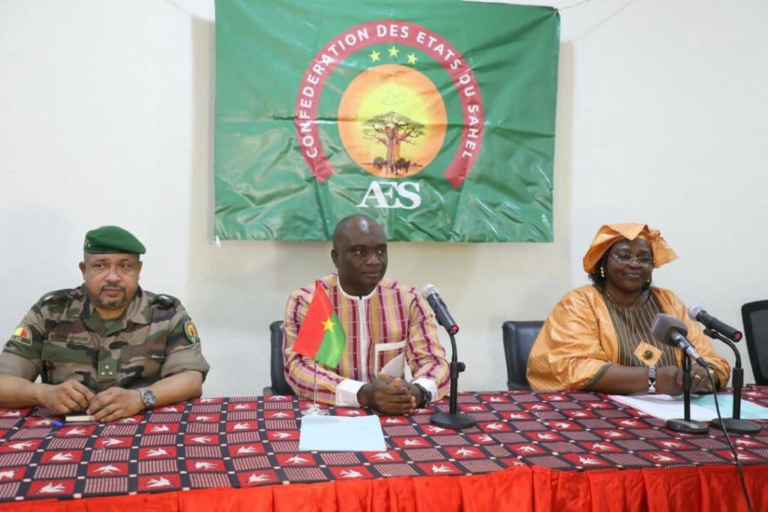
The regulatory side of this expansion is being coordinated by ARCEP, Burkina Faso's Electronic Communications and Postal Regulatory Authority, which ran a four-day national workshop in Bobo-Dioulasso from June 29 to July 2, 2026, bringing together roughly 100 participants from ARCEP and territorial authorities to align local governments with network deployment and quality standards. The workshop reflects a broader shift in how the junta-led government is approaching telecom policy: rather than treating connectivity purely as a private-sector or foreign-donor matter, it is folding regulators, local officials, and state investment into a single coordinated push — consistent with the broader AES project of building shared Sahelian institutions independent of the regional blocs, such as ECOWAS, that Burkina Faso formally exited in January 2025.
A Shared Biometric Identity Card for Three Sahel States
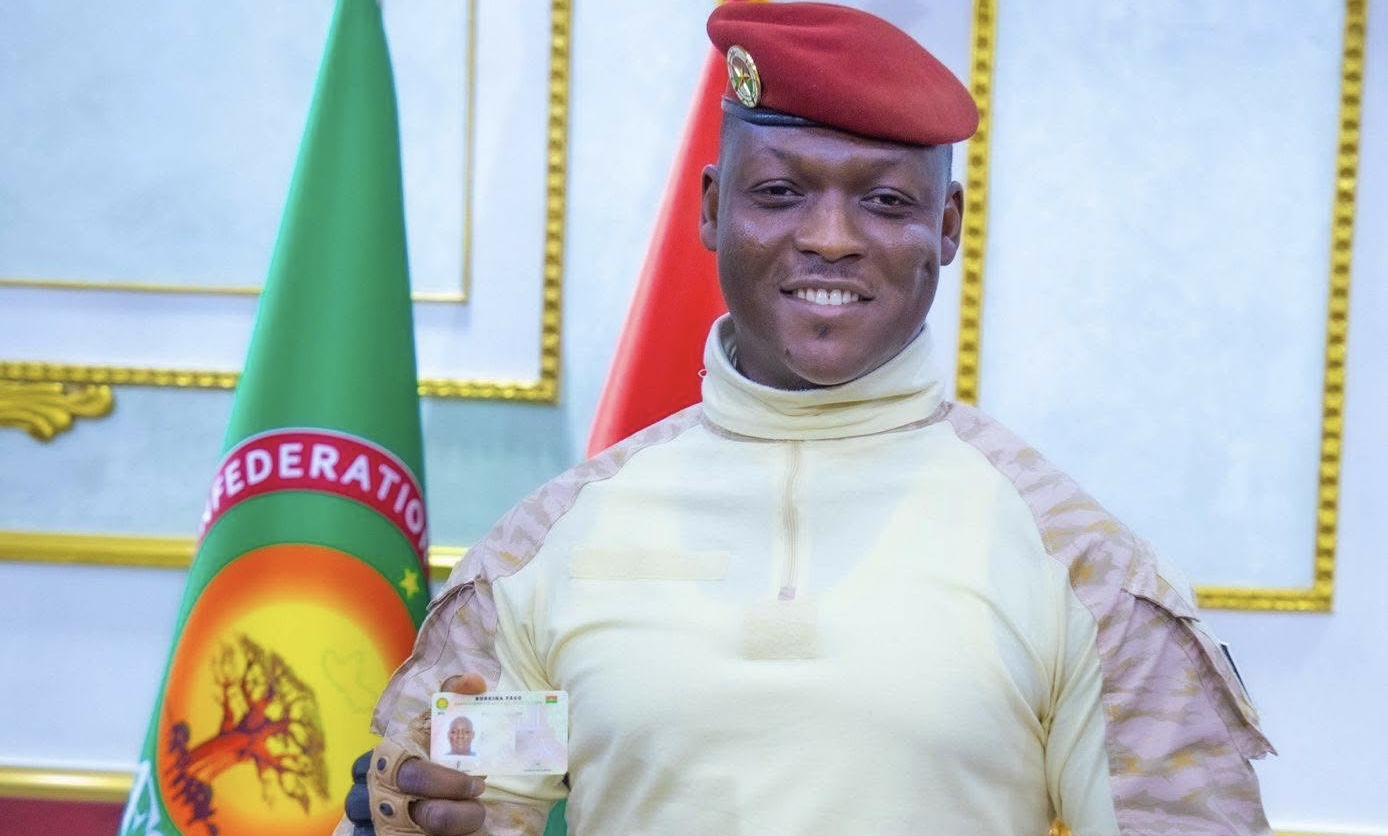
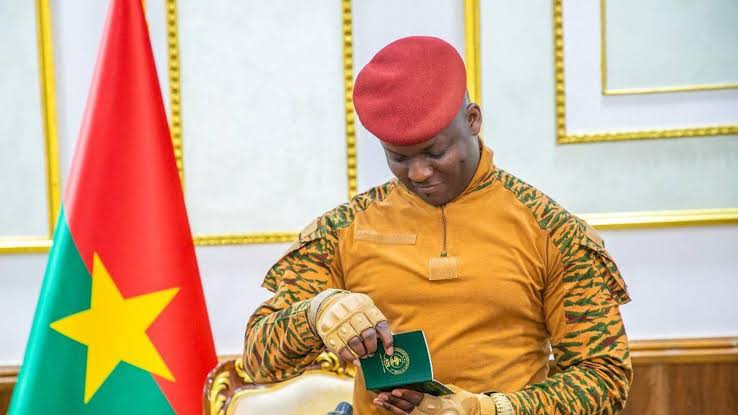
Perhaps the most tangible sign of that AES institution-building is the new biometric identity card, adopted by Burkina Faso's Council of Ministers on November 6, 2025, and rolled out as a shared credential across Burkina Faso, Mali, and Niger. The card is available from age five and becomes legally mandatory at age 13, carries a ten-year validity period, and costs 3,500 CFA francs (roughly six US dollars) to obtain. Large-scale production began in January 2026. On June 1, 2026, authorities went a step further, launching mobile enrollment kits in Bamako, Mali, specifically to register Burkinabe nationals living abroad in AES member states — enabling biometric enrollment for both the new AES identity card and a shared AES passport without requiring citizens to travel home. The initiative effectively creates a parallel identity and travel-document infrastructure for the three-country confederation, built independently of ECOWAS systems and explicitly framed by AES officials as an exercise in shared technological sovereignty rather than a simple national digitization project. It sits alongside a broader 'DSI Digital Day' event that in 2026 expanded to formally include IT professionals and technology leaders from Mali and Niger, with the stated goal of pooling expertise and co-developing solutions to common cyber and infrastructure challenges across the confederation.
Starlink's Uneasy, Unfinished Arrival
Satellite connectivity remains the most contested piece of Burkina Faso's digital picture. As of mid-2026, Burkina Faso sits within what industry trackers describe as the Sahel 'ban-belt,' with Starlink service still listed as 'coming soon' rather than commercially available, even though the government has reportedly signed licenses and has pre-deployment hardware already on the ground. The hesitation reflects a genuinely fraught regional debate: reporting in March 2026 documented how Starlink terminals, originally marketed as a tool to connect isolated populations, have also become a strategic communications tool for armed groups operating across the Sahel, complicating any government's calculus about opening its skies to a foreign-controlled satellite network. A widely discussed June 2026 opinion piece framed the broader continental question starkly — asking whether Starlink represents a genuine breakthrough for African connectivity or a 'backdoor' that quietly shifts control over information flows and surveillance capacity from African capitals to corporate boardrooms in the United States. For a government whose entire post-2022 political identity has been built around rejecting external control, that framing carries particular weight, and helps explain why Burkina Faso has moved more slowly on satellite internet than several of its coastal neighbors even as it accelerates terrestrial fiber and mobile investment.
Mobile Money and a Nascent Fintech Sector
Burkina Faso's fintech ecosystem in 2026 remains, in the words of one industry outlet, 'a work in progress.' Around 15 fintech startups currently operate in the country, covering digital payments, mobile wallets, insurance technology, and financial infrastructure. Mobile money is dominated by a small number of licensed providers — Orange Money, Moov Money, and Wave — and Orange Burkina Faso recently upgraded its platform to Comviva's next-generation mobiquity Pay system to improve service reliability and support new product innovation. On the public-sector side, the finance ministry has rolled out several new digital payment platforms since April 2026: e-BDT and LANAYA, both aimed at digitizing government procedures and shortening processing times, and FASOAZERKA, described by the finance ministry as an innovative digital payments platform intended to modernize state revenue collection. Despite this activity, financial inclusion gaps remain wide: World Bank data cited in mid-2026 reporting shows more than 60% of adults in Burkina Faso remain unbanked, and fewer than 20% of adults use mobile phones to send money at all — a substantial gap between network access and actual financial usage that mirrors challenges seen across much of the Sahel.
Digital Investment Against a Backdrop of Resource Nationalism
Burkina Faso's digital sovereignty push is unfolding alongside, and is arguably reinforced by, a parallel nationalist turn in the country's gold sector — its most important source of hard currency. Under President Ibrahim Traoré, the government has nationalized five gold mines since August 2024, raised the state's profit share at foreign-operated sites, and inaugurated its first fully state-owned mine, in Yako, in July 2026, expected to produce more than seven tonnes of gold over fifteen years while creating over 1,200 direct and indirect jobs. Burkina Faso produced a record 94 tonnes of gold in 2025, and by the end of that year six of the country's fifteen industrial gold mines had passed into majority Burkinabe ownership, three of them under direct state control through the Burkina Faso Mining Participation Company (SOPAMIB). The IMF has acknowledged 'commendable progress' on domestic revenue mobilization under the new regime. The parallel is not coincidental: officials frame both the gold nationalization drive and the digital infrastructure buildout as expressions of the same underlying strategy — retaining control over strategic assets, whether mineral or informational, that were previously managed or financed largely by foreign actors.
Outlook
Burkina Faso's technology trajectory for the remainder of 2026 will likely be defined by three open questions: whether PactDigital's 1,000-white-zone target is met on schedule given the security constraints of operating in a country still contending with jihadist insurgency across large parts of its territory; whether the AES biometric ID becomes a genuine functional passport-replacement for cross-border Sahelian citizens or remains a largely symbolic confederation-building exercise; and whether Starlink's slow-walked entry gives way to a full commercial launch, or whether security concerns about satellite terminals in insurgent hands keep the service in regulatory limbo indefinitely. None of these questions have a foregone answer, but together they illustrate a broader pattern across the AES states: digital infrastructure decisions in Ouagadougou are no longer being made as narrow telecom-policy choices, but as extensions of the junta's wider project of asserting sovereignty over resources, borders, and now data.
Published By | News Editor