Written By |
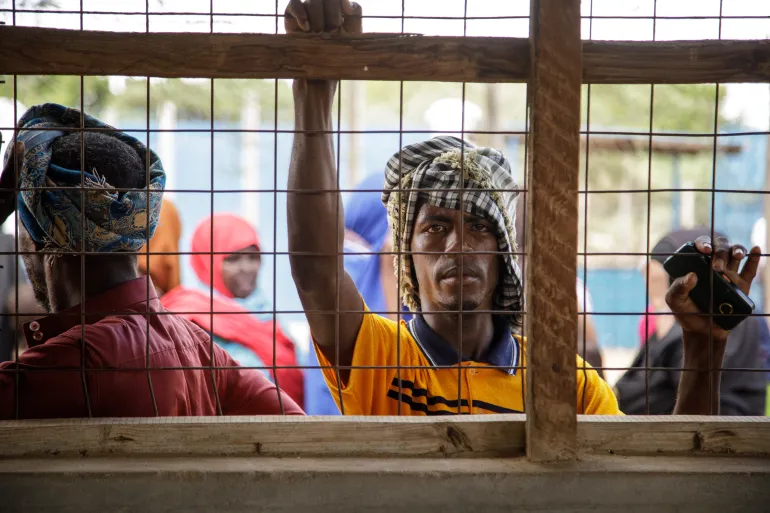
Newly arrived Somali refugees wait at the profiling and registration centre in the Dadaab refugee camp, one of Africa's largest refugee camps, in Kenya on March 23, 2023 [AFP Photo]
Nairobi
Refugees in Kenya’s Kakuma and Dadaab camps are facing drastic food ration cuts as the World Food Programme (WFP) struggles with a sharp decline in global aid, including major funding reductions from the United States Agency for International Development (USAID). Under a new prioritisation system rolled out this week, food assistance has been cut by 60% for the most vulnerable groups, including pregnant women and persons with disabilities, and by 80% for refugees with some form of income.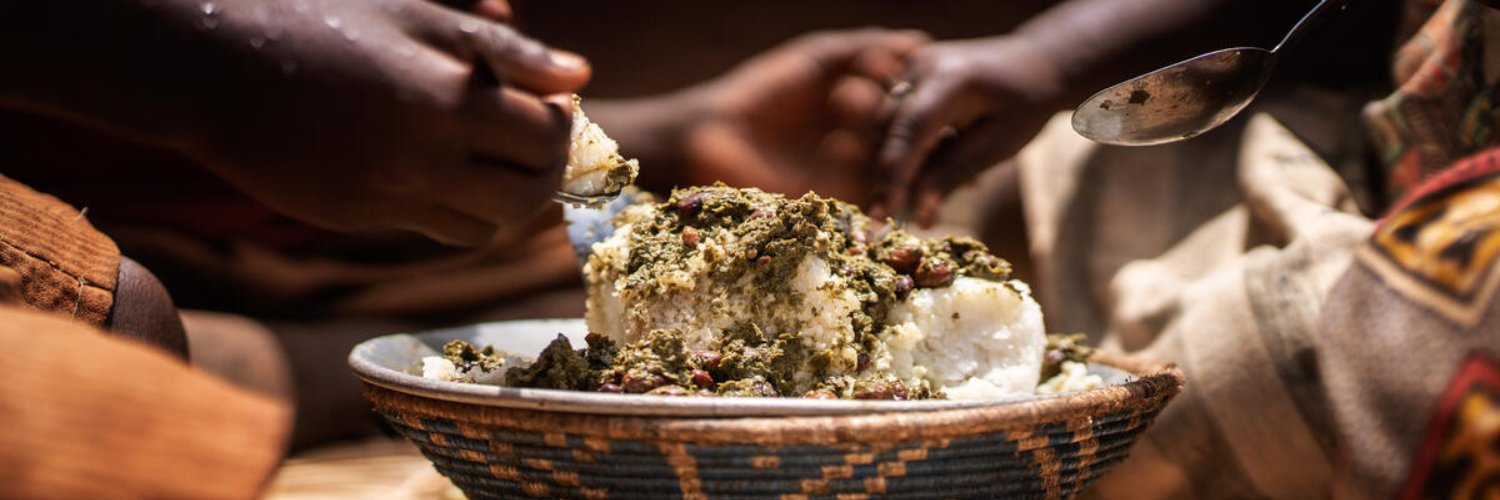
The two camps host nearly 800,000 refugees fleeing conflict and drought in Somalia and South Sudan, according to the UNHCR.
“WFP’s operations supporting refugees in Kenya are under immense strain,” said Baimankay Sankoh, WFP’s Deputy Country Director in Kenya. “This will have a serious impact on vulnerable refugees, increasing the risk of hunger and malnutrition.” The cuts have sparked tensions and protests in recent weeks, leaving one person dead and several others injured. WFP officials say the new “priority food distribution” was necessary after assessments revealed critical funding gaps.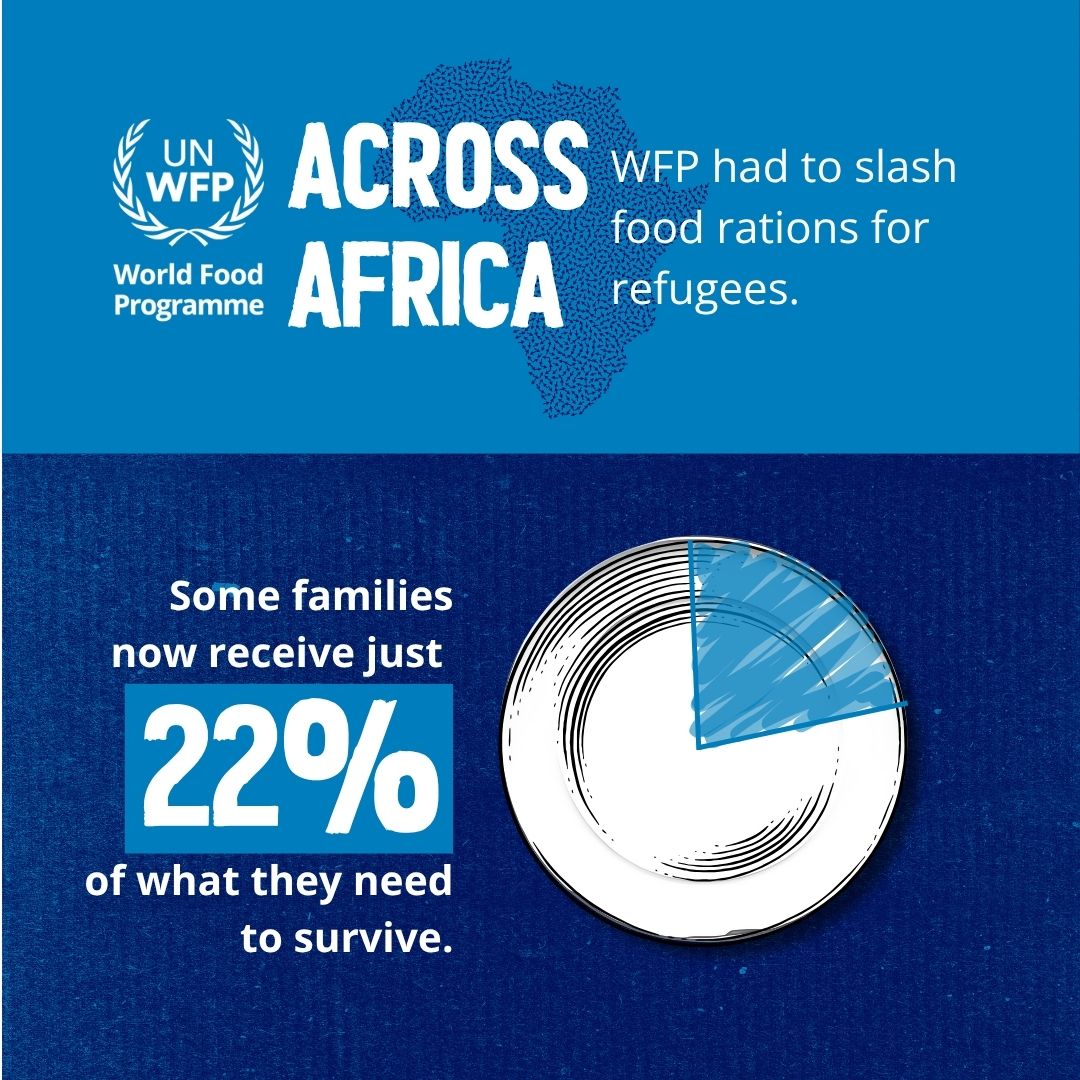
Kenya’s refugee communities already face high malnutrition levels. The Global Acute Malnutrition (GAM) rate among children and pregnant or breastfeeding women is above 13% – well beyond the 10% threshold for a nutrition emergency.
Without fresh funding, WFP says it can only sustain current operations until December or January. An estimated $44 million is needed to restore full rations and cash assistance for all refugees in Kenya through August alone.
Nigeria faces similar hunger crisis
In northeastern Nigeria, WFP is also cutting food and nutrition assistance for hundreds of thousands of people displaced by years of conflict, insecurity, and climate shocks. Without urgent donations, 1.3 million people risk losing aid entirely. Families in displacement camps like Mafa, Borno State, already struggle to survive on meagre rations. “On good days, we barely feed our children. On bad ones, they go to bed hungry,” said Iya, a mother of seven in Mafa camp. “Soon, we may get nothing at all.”
WFP warns that without immediate and sustained funding, its operations in Nigeria’s northeast could collapse — threatening regional stability and forcing families into “impossible choices: go hungry or flee again,” according to David Stevenson, WFP Country Director for Nigeria. The situation also endangers the lives of 300,000 malnourished children, as up to 150 WFP-supported nutrition centres could close.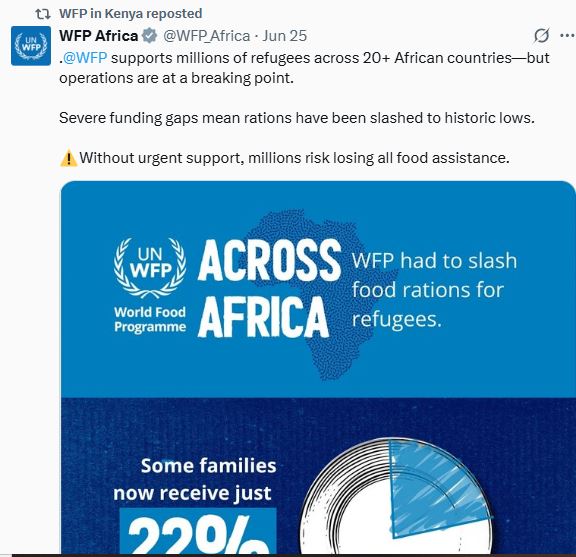
Global Need, Global Appeal
WFP says both Kenya and Nigeria’s crises reflect a wider global funding shortfall that is forcing the agency to make “devastating choices” about who receives food aid. Without an immediate injection of donor support, hunger and malnutrition are expected to worsen sharply in affected regions.
Torch Media Africa



