Written By | International News Agencies
August's inflation data says food is calm. The fish counter says otherwise — and the reasons run from Lake Victoria's nets to the diesel pump.
ANTANANARIVO, Madagascar
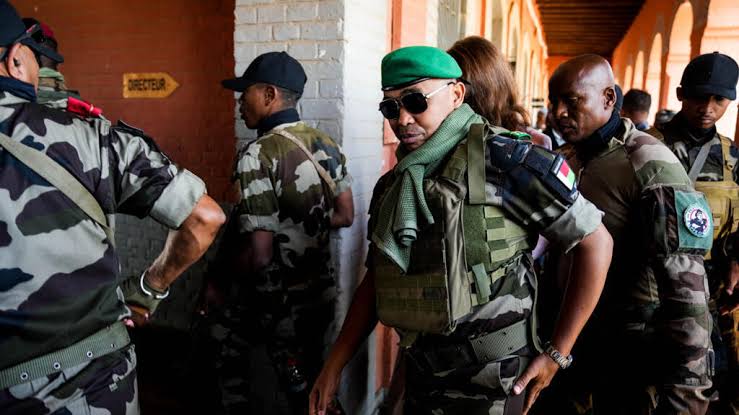
A court in Antananarivo has sentenced Richard Ravalomanana, Madagascar's former Senate president and a retired general who was among the most recognizable faces of the old order, to 10 years of hard labour for complicity in murder over the crackdown on the youth-led protests that brought down Andry Rajoelina's government last year. The verdict, delivered Tuesday and reported widely on Thursday, is the most consequential judgment yet produced by the transitional administration of Col. Michael Randrianirina — and the clearest test so far of whether the accountability project at the heart of its promised "Refondation" can withstand scrutiny.
Ravalomanana denies the charges and will appeal. His conviction turns on a proposition his own defence contested at length: that a senior figure who held influence over the gendarmerie, but who a former national police chief testified was outside the operational chain of command, can be held criminally responsible for the deaths of demonstrators. How an appellate court answers that question will shape whether Madagascar's post-uprising prosecutions are read at home and abroad as justice or as settling of scores.
What the court decided
Ravalomanana, a retired general and a close ally of Rajoelina, was found guilty of complicity in murder by a court in the capital on Tuesday and sentenced to a decade of hard labour, according to BBC reporting carried by Kenya's People Daily.
Prosecutors accused him of giving instructions to security forces to use violence against demonstrators during the protests of September and October 2025, the movement Malagasy media and protesters themselves labelled the Gen Z protests. A state prosecutor said in December 2025 that Ravalomanana had "directed violent actions to suppress the demonstrations."
At least 22 people were killed and more than 100 injured during the unrest, according to United Nations figures cited by local media.
The court's reasoning has not been published in full, but the contours of the trial are known. A former national police chief who testified backed Ravalomanana's account, telling the court he was not part of the operational chain of command and had issued no orders to police, gendarmes or soldiers deployed during the unrest. His lawyer pressed the same point directly at the bench: "Is there confirmed written or verbal evidence… to accuse him?" he asked, arguing that prosecutors had not produced proof that security officers had received orders from his client. A separate allegation that Ravalomanana had made a death threat was dropped after the court ruled the case too old to prosecute.
The defence team has said it will challenge the verdict in a higher court. Ravalomanana also faces a separate corruption investigation.
The man and the movement
To understand why this verdict lands as heavily as it does, it helps to know how visible Ravalomanana was during the events for which he has now been convicted. Known for wearing a cowboy hat and displaying his military medals, he was, in the eyes of the demonstrators, a walking symbol of authoritarian power — the general in the Senate, the uniform inside the institution.
The protests began a year ago this month. They were initially sparked by anger over persistent power and water shortages, an everyday grievance in a country where load-shedding and dry taps had become routine, before broadening into a general movement against Rajoelina's government. Within weeks the demonstrations had produced a political crisis that the presidency could not contain. Rajoelina — who had secured a contested third term in the 2023 election — left the country, and the military sided with the streets. Col. Michael Randrianirina took power on Oct. 14, 2025, pledging elections within two years.
Ravalomanana was removed as Senate president in October 2025, shortly after the protests, and arrested at his home that December after failing to respond to a summons from the gendarmerie. He was placed in pre-trial detention at the high-security Imerintsiatosika prison outside Antananarivo, where he has spent the past seven months. He is one of several senior figures associated with Rajoelina's government to face legal proceedings since the change of power.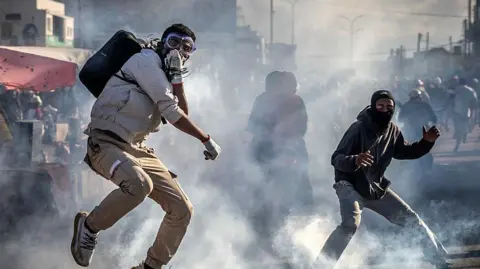
The Refondation and its clock
Randrianirina's transitional program, the Refondation, rests on a set of commitments: a break with the past, reform of the state, better governance, and a series of multisectoral national consultations meant to produce a new constitution and new electoral laws. The transition is designed to run 24 months, with a presidential election scheduled for September 2027. The Independent National Electoral Commission planned to revise the electoral code and build new voter rolls between Dec. 1, 2025, and May 15, 2026.
That timetable is tight to the point of strain, and Malagasy analysts have said so publicly. Election results are anticipated between May and July 2027, while the resolutions of the national consultations — the very documents meant to define the constitutional order the election will operate under — are not expected until after May 2027. In other words, on the current sequencing, Madagascar could vote before it has settled what it is voting into. Regional bodies pressed Randrianirina to open an inclusive national dialogue and submit a transition roadmap; he has responded by insisting that free, inclusive and transparent elections remain the transition's primary objective.
The government's stability has not been uninterrupted. In March 2026, Randrianirina dissolved the government, dismissing Prime Minister Herintsalama Rajaonarivelo — a businessman appointed shortly after the military takeover in an attempt to bridge civilian leadership and the armed forces — along with the entire cabinet. In April, 13 people were charged over an alleged plot to kill the interim leader. And among the Gen Z protesters who made the change of power possible, arrests since the takeover have fuelled a fear voiced openly in Malagasy media: that the new regime may not be materially better than the one it replaced.
Why this verdict is politically loaded
Three tensions run through the Ravalomanana judgment. The first is evidentiary. Command responsibility cases are difficult everywhere, and they are hardest when the accused sits beside the chain of command rather than in it. Prosecutors alleged Ravalomanana gave instructions; the defence produced a former police chief who said he had no authority to give them. If an appellate court finds that the prosecution proved influence but not orders, the conviction becomes a liability for the transition rather than a credential — evidence for Rajoelina's remaining supporters that the trials are political.
The second is selectivity. Twenty-two deaths, per UN figures, imply a chain of decisions running from the field to the ministries. A transition that convicts one general and stops there will invite the charge that it has produced a scapegoat rather than an accounting. A transition that pursues the chain fully will collide with the fact that parts of the security apparatus that suppressed the protests are the same parts that later declined to defend Rajoelina — the institutions that made the transfer of power possible.
The third is legitimacy. Randrianirina came to office through an uprising, not an election, and his mandate rests on delivering two things: accountability for the killings and a credible vote in 2027. The Ravalomanana sentence delivers on the first in the most visible way available. But it also concentrates attention on the second, where the calendar is slipping and the constitutional sequencing does not yet cohere. Prosecutions are faster than constitutions; the risk for any transitional government is that it banks its legitimacy on the fast thing and runs out of time on the slow one.
Reaction and next steps
Ravalomanana's lawyers have committed to an appeal, and the corruption investigation against him remains open, which means he is unlikely to leave the docket even if the murder-complicity conviction is disturbed. There has been no indication that the transitional authorities intend to slow the broader set of proceedings against former officials.
Three things are worth watching in the coming weeks. First, the appeal: whether it is heard promptly and in public, and whether the appellate court engages the chain-of-command question directly. A reasoned appellate judgment would do more for the transition's credibility than the original verdict. Second, whether prosecutors move up or down the hierarchy — charges against serving officers, or against civilian ministers, would signal a genuine accounting; silence would signal the opposite. Third, the electoral calendar: whether the CENI publishes a revised, internally consistent timetable that resolves the collision between the consultation resolutions expected after May 2027 and results expected between May and July of the same year.
For now, Madagascar has done something rare on the continent: convicted a general for the deaths of protesters, within a year of the protests. Whether that becomes a precedent or a one-off depends less on Tuesday's sentence than on what the same courts do next, and on whether the government that ordered the prosecutions is still counting the days to an election it has promised to lose if it must.



