Written By | International News Agencies
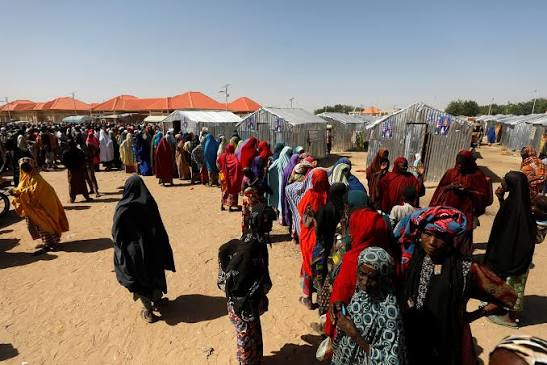
Seventeen years of war have indirectly cost close to 350,000 civilian lives, according to figures cited in The New Humanitarian's report.
Abuja / Maiduguri
For three months, the Nigerian government has been observing a ceasefire with Boko Haram that it has never acknowledged and continues to deny in principle, according to an investigation published Monday by The New Humanitarian. The disclosure arrives at the worst possible political moment for President Bola Tinubu: 130 days before a presidential election in which insecurity is the defining issue, and three weeks into a campaign season in which he has staked his record on a promise to defeat, not negotiate with, the jihadist groups that have devastated Nigeria's northeast.
The report, by the outlet's senior Africa editor Obi Anyadike, is based on three people with contacts among Boko Haram members, some of them senior figures, who independently described a truce that has held since June and is likely to be extended for a further 40 days. Communities around Ngoshe village, in the foothills of the Mandara mountains on the Cameroonian border, told two of those sources that attacks have stopped since the ceasefire took effect.
The truce is tied to a hostage negotiation. In March, Boko Haram fighters attacked an army base near Ngoshe and abducted 360 civilians from the village. Those captives were released in June. The deal that freed them reportedly also included a ransom payment of five billion naira — about $3.7 million — by the government, a transaction Abuja has denied amid a domestic controversy over the alleged misappropriation of part of the money. The New Humanitarian said it approached spokespeople for the government, defence headquarters and the army to verify the ceasefire and received no reply before publication.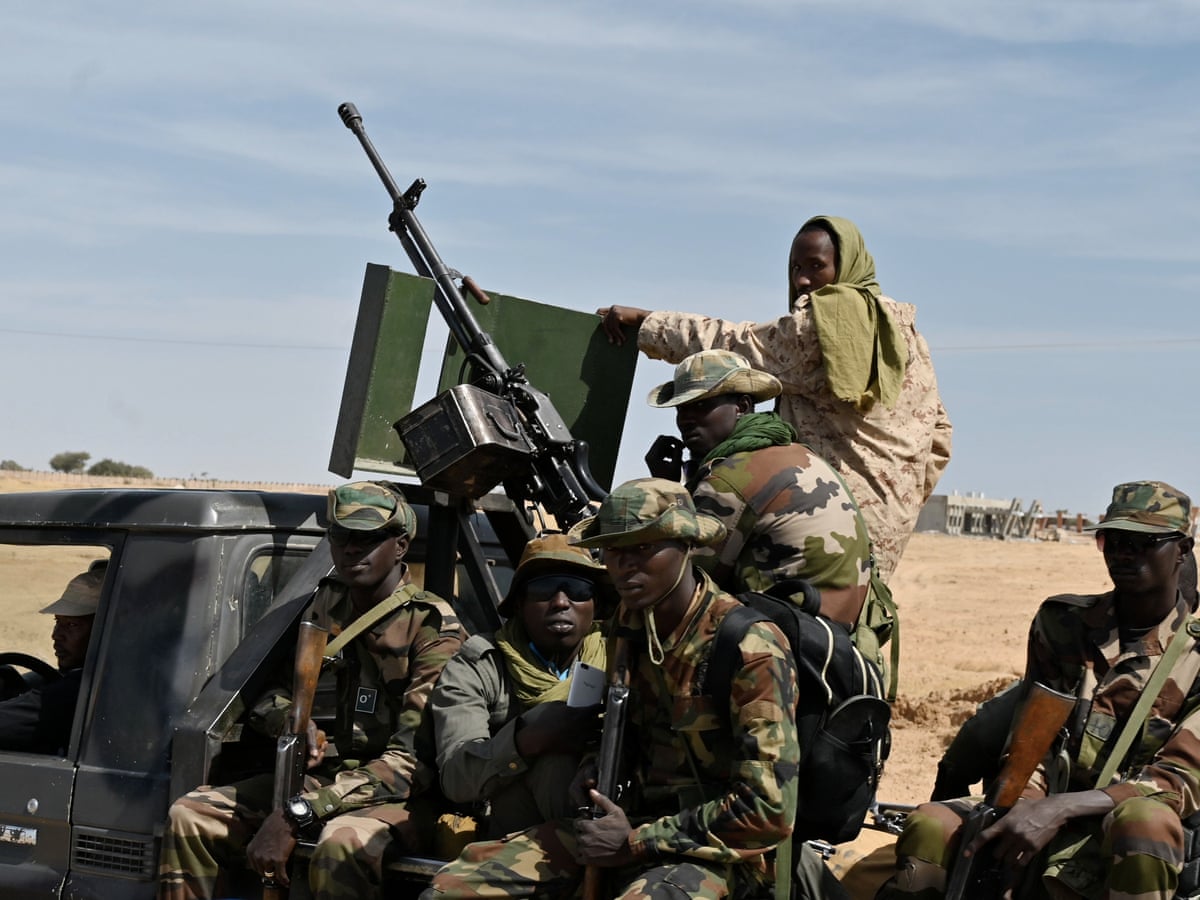
A war Nigeria has fought for 17 years
The insurgency began in the early 2000s as an ultra-conservative religious movement in Maiduguri under the cleric Mohammed Yusuf, who condemned what he called Western values and drew on the memory of five centuries of Islamic learning and empire in Nigeria's northeast. Yusuf resisted calling for jihad at first. As friction with the authorities grew, he launched an urban insurrection in July 2009. It was crushed within days, and Yusuf was extrajudicially killed by police.
His deputy, Abubakar Shekau, took over and turned the movement into an insurgency of bombings, mass abductions and the seizure of towns. Rural Borno State emptied. Shekau pledged allegiance to the Islamic State group in 2015, and the organization was renamed Islamic State West Africa Province. The following year it split: dissident commanders led by Abu Musab al-Barnawi and the cleric Mamman Nur accused Shekau of despotism and of applying takfir — the death penalty for unbelievers — to rural civilians. The dissidents kept the ISWAP name and the blessing of Islamic State's central command; Shekau's faction reverted to the Boko Haram designation.
Better resourced and more disciplined, ISWAP grew. By 2018 it was overrunning military bases and securing cross-border supply routes. In 2021 it stormed Shekau's Sambisa Forest headquarters, and Shekau detonated a suicide vest. Tens of thousands of Boko Haram fighters and their families surrendered to Nigerian authorities rather than submit to ISWAP's centralized control and its ban on ghanima — the plunder of civilians on which Boko Haram survives.
Seventeen years of war have indirectly cost close to 350,000 civilian lives, according to figures cited in The New Humanitarian's report. The question of whether to negotiate divides Nigerians sharply, and the division tracks distance from the fighting: those living closest to the conflict tend to be considerably more supportive of dialogue than the rest of the country, a pattern documented in research by the United Nations Institute for Disarmament Research and the Institute for Security Studies.
Who would be signing
The current Boko Haram is led by Ibrahim Bakura Doro, its overall commander and imam, based on islands in the northern reaches of Lake Chad near the Niger border. Three factional commanders have sworn allegiance to him: Alhaji Kale's Darul Gazwa group in southeastern Borno; the Sadiku group of Abubakar Sadiku Saidu, active in north-central Nigeria; and the Ali Ngulde faction, which carried out the Ngoshe kidnappings.
That structure is the first and most obvious weakness in any deal. Whether the ceasefire holds depends on whether Bakura, operating from a base hundreds of kilometers from the Mandara mountains, can bind three semi-autonomous commanders to an agreement none of them personally negotiated.
The second weakness is that ISWAP is not party to the agreement at all. It remains operationally and organizationally distinct, loyal to the transnational caliphate rather than to a local grievance, which effectively hands Islamic State's central command a veto over any dialogue involving it. "ISWAP needs buy-in from IS. They make the final decision," a rehabilitated former ISWAP commander told The New Humanitarian. "But Bakura needs money, you can make a deal with him." Clashes between the two groups have continued through the truce.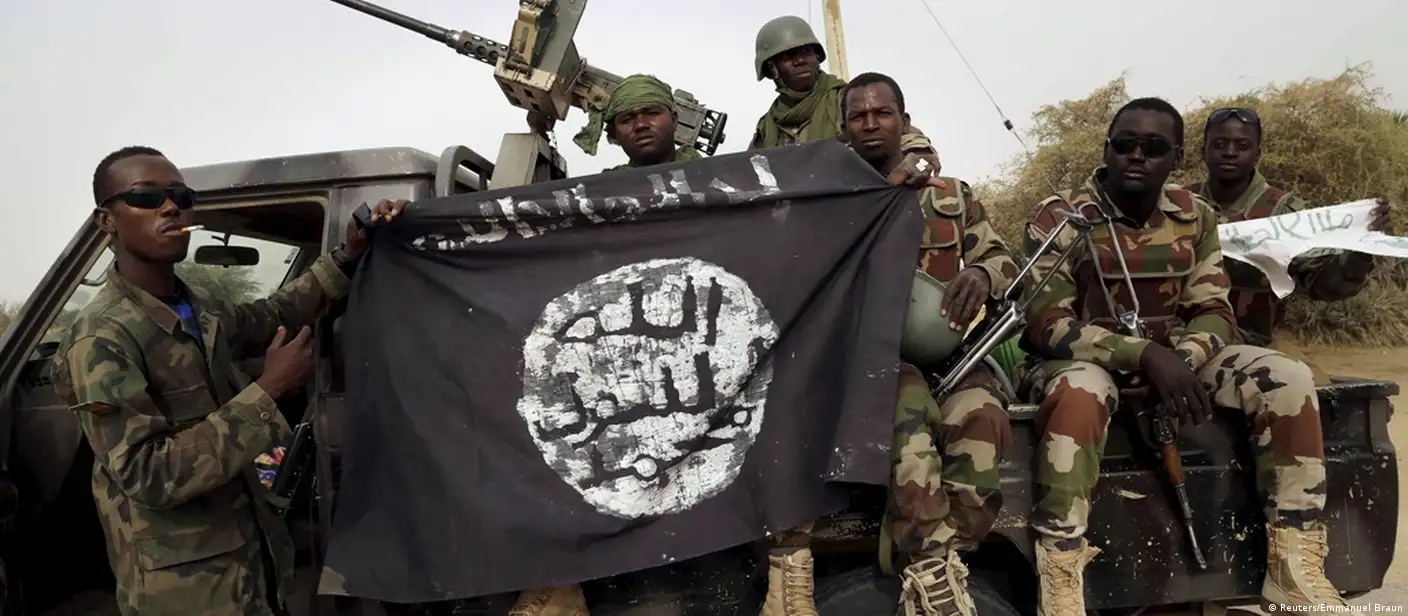
An old pattern, repeated
Under-the-radar contacts between Abuja and the insurgents are not new. Talks have historically been run on the government side by the Office of the National Security Adviser and the Department of State Services, and they have repeatedly collapsed — typically, according to security officials, diplomats and mediators who spoke anonymously, because of spoilers within the government and military, forcing the parties to rebuild confidence from scratch each time.
"We've negotiated a couple of ceasefires but they couldn't be maintained," a government security official with knowledge of the process said. "The last hudna [armistice] was in the 2022/2023 period but it also collapsed."
There are already warnings that this one may be no different. Two of the sources who described the deal cautioned that Boko Haram could be using the pause to strengthen its position, potentially by moving equipment into the mountains.
Money is the other structural problem. "Any arrangement involves a payment, otherwise how would they eat as there would be no ghanima?" the Abuja-based security official said — a blunt statement of the logic that makes a cash-for-quiet deal both necessary and self-undermining. Buying off armed opponents is a well-worn instrument of Nigerian statecraft, from the 2009 Niger Delta amnesty to continuing attempts to contain banditry in the northwest. A former Boko Haram hostage negotiator put the objection plainly: "If you give them money, that doesn't guarantee peace."
The scenario Abuja actually wants
The outcome the security establishment would most welcome, according to the report, is not peace with Boko Haram as an end in itself but a realignment: dialogue leading to an alliance with Bakura against ISWAP. One official framed it as doing "a deal with one, to fight the other."
The strategic case is real. ISWAP is the most lethal of Nigeria's jihadist insurgents — centralized, bureaucratic and well-funded, with a tax base that the report says far outstrips the revenue Borno State earns. It has proved tactically adaptable and technologically advanced, and its battlefield successes have drawn experienced fighters and instructors from across the Sahel and the Maghreb. The Nigerian navy's failure to mount a meaningful offensive across Lake Chad's shifting maze of swamps, channels and islands leaves ISWAP's bases relatively secure. "They are only nervous about the [air force] bombing, but every house has a shelter," said Abu Jabir, a farmer who lives in ISWAP-held territory and travels to Maiduguri to buy fishing gear.
Bakura, meanwhile, is ISWAP's most persistent local threat. "Bakura people are always attacking: They are powerful, they know how to fight on the water," Abu Jabir said. The hostility is personal: Bakura stayed loyal to Shekau through the 2016 split and was rewarded with wide autonomy, and Shekau died when ISWAP overran his base. "For Bakura, it's personal," said the conflict researcher Malik Samuel. "Former Bakura fighters have told me that he prefers to attack ISWAP rather than the military. Even if he attacks military bases, it's to get weapons to attack ISWAP."
The political stakes
Nigeria's Independent National Electoral Commission moved the general election forward this year after Tinubu signed the Electoral Act, 2026, into law on Feb. 18. Presidential and National Assembly voting will now be held Jan. 16, 2027, with governorship and state assembly elections on Feb. 6 — earlier than the previously scheduled Feb. 20 and March 6 dates, in part because the old timetable would have fallen during Ramadan. Presidential and National Assembly campaigning formally opened Aug. 19.
Tinubu has campaigned on force. In July he announced 30,000 new army recruits and four additional divisions, which he said would supply the "teeth that are needed to defeat terrorism and banditry." The public position is an emphatic rejection of talks with an organization legally proscribed as a terrorist group. The reported ceasefire does not merely sit awkwardly beside that position; it suggests the government has concluded, privately, that the position is inadequate.
"The government seems very interested in having a dialogue with Boko Haram, perhaps realising a military response alone is inadequate to resolving the problem," Samuel said.
What to watch
Three things will determine whether this is a turning point or another failed hudna. The first is the 40-day extension: whether it is agreed, and whether attacks around Ngoshe stay stopped. The second is Abuja's response to the report — a flat denial would preserve the campaign message while leaving the negotiators exposed to the same internal spoilers that have wrecked previous rounds. The third is ISWAP. A truce that frees Boko Haram to fight its rival, and frees the army to concentrate on Lake Chad, may deliver a genuine security dividend. It may equally produce a better-armed Boko Haram in the Mandara mountains once the money runs out.
Malik Samuel's assessment is the appropriate caution: "It could be just a temporary, tactical ceasefire that benefits both sides, but doesn't really affect the trajectory of the war. I don't think it's a step towards a sustainable peace settlement."



