Overview
Serbia votes on Sunday, October 25, in an early parliamentary election that many analysts describe as the most consequential since the fall of Slobodan Milošević in 2000. About 6.4 million eligible voters will fill the 250 seats of the National Assembly, and while many parties are on the ballot, the contest has hardened into a referendum on one man: Aleksandar Vučić, the right-wing populist who has dominated Serbian politics since his Serbian Progressive Party (SNS) took power in 2012. Vučić resigned the presidency in September to run for prime minister, and his party faces a newly formed, student-led list that grew out of nearly two years of street protests.
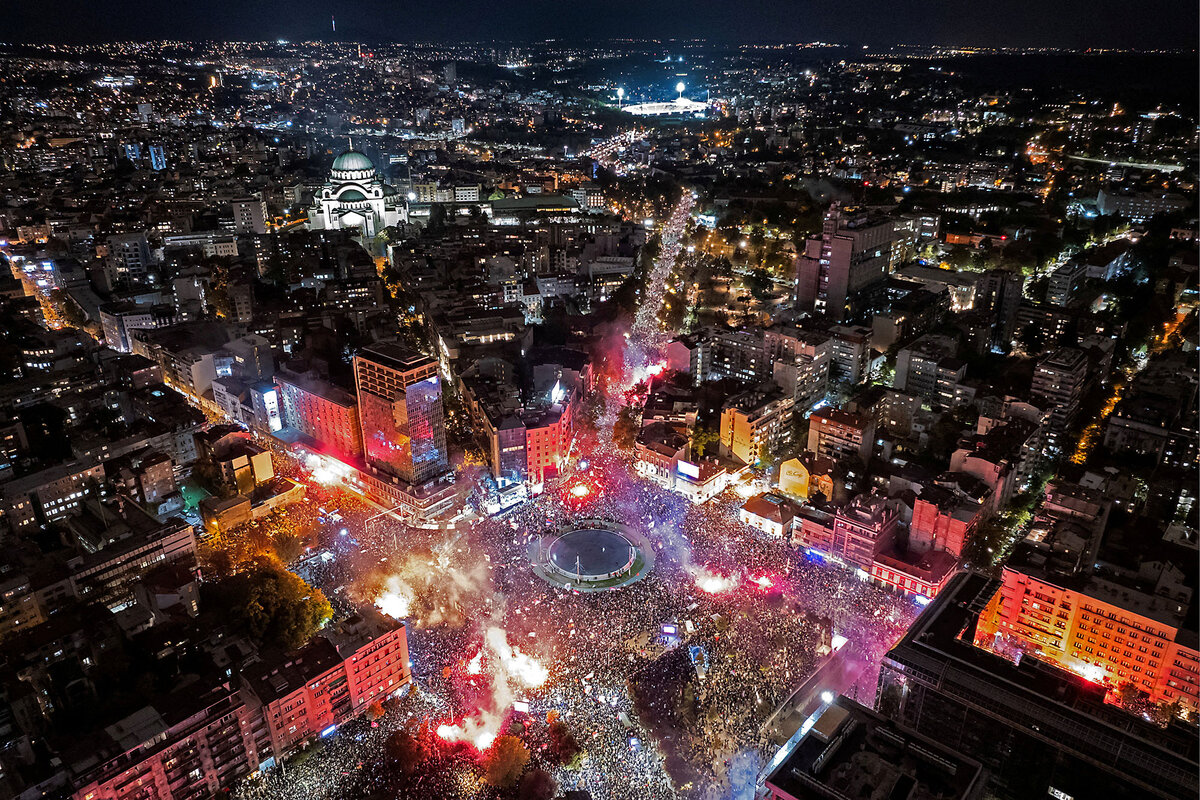
On Thursday, October 22, tens of thousands of supporters of the Students' List filled central Belgrade, including Slavija Square, for the movement's closing rally; Democracy Now! and other reports put the crowd at around 150,000. Vučić held a rival rally the same evening at a sports hall across the city, telling supporters, "Let us go out and defeat them! Defeat them decisively!" The mood on both sides is one of high stakes and genuine uncertainty, with international monitors and the European Union voicing concern about whether the vote can be free and fair.
Background: From a Collapsed Canopy to a National Movement
The movement traces its origin to November 2024, when a concrete canopy collapsed at the newly renovated railway station in Novi Sad, killing 16 people. Millions of euros had been spent on the renovation, and the disaster came to symbolize what critics describe as corruption in state-run construction projects. According to the Christian Science Monitor, no one has yet stood trial over the collapse, and that absence of accountability became a central grievance.
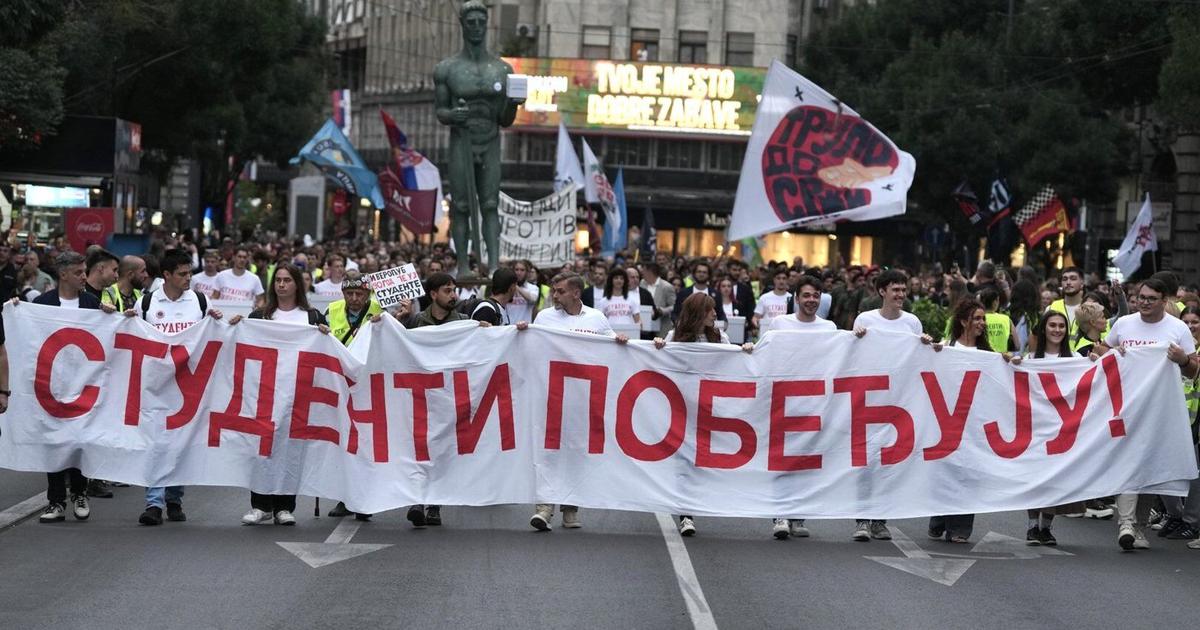
What began as student-led blockades of universities grew through 2025 into the largest protests the country had seen since the Milošević era. A March 2025 rally was described as the biggest in Serbia's history, and by May 2025 demonstrators were demanding snap elections. Students marched and cycled across the country, including into rural areas that have long been Vučić strongholds. Scores of students have been arrested over the two years and accused of anti-state activities. Vučić eventually announced the early election, and in September he gave up the presidency, a largely ceremonial post under Serbia's constitution, to seek the more powerful job of prime minister.
The Students' List is leaderless by design. It is fielding 250 candidates for the 250 seats, most of them academics and political outsiders, selected through what the Monitor called an opaque 18-month process that ended in September. Its slogans are "Students win" and "Serbia or mafia," and its platform centers on fighting corruption. Part of the traditional opposition has stepped aside to avoid splitting the anti-government vote, which makes the election an even starker two-sided contest. Observers draw a parallel with Hungary's election earlier this year, in which Péter Magyar's challenge ended Viktor Orbán's long rule and Magyar is now prime minister.

Key Developments in the Final Days
The campaign has been intense and, by the count of independent monitors, rough. The group CRTA recorded more than 100 violent incidents during the campaign and cited a "narrowing of freedoms and deepening of inequality." On Wednesday, prosecutors questioned six people arrested on suspicion of plotting violence, riots and attacks on election day. Twenty-four Serbian civil society groups have warned that conditions for a free and fair vote are lacking. Reported problems include pre-election detentions, near-total government control of the media, and surveillance and cyberattacks aimed at activists.
Vučić has leaned on the media dominance of his party. The Monitor reports that he gave 49 televised speeches in 11 days in August, and the Associated Press describes round-the-clock live coverage on pro-government outlets. He has portrayed his opponents as foreign-funded mercenaries advancing a "color revolution" and a coup attempt, a framing that media theorist Ana Martinoli says pushes the debate toward "patriotism and loyalty to the state." He denies accusations of corruption, ties to organized crime and a crackdown on the media.
An investigation by the Balkan Investigative Reporting Network, cited by the Monitor, collected about 180 testimonies from several dozen state entities describing institutions used as "political factories" for SNS votes, with employees allegedly facing threats of dismissal, pay cuts, stalled promotions or transfers. Transparency Serbia's Nemanja Nenadić told the paper he expects irregularities to be "far greater" than in previous elections. Loyalists of Vučić have also camped in a central Belgrade park for more than a year, and violent incidents at protests have often involved them.
Polls, Rules and Expectations
Serbia lacks reliable independent polling, and neither camp's numbers can be treated as authoritative. Pro-government sources predict a convincing SNS victory, while sources close to the students predict the opposite. Political scientist Dušan Vučićević has said he expects the Students' List to win more than 40 percent of the vote, which would be more than any opposition list has won since the SNS took power. The Associated Press reports that available polls suggest a close race, raising fears of unrest if both sides claim victory.
The rules matter. Parties need 3 percent of the vote to enter parliament, and observers expect that many smaller parties will fall below that line, which would concentrate the result between the two main blocs. High turnout is expected. Because the SNS controls most local governments, which it has held since 2016, and a wide range of state institutions, analysts say it has a built-in organizational advantage on election day even if its popularity has dropped. Aleksandra Krstić of Belgrade's Faculty of Political Sciences told the Associated Press she does not see "a possibility that he would concede defeat," citing his power and well-developed political machine.
Reactions and the International Dimension
Supporters of the students describe the vote in near-existential terms. Marija Nedeljković Radić, 47, said at Thursday's rally: "Really, for the first time in my life, I believe that it is possible." Candidate Jugoslav Gašić, a university professor, said: "We are putting an end to 14 years of humiliation, chaos and betrayal." Student supporter Lidija Miladinović offered a more tempered view: "Not everything is going to be great after Sunday, but it will be much, much better."
Abroad, the stakes are geopolitical. Serbia is an official candidate for European Union membership, and Brussels has criticized democratic backsliding under Vučić, who has drifted away from the pro-European stance that helped bring his party to power. He has repeatedly cited support from Russian President Vladimir Putin, telling state broadcaster RTS that Putin hopes he will become prime minister and that Putin believes there "won't be any sanctions" on Russia only if populist parties win. Serbia has not joined Western sanctions on Russia. Critics also point to the SNS's alliance with the Serbian Radical Party of Vojislav Šešelj, a convicted war criminal, and to Vučić's decision last month to allow a hero's funeral in Belgrade for Ratko Mladić, who was convicted of genocide by a UN tribunal.
Student and youth protests have been shaking other European countries as well, including France, which gives the Serbian vote a wider resonance as a test of whether such movements can translate street energy into electoral power.
What Happens Next
Polls close Sunday evening, and the key early signal will be the turnout figures and the size of the Belgrade and Novi Sad results, where the students are strongest, relative to the countryside, where the SNS machine is most entrenched. A decisive SNS win would likely be contested by the students and could trigger a new wave of protest, while a narrow outcome may produce dueling claims of victory. If the students win a plurality but fall short of a majority, coalition arithmetic and the actions of smaller parties surpassing the 3 percent threshold would decide who forms the government.
Should Vučić prevail, he is expected to return as prime minister with a renewed mandate and the regional and international consequences that implies for Serbia's relations with Brussels and Moscow. Should the students prevail, it would be the first meaningful loss for the SNS in over a decade, and a potential model for opposition movements in a region where several governments have faced similar anti-corruption protests. Observers will be watching not only the count but also how the loser responds, and whether the police and judiciary, which critics say are closely aligned with the ruling party, act with restraint.
Published By | News Editor