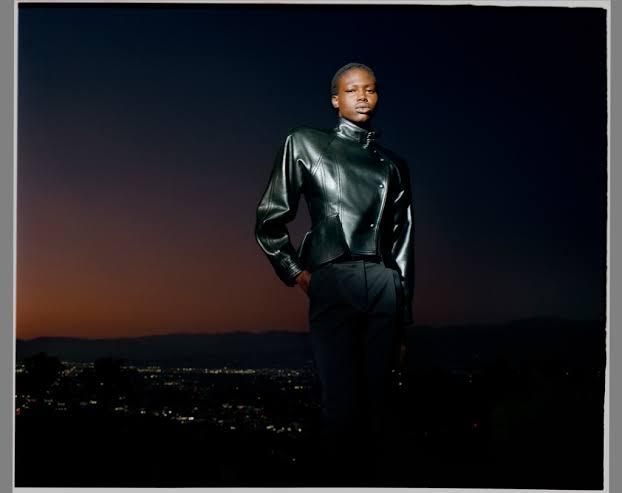
Plastered across a thousand bus shelters and metro entrances overnight, 'L'heure du Loup' announces a moodier, more cinematic Balmain — and signals how completely the house's new creative director intends to rewrite its image.
PARIS
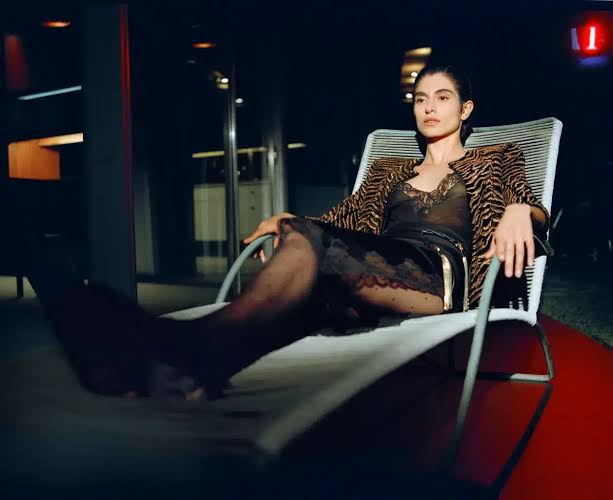
Parisians woke on Friday to find their city recast as a psychological thriller. Across roughly 1,000 bus shelters, kiosks and metro entrances, the first Balmain campaign by new creative director Antonin Tron appeared overnight — a series of shadowy, cinematic images that look less like fashion advertising than stills lifted from a lost European art film.
The campaign is titled 'L'heure du Loup' — the hour of the wolf — a play on the French expression 'entre chien et loup,' that ambiguous moment when evening slides into darkness and the eye can no longer tell dog from wolf, friend from threat. It is a poetic choice, and a pointed one. Tron is telling Paris, in its own language, that Balmain is entering its twilight transformation: something familiar is becoming something wilder.
A Debut Built on Cinema
Tron, who presented his first Balmain runway collection for fall 2026 in March, has been open about the film references stitched through his debut. His mood board was peppered with scenes from dark-hearted classics: Tony Scott's sleek vampire elegy 'The Hunger' and David Lynch's hallucinatory Hollywood thriller 'Mulholland Drive.' For the campaign, he reached further back, layering in nods to Ingmar Bergman and the Swedish master's avant-garde 1966 landmark 'Persona' — a film about two women whose identities blur and merge, which feels apt for a house mid-metamorphosis.
The designer has said he wanted the images to feel like stills from a psychological thriller, charged with subtle erotic tension. Spanish photographer Suffo Moncloa shot the campaign at John Lautner's Harpel House, the Los Angeles hillside residence Tron selected as an emblem of the 'modern living space' — all glass, angles and midcentury unease. Against Lautner's architecture, models appear in key looks from the fall collection like characters caught mid-plot: watchful, poised, lit as if by headlights.
Strong Women, Sharper Shadows
What unites Tron's references — Deneuve in 'The Hunger,' the doubled heroines of Lynch and Bergman — is the archetype of the strong, enigmatic female lead of film noir and its descendants. That is a meaningful compass at Balmain, a house whose founder Pierre Balmain dressed the golden-age stars of the 1940s and 1950s, and whose modern identity was forged in the glossy, armour-shouldered glamour of the Olivier Rousteing era.
Tron's noir heroine is a different creature from the Instagram-bright 'Balmain Army' of the 2010s. She is shadowed rather than spotlit, suggestive rather than declarative. In the campaign images, the fall collection's tailoring reads as costume in the best sense — clothes that imply a narrative, a secret, a next scene. It is a risky pivot for a brand whose commercial power was built on high-wattage visibility, and precisely the kind of risk that makes a designer debut worth watching.
The Streets as Gallery
The media strategy deserves attention of its own. Rather than debuting the campaign on a jumbotron in Times Square or an influencer's feed, Balmain carpeted the physical city: bus shelters, kiosks, subway entrances. The choice returns fashion advertising to its most democratic canvas — the street — and to the French tradition of the affiche, the poster as public art.
There is strategy beneath the romance. Out-of-home advertising has quietly become luxury's favourite flex in the post-digital era, prized precisely because it cannot be skipped, blocked or algorithmically buried. A thousand simultaneous placements across Paris transforms a campaign launch into an urban event, and turns every commuter into an audience member. By Friday evening, images of the posters were circulating on social media anyway — proof that the surest way to go viral is to build something worth photographing.
What the Industry Is Watching
Fashion editors have framed Tron's arrival as one of the defining storylines in a year crowded with creative-director debuts across the luxury landscape. Balmain, owned by Mayhoola, needs its new chapter to perform: the house spent more than a decade under Rousteing building one of fashion's most recognisable commercial identities, and any successor inherits both that equity and its constraints.
The early readings of 'L'heure du Loup' suggest Tron understands the assignment. Reviews of his March runway debut praised its stylistic intelligence and its effort to reconnect the house with its couture roots, and the campaign extends that argument in visual form: heritage glamour, restated in a darker, more intellectual register. Whether noir sells handbags is the billion-euro question the next few quarters will answer.
What It Means for You
For fashion watchers, the campaign is the clearest preview yet of where Balmain's aesthetic — and by extension, a chunk of the luxury market's mood — is heading for fall 2026: cinematic styling, sculpted tailoring, twilight palettes and a general turn from maximal shine toward atmospheric mystery. Expect the codes to filter quickly into high-street interpretations: strong shoulders, liquid draping, noir-inflected eveningwear.
And if you happen to be in Paris this month, the best fashion exhibition in town is free. It is hanging at a bus shelter near you, at least until the next campaign papers over the hour of the wolf.
Shoppers will not have to wait long to judge the clothes themselves: the fall 2026 collection that stars in the campaign begins arriving in Balmain boutiques and department stores over the coming weeks, giving the noir fantasy a retail reality test just as the September issues land. The gap between a beautiful poster and a purchased jacket is where creative directors are ultimately measured.
The Last Frame
Every designer debut is a wager about what a house means. With one poster blitz, Antonin Tron has placed his: Balmain as cinema, Paris as the screen, and the customer as protagonist in a story that begins, fittingly, at dusk. The lights have gone down. The feature is starting.
Published By | Features Editor