BRISBANE, AUSTRALIA / STOCKHOLM, SWEDEN
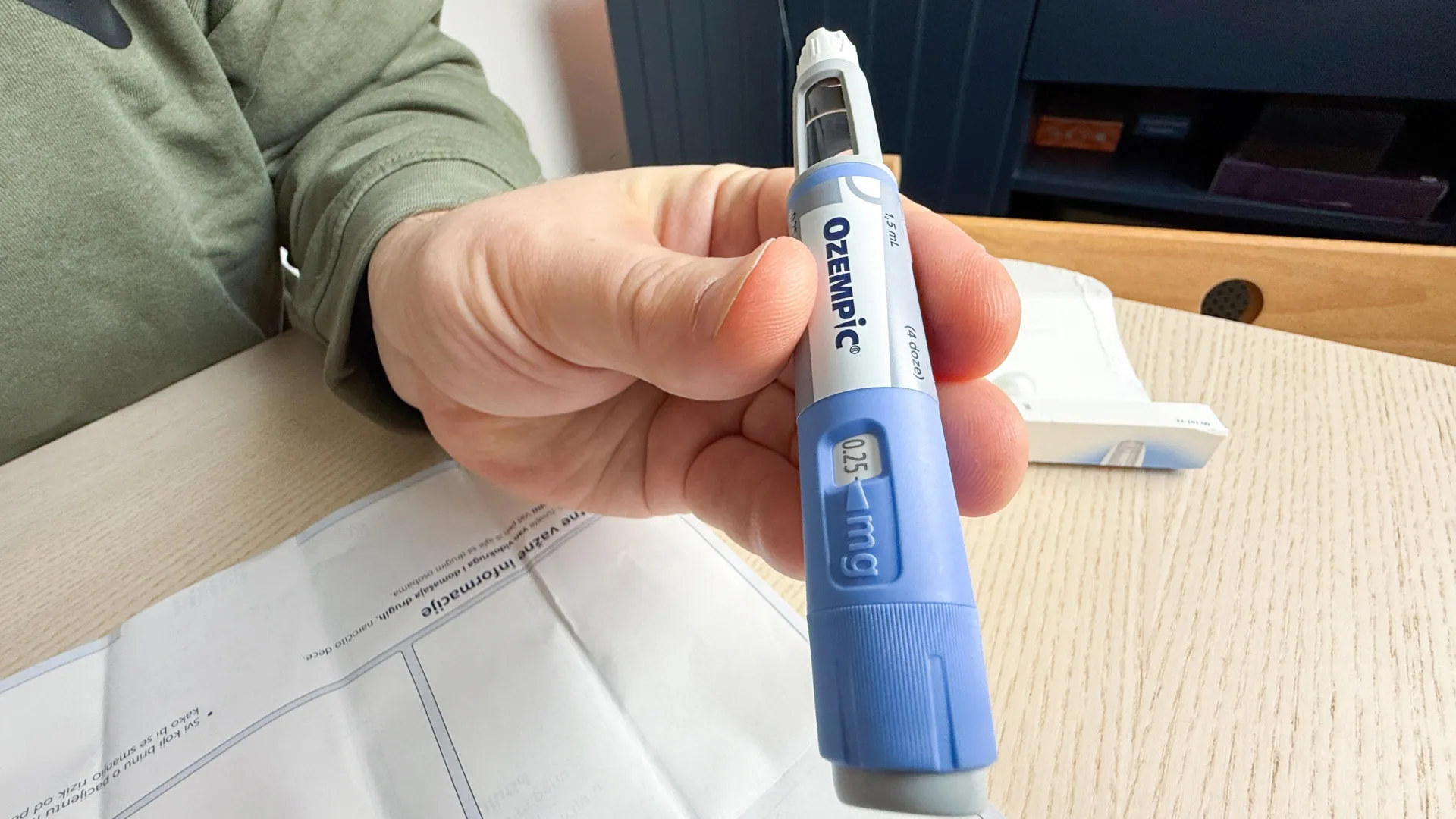
It was supposed to be a diabetes drug. Then it became the most famous weight-loss drug on the planet. Then it started turning up, uninvited, in research on heart attacks, kidney failure, addiction, bone fractures and dementia - a molecule that keeps wandering into rooms it was never designed to enter.
Now semaglutide has walked into psychiatry, and it has brought a number that is making clinicians sit up: among people living with bipolar disorder, periods of semaglutide use were associated with a 21 per cent lower risk of ending up in a psychiatric hospital.
The finding, published in the journal Acta Psychiatrica Scandinavica and circulating hard in medical media this week, comes from one of the largest and longest-running datasets ever brought to bear on the question. And it lands in a field that has been quietly starved of good news for decades.
The study: 15 years, an entire country, 14,694 lives
The research was led by Professor Mark Taylor of Griffith University's School of Medicine and Dentistry in Australia, with first author Dr Heidi Taipale and a team drawn from Karolinska Institutet in Stockholm and the University of Eastern Finland - among them Professor Jari Tiihonen, one of the most prolific figures in real-world psychiatric drug research, along with Markku Lahteenvuo, Ellenor Mittendorfer-Rutz and Antti Tanskanen.
Their raw material was the Swedish national registers, a resource that epidemiologists elsewhere in the world regard with something close to envy. Sweden records prescriptions, diagnoses and hospital admissions for the entire population, linked by personal identity number, going back decades. Nobody drops out of a Swedish register study because they moved house or changed insurer.
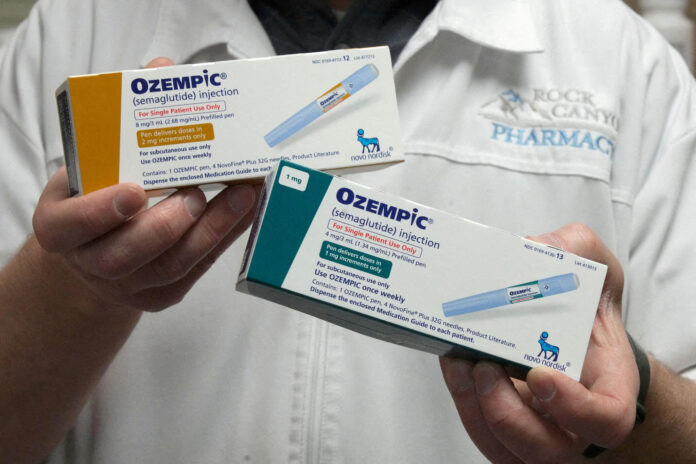
The team identified every person in Sweden with a diagnosis of bipolar disorder who also used any antidiabetic medication between 2009 and 2024 - a cohort of 14,694 people. Of those, 5,200 used a GLP-1 receptor agonist at some point: the drug class that includes semaglutide (sold as Ozempic and Wegovy), liraglutide (Victoza, Saxenda) and dulaglutide (Trulicity).

The clever bit: everyone was their own control group
Here is where the design gets interesting, and where it dodges the objection that sinks most observational drug studies.
The usual complaint about a study like this is obvious: people who get prescribed a modern, expensive weight-loss drug are probably different from people who do not. They may be wealthier, better connected to care, more organised, more motivated. Compare them with non-users and you may simply be measuring privilege dressed up as pharmacology.
So the researchers did not primarily compare users to non-users. They compared each person to themselves. Within-individual analysis takes a single patient's 15-year timeline and contrasts the stretches when they were taking the drug against the stretches when they were not. Every fixed characteristic of that person - their genetics, their childhood, their personality, their baseline illness severity, their social class - is held constant, because it is the same person on both sides of the comparison.
It is not a randomised trial. But as observational designs go, it is about as close as you can get without one.
The numbers
Analysed as a whole class, GLP-1 receptor agonists were associated with a 13 per cent lower risk of psychiatric hospitalisation (adjusted hazard ratio 0.87, 95% confidence interval 0.79 to 0.97).
But the class average concealed the real story. When the drugs were pulled apart individually, semaglutide carried essentially all of the signal: a 21 per cent lower risk of psychiatric hospitalisation (adjusted hazard ratio 0.79, 95% confidence interval 0.69 to 0.91). The confidence interval sits comfortably below 1.0, which in plain English means the result is unlikely to be a fluke of chance.
Semaglutide was also associated with roughly a 17 per cent lower risk of hospitalisation specifically for bipolar relapse - not just any psychiatric admission, but the particular kind that means a manic or depressive episode has spiralled beyond what outpatient care can hold.
That last distinction matters more than it might look. Psychiatric hospitalisation is a brutally concrete outcome. It is not a mood questionnaire, not a self-reported symptom score, not a clinician's global impression. It is a person losing their footing badly enough that a bed had to be found for them - a life interrupted, a job at risk, a family in crisis. Moving that number is not a cosmetic result.
One drug worked. Two did not.
The strangest finding in the paper is what did not happen. Neither liraglutide nor dulaglutide was individually associated with a significant reduction in hospitalisation risk.
There are two competing readings of this, and honest scientists will admit they cannot yet tell which is right.
The first is boring and quite likely: statistical power. Liraglutide and dulaglutide were used by far fewer people in the cohort, and a smaller sample produces a wider, wobblier estimate that struggles to reach significance even if a real effect exists. Absence of evidence, as the saying goes, is not evidence of absence.
The second reading is far more interesting: that this is a genuinely molecule-specific effect rather than a class effect. Semaglutide is known to penetrate certain brain regions more effectively than some of its competitors, and its pharmacokinetics differ substantially. If the psychiatric signal really does belong to semaglutide alone, that would point towards a specific mechanism in the brain rather than a general consequence of losing weight or improving blood sugar - because liraglutide and dulaglutide also lower blood sugar, and liraglutide also drives weight loss.
Only a head-to-head trial can settle it. Until then, the split result is the most tantalising loose thread in the paper.
Why would a gut hormone drug touch the mind at all?
GLP-1 is not really a diabetes molecule. It is a hormone your gut releases after you eat, and its receptors are scattered far beyond the pancreas - including in the brain, in regions involved in appetite, reward, stress response and inflammation.
The researchers propose that GLP-1 signalling may protect the brain by dampening inflammation and cellular stress - processes that a substantial body of work has linked to bipolar disorder. The inflammation hypothesis of mood disorders has been circling psychiatry for years: elevated inflammatory markers turn up repeatedly in people during mood episodes, and several anti-inflammatory interventions have shown flickers of antidepressant effect. If semaglutide is turning down a neuroinflammatory dial, that would fit a pattern researchers have been chasing for a decade.
But there is a much more prosaic candidate mechanism too, and it deserves equal billing.
The trap that bipolar patients have been living in
Bipolar disorder and metabolic disease are locked together in a vicious circle that psychiatrists have complained about for as long as effective mood stabilisers have existed.
The World Health Organization estimates that roughly one in 200 people worldwide - about 37 million - live with bipolar disorder. People with the condition have markedly higher rates of obesity and type 2 diabetes than the general population, and die years earlier on average, mostly of cardiovascular disease rather than anything psychiatric.
Part of that is the illness itself: disrupted sleep, disrupted eating, long depressive stretches with little movement, higher smoking rates, unequal access to primary care. But part of it is the treatment. Several of the most effective drugs in psychiatry - olanzapine and quetiapine among the antipsychotics, valproate, lithium - are notorious for weight gain and metabolic disturbance. Patients are asked to accept a drug that stabilises their mood and enlarges their waistline, and a substantial number of them quietly stop taking it. Non-adherence is one of the strongest predictors of relapse and rehospitalisation in bipolar disorder.
Which raises an unglamorous but entirely plausible explanation for the Swedish result: perhaps semaglutide is not doing anything mysterious to the brain at all. Perhaps it is simply making a mood stabiliser tolerable enough to keep taking. Take away the weight gain and you take away one of the biggest reasons people abandon treatment - and fewer abandoned treatments means fewer admissions.
That would be a less exciting headline. It would also be enormously useful clinically, and it would be no less real.
Expert perspective - and the caveats that matter
Professor Taylor has been notably careful in describing what his own study does and does not show.
"People with bipolar disorder who were taking semaglutide, otherwise known as Ozempic or Wegovy, a type of GLP-1 medication, had significantly lower rates of psychiatric hospitalisation compared with periods when they were not taking GLP-1 medicines," he said. "The findings add to growing evidence that GLP-1 receptor agonists may have benefits beyond diabetes and obesity treatment, and could represent a promising new avenue for bipolar research."
A promising new avenue for research. Not a treatment recommendation. Taylor has said explicitly that he hopes the finding will now be tested in a randomised controlled trial, which is the only design capable of establishing whether semaglutide itself improves psychiatric outcomes.
The caveats are substantial and worth spelling out.
This was an observational study built from existing health records, not an experiment. It can establish association; it cannot establish cause. Even within-individual designs cannot control for things that change over time within one person - and one of those things is how well they happen to be doing. A patient may be more likely to start or persist with a demanding injectable medication during a stable stretch, and more likely to let it lapse when they are becoming unwell. If that is happening, part of the apparent benefit is really the mood episode casting a shadow backwards onto the prescription record.
The cohort was also restricted to people with bipolar disorder who were already using antidiabetic medication - meaning people with diabetes or significant metabolic disease. Whether anything here would apply to a person with bipolar disorder and normal metabolic health is completely unknown.
And large exploratory analyses of national registers generate a great many comparisons. Signals from such studies have a well-documented habit of shrinking or vanishing when someone tries to replicate them, or when they finally face a randomised trial. Psychiatry has an especially long graveyard of promising repurposed drugs that looked wonderful in registry data and did nothing in a trial.
The honest summary from the field is that this is a real, well-constructed signal worth chasing - and that a single report does not make semaglutide a bipolar treatment.

What this means for you
If you or someone close to you lives with bipolar disorder, the practical guidance here is unusually clear.
Nobody should start, stop or alter any medication on the strength of this study. Semaglutide is not approved anywhere for bipolar disorder or for any psychiatric indication. It is approved for type 2 diabetes and for weight management, it requires medical supervision, and it carries real side effects including nausea, vomiting, gallbladder problems and, less commonly, pancreatitis. It is also not a benign drug to obtain from grey-market sources, and the compounded and counterfeit market around GLP-1 drugs has been a genuine safety problem.
Above all: nobody with bipolar disorder should reduce or stop a mood stabiliser or antipsychotic on the basis of a registry finding. Abrupt discontinuation, particularly of lithium, carries a well-documented risk of rapid relapse.
What the study does justify is a conversation. If you have bipolar disorder together with type 2 diabetes or obesity - a very common combination - then the metabolic side of your health is already a legitimate treatment target in its own right, quite apart from any possible psychiatric bonus. If weight gain from psychiatric medication has been eroding your willingness to keep taking it, that is a concrete thing to raise with your prescriber, and it is a problem that now has more solutions than it did five years ago.
For everyone else, the broader lesson is about how medicine actually advances. GLP-1 drugs were designed to do one thing. They keep turning out to do others - some real, some illusory - and the only way to tell the difference is unglamorous, expensive, slow randomised trials. The gap between an intriguing signal and a proven treatment is where most medical hype goes to die.
The bottom line
Fourteen thousand six hundred and ninety-four people. Fifteen years of national records. A 21 per cent lower risk of psychiatric hospitalisation during semaglutide use - and, oddly, nothing for two of its closest cousins.
Psychiatry has not had a genuinely new mechanism for bipolar disorder in a very long time. Lithium, the field's most reliable drug, was introduced into modern practice in the mid-twentieth century and still has no clear successor. The authors themselves frame their finding against what they describe as an era of stagnated pharmacotherapy - a polite way of saying that the pipeline has been disappointing for a generation.
Against that background, a signal this size from a dataset this clean is not something to shrug at. It is also not something to prescribe on. The next move belongs to whoever funds the randomised trial - and until someone does, the honest answer to the question everyone will be asking is the least satisfying one available: we do not know yet, and it would be worth finding out.
Published By | Features Editor