Written By | Fashion and Design Desk
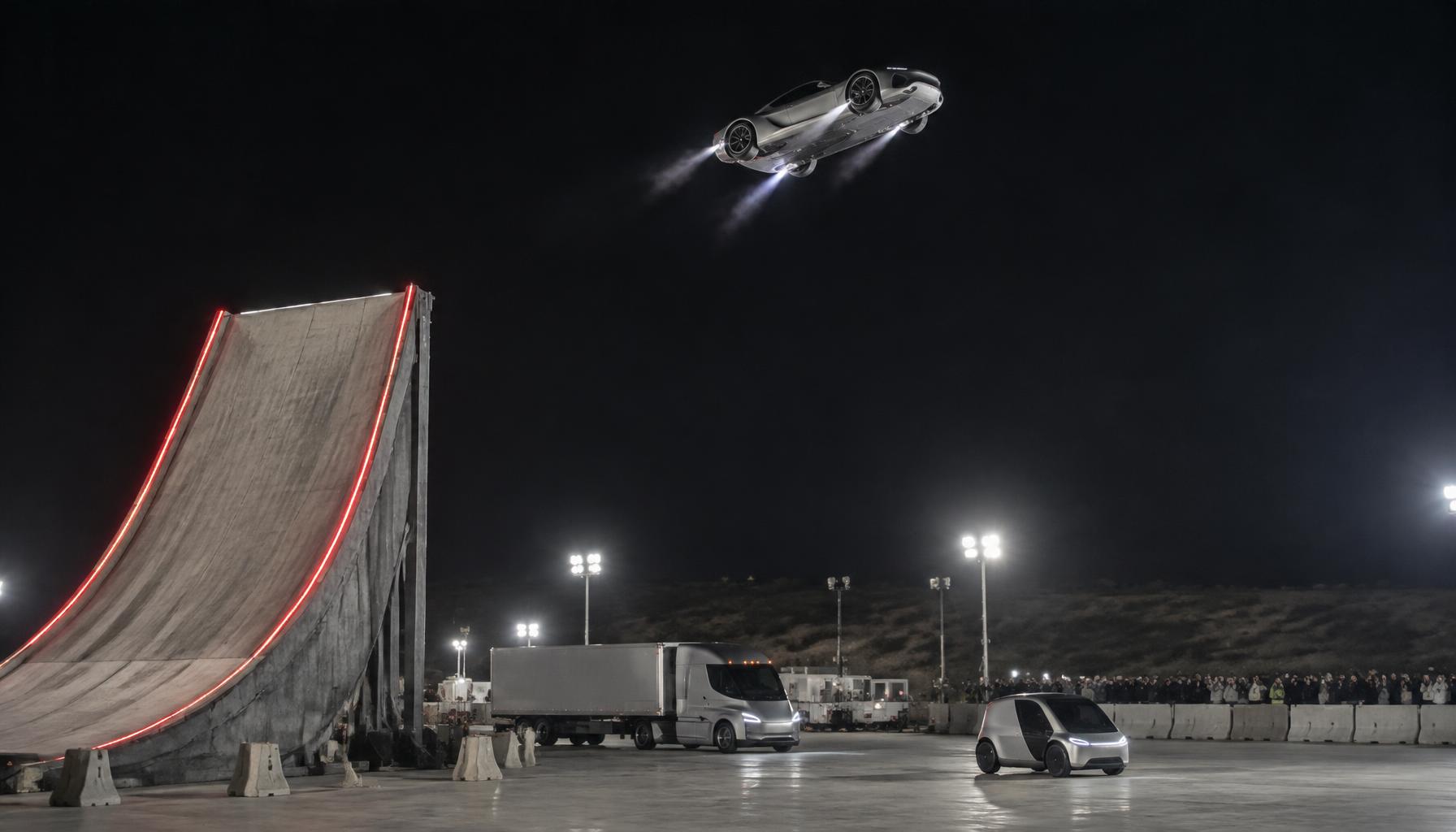
Built with SpaceX and shown in Texas, the two-seat concept jumped a row of cars, hung upside down on a ramp and promises a 0.81-second sprint to 60 mph.
TEXAS
A car that stays in the air
Concept cars usually promise the future from behind a rope. Tesla's latest took a running jump at it. At a live event in Texas, reported by Dezeen's Ben Dreith on October 16, the company unveiled its flying Roadster, a two-seat coupe that drove up a half-pipe ramp, launched off the top and stayed airborne for a few seconds.
It did not stop there. The car also took off after building speed on flat ground, jumping over a row of parked vehicles, and lifted off from a standstill. The demonstration followed a pre-programmed sequence with no driver aboard, a detail worth keeping in mind when judging what the stunt does and does not prove.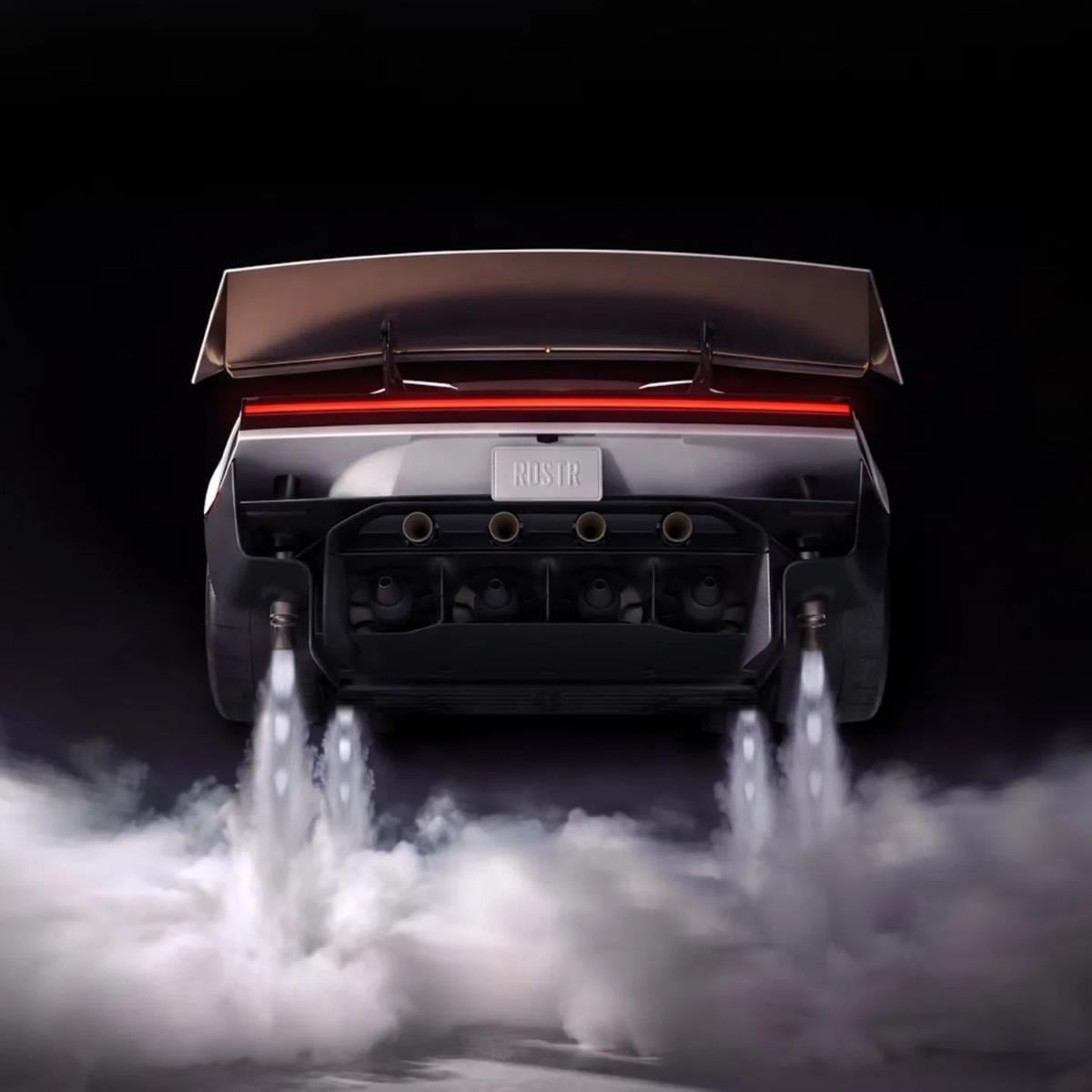
The engineering behind the leap
According to the report, a series of thrusters in the bottom and back of the car propel it into the air and cushion its landings. The same thrusters can fire rearward to boost acceleration. Tesla claims a 0.81-second run to 60 mph, which it says would make the Roadster the "quickest" production vehicle to that speed.
A fan suction system allowed the car to stay upside down on the ramp, a party trick that doubles as a demonstration of grip. Tesla says the compressed-air tanks that feed the system are rechargeable and can be refilled without fuel. Those are company claims made at a launch event, and they have not been independently tested.
Design: an "aerospace aesthetic"
The design story is where the Roadster is most concrete. Tesla's chief designer, Franz von Holzhausen, said the car has an "aerospace aesthetic." The exterior is an angular supercar with scissor doors and a deployable spoiler, a hard-top coupe that looks closer to a spacecraft than to the rounded forms of Tesla's current lineup.
Inside, the seats are moulded directly to the chassis, which implies a fixed, race-car-like driving position. The car also uses wire steering, which replaces the mechanical link between the steering wheel and the wheels with electronic controls. Wire steering has long been a subject of design interest because it frees designers from the physical constraints of a steering column and allows for a more flexible cabin layout.
A collaboration of two Musk companies
The Roadster was designed by Tesla and SpaceX, both of which are led by Elon Musk. Musk described it as "a collaboration with the world's best car company and the world's best rocket company." The rocket-company connection helps explain the thruster-based approach and the compressed-air tanks, which echo cold-gas systems more familiar from spaceflight.
Musk also said the Roadster will be the "only manual" vehicle in Tesla's lineup, in contrast to the company's plans for driverless vehicles. In a lineup increasingly defined by automation, the Roadster is positioned as a deliberate exception: a car for people who want to drive.
Promises, timelines and caveats
Tesla says production is set for 2028. That timeline deserves context. The second-generation Roadster was first unveiled in 2017, with deliveries originally planned for 2020, and the report notes that Tesla's last major launch was the Cybertruck, unveiled in 2019. For observers, the history is a reason to treat the date as a target rather than a guarantee.
Musk himself was candid about the uncertainty. He acknowledged that it is not clear whether the flying capability would be street legal, and before the test he said "success is not guaranteed." Regulation is a genuine unanswered question: a car that can leave the ground raises issues that road-vehicle rules were not written to address. The Dezeen report also mentions Alef's concept vehicle as another recent concept car, a reminder that Tesla is not alone in imagining road-going flight.
What it means for design
Even skeptics can find something useful in the exercise. Concept cars are a design tool as much as a product plan: they let a company test ideas about form, interface and brand in public. The Roadster's angular, aerospace-influenced silhouette points to a possible new design language for Tesla, and wire steering and moulded seats suggest a cabin built around the driver rather than around conventional controls.
The more provocative question is what a car is for. If a vehicle can jump, hover or land softly on thrusters, the road becomes one possible surface among several. Designers will be watching to see whether any of that thinking migrates to production vehicles in less dramatic forms.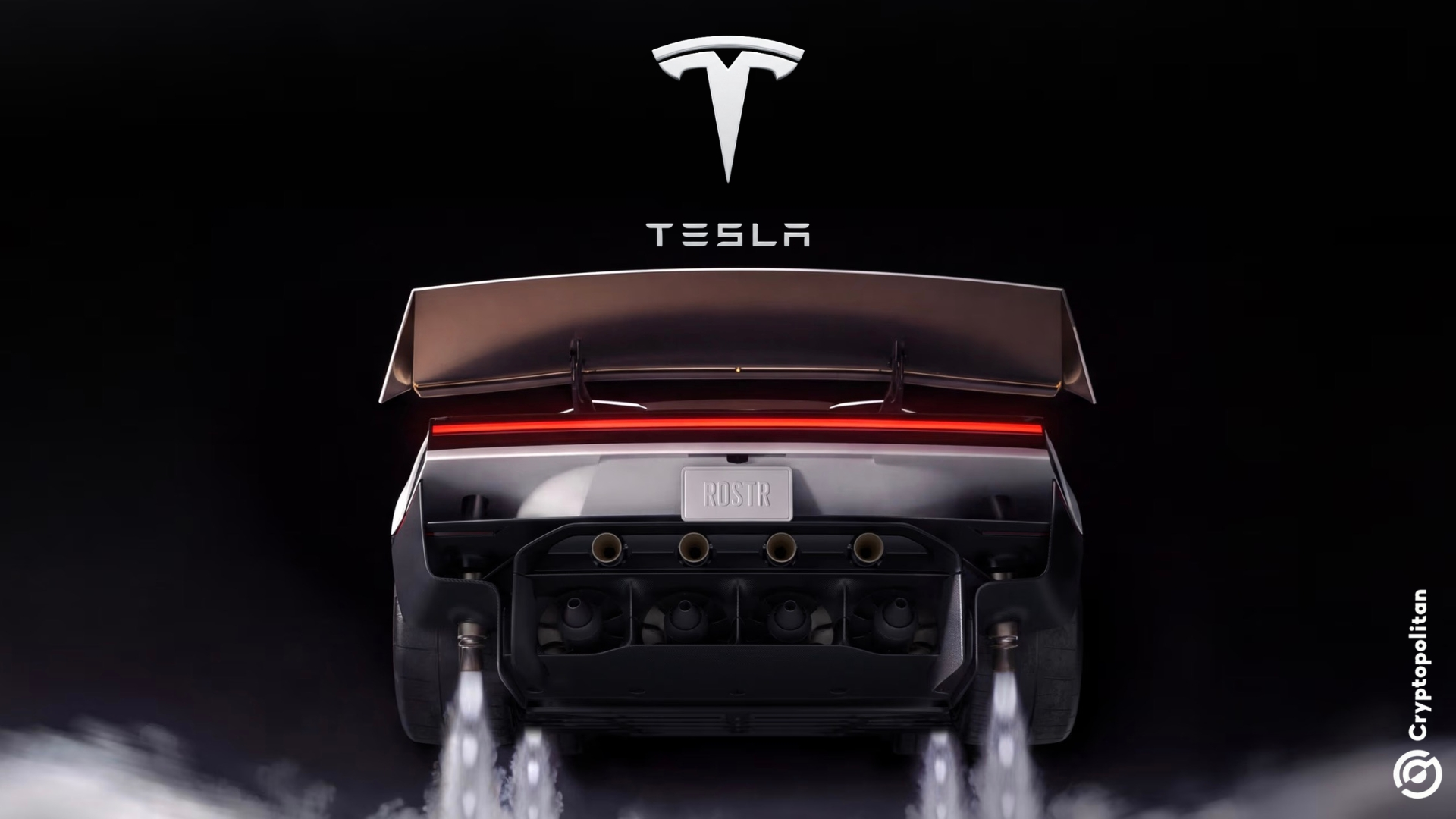
What this means for you
For most people, nothing changes soon. Production is slated for 2028, the flying capability's legality is unresolved, and pricing was not part of the report we reviewed. If you are a prospective buyer, treat this as an early look rather than a purchase decision.
For design enthusiasts, it is worth watching how the aesthetic evolves between now and any production version, and whether wire steering and the manual-driving positioning survive contact with regulators and customers. And for the rest of us, it is a vivid reminder of how quickly a concept can turn into a conversation, even when the hardest questions are still ahead.
The takeoff, in perspective
The flying Roadster is equal parts engineering demonstration and design provocation. It has a striking look, a headline performance claim and a famous name attached, along with an unusually frank admission from its backer that success is not assured. Whether it ever leaves the ground with a driver aboard is a question for 2028 and beyond. For now, it has done what the best concept cars do: made people look up.



