World Politics
Overview
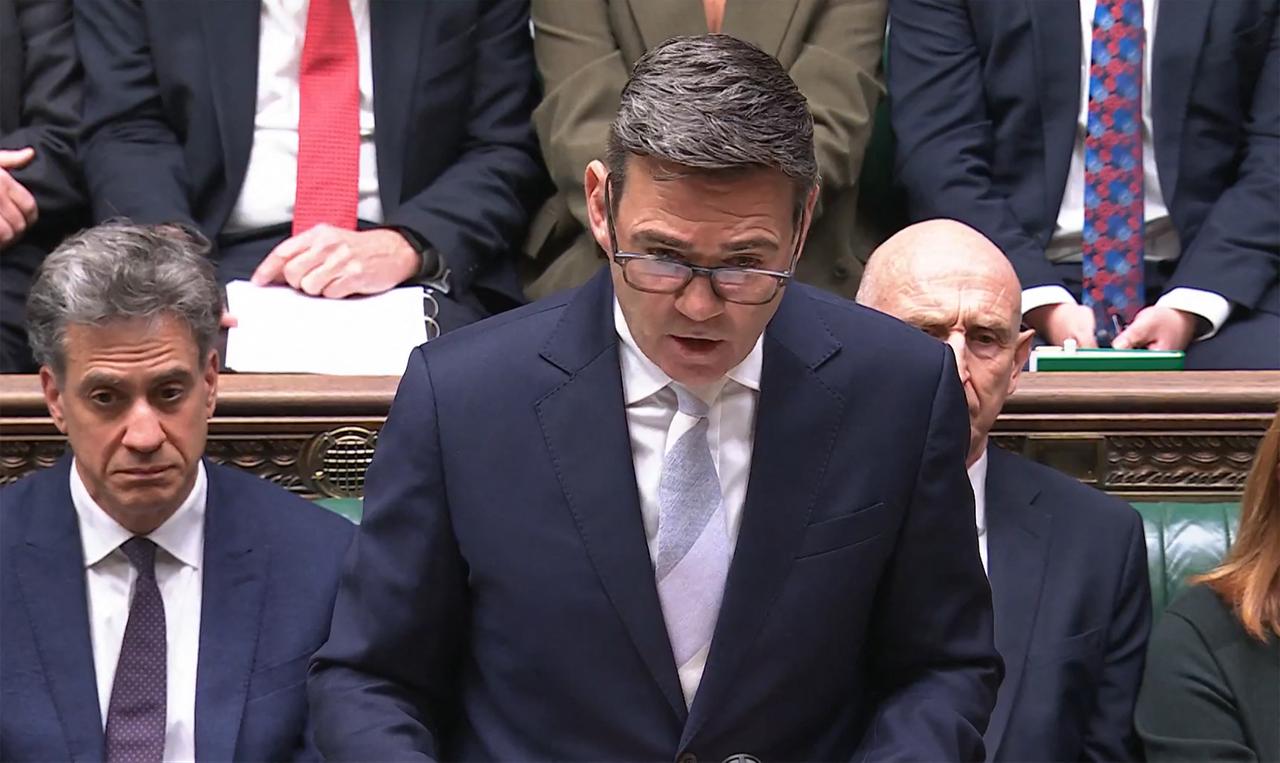
On Monday, October 12, British Prime Minister Andy Burnham told Parliament that a suspected plot against RAF Fairford, the Gloucestershire air base used by American bombers, was highly likely coordinated in Iran and almost certainly directed by the Islamic Revolutionary Guard Corps. "We will not tolerate these threats on our soil," he said, pledging a crackdown on Iran's use of criminal networks and further sanctions on Tehran and the IRGC. The same day the Foreign Office announced sanctions on two Iranian nationals, summoned Iran's ambassador, and joined 29 countries in a statement condemning what it called Iran's campaign of lethal plotting, arson, sabotage and cyber-attacks abroad.
The accusation lands in the seventh month of a war between the United States, Israel and Iran, and just as the conflict is widening across the Gulf. It also arrives with an important caveat that the government's critics and neutral observers have been quick to note: the intelligence underpinning the attribution has not been made public, and no one has yet been charged.
Background: What Happened at Fairford
RAF Fairford, roughly 160 kilometers (100 miles) west of London, is the United States' preferred European base for strategic bombers and has served as a staging point for operations in the war against Iran, which began on February 28. According to Al Jazeera's account, in the early hours of September 27 five British men in their twenties were arrested on suspicion of terrorism and explosives offences. Police found petrol in three vans linked to the suspects but no explosives. The men were released on police bail with strict conditions, and none has been charged. Two further people were arrested later, including a British-Iranian national, and were also released.
The nature of the suspected threat remains murky. Earlier this month, U.S. officials said Washington had moved its B-52 and B-1 bombers away from the base over concerns about a suspected Iranian plot to carry out a complex drone attack there, a detail that suggests American intelligence viewed the danger as more operational than the physical evidence recovered so far would indicate. Reporting on Monday also noted that Britain's decision to permit U.S. use of its bases has been politically contentious throughout the war.
Iran's London embassy responded to the initial reports last month by condemning what it called "malicious speculations" and warning that such claims would fuel "Iranophobia propaganda." That denial has now hardened into a formal diplomatic dispute.
Key Developments
Burnham's statement to the House of Commons was carefully graded. He described coordination in Iran as "highly likely" and IRGC direction as "almost certain," language that follows the probability yardstick British intelligence uses to convey confidence without claiming certainty. He said the government would act against the criminal networks Tehran uses as proxies, a reference to a pattern British and European officials have described for several years in which the Iranian state outsources plots to organized crime groups.
Foreign Secretary Ed Miliband announced sanctions on two individuals. The first, Ruhollah Bazghandi, is described as the head of IRGC counterespionage operations; the second, Shahram Ali Reza Tamarzadeh Jakki, is described as a facilitator for the Zindashti criminal network, which is already under British sanctions and has been linked to plots against Iranian dissidents. The measures consist of asset freezes, travel bans and a bar on serving as a company director. Miliband summoned Iran's ambassador and said on social media that Britain "will not tolerate threats on our soil."
The diplomatic response was broad. A joint statement by foreign ministers from 29 countries, including the United Kingdom, the United States, most European states, Canada, Australia and New Zealand, condemned Iran's use of violent attacks and said any attempt to threaten, silence, intimidate, harass, harm or coerce people on their territories is unacceptable. The statement cited lethal plotting, arson, sabotage, cyber-attacks and other hybrid activity. Al Jazeera's reporting indicates it also referred to other alleged attacks in Europe, including activity claimed by a group calling itself Harakat Ashab al-Yamin al-Islamiya. The same reporting mentions a separate British sanctions package against 71 Iranian nuclear-related entities and an earlier plan to designate the IRGC under state-threats legislation.

Reactions
Tehran rejected the accusation. Iran's ambassador, Ali Mousavi, met Middle East minister Stephen Doughty and denied any Iranian role, urging London to avoid unsubstantiated statements. Iran's foreign ministry called the claims unfounded, and the state news agency IRNA reported that Tehran is willing to cooperate with the investigation. Such an offer is partly rhetorical, but it signals that Iran wants to frame the dispute as an evidentiary one rather than a political one.
In Washington, President Donald Trump was asked whether the United States would act against Iran over the Fairford plot. "We're going to see," he said, according to Fox News live coverage. He added that Iran has "no Navy" and "no air force" and predicted the war would end "very soon." The remarks fit his broader pattern of describing the conflict as nearly won even as attacks across the Gulf intensify.
The Eastern Herald's analysis and Al Jazeera's reporting both stress the gap between suspicion, intelligence assessment and legal proof. Sanctions are an executive decision and not a criminal verdict, and the published notices do not disclose the basis for the attribution. The public record does not establish that anyone arrested in Britain was in contact with Iran, or that the alleged plot had progressed beyond the stage police described. The joint statement demonstrates diplomatic solidarity but, as one analysis put it, the number of governments endorsing a conclusion does not reveal the evidence behind it.
Wider Context: A War Spreading Across the Gulf
The Fairford announcement did not occur in isolation. Over the same weekend Houthi forces struck King Khalid International Airport in Riyadh, killing at least 13 people according to Fox News live coverage, with accounts of total deaths across Saudi airports differing by section. Saudi Arabia extended the closure of Riyadh's airport through October 17, affecting nearly 700 flights a day, and the U.S. Federal Aviation Administration issued a notice warning American airlines about Saudi airspace through December 10. Brent crude closed on Monday at $106.65, its highest since mid-September. A products tanker was reportedly struck by an unidentified projectile in the Strait of Hormuz, and India condemned attacks on ships with Indian crews, with two sailors reported missing.
Against that backdrop, Britain's attribution serves several purposes. It establishes a legal and diplomatic record that could justify further measures, including a long-discussed designation of the IRGC. It reassures the United States that Britain is taking the security of the bases it hosts seriously, at a moment when American bombers have been relocated over safety worries. And it gives Burnham, who took office amid considerable political turbulence, a chance to show firmness on national security without committing British forces to new combat roles.
There is a domestic risk as well. If the Fairford arrests do not lead to charges, or if prosecutors cannot link the suspects to Iranian handlers, critics will argue that the government overstated its case to support a foreign-policy position. Conversely, if the investigation produces evidence of Iranian direction, the episode could harden British public opinion and open the way to tougher legislation on foreign interference.
What Comes Next
Three things bear watching. The first is whether prosecutors bring charges against any of the seven people arrested, since a courtroom would force the government to disclose some of the evidence. The second is whether Britain follows its rhetoric with the IRGC designation or with expulsions of Iranian diplomats; Burnham has promised more sanctions but has not set a timetable. The third is the American response. Trump's non-committal answer leaves open whether Washington will treat the plot as a separate escalation or as another data point in a war it already says it is winning.
For now, Britain has made a serious public accusation backed by allied signatures but not yet by public proof. Readers should treat the attribution as an official assessment rather than an established finding, and note that several details here come from secondary reports of the government's statements. As the investigation proceeds, the distance between what is alleged and what can be shown will determine how far the episode reshapes relations between London and Tehran.
Published By | News Editor