Written By | Staff Writer
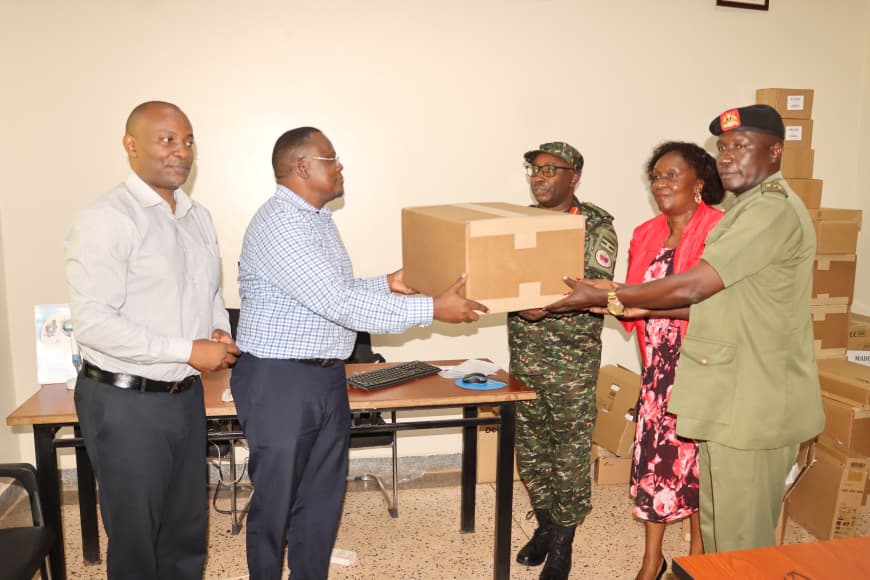
Col. Dr. Francis-Bakehena (Centre) Receiving the gene expert machine
KAMPALA
The Uganda People's Defence Forces (UPDF) has received GeneXpert diagnostic machines to strengthen the detection and treatment of tuberculosis (TB) across its health facilities.
The equipment was officially handed over at the Senior Officers' Diagnostic Centre in Mbuya during a ceremony attended by senior military health officials, representatives from the Ministry of Health, development partners, and medical personnel.
Speaking at the event, the Head of Public Health and Director of the HIV/AIDS Programme in the UPDF, Col. Dr Francis Xavier Bakehena, who represented the Joint Staff Health Services, described the GeneXpert machines as a timely intervention that will significantly improve TB diagnosis and management within the force.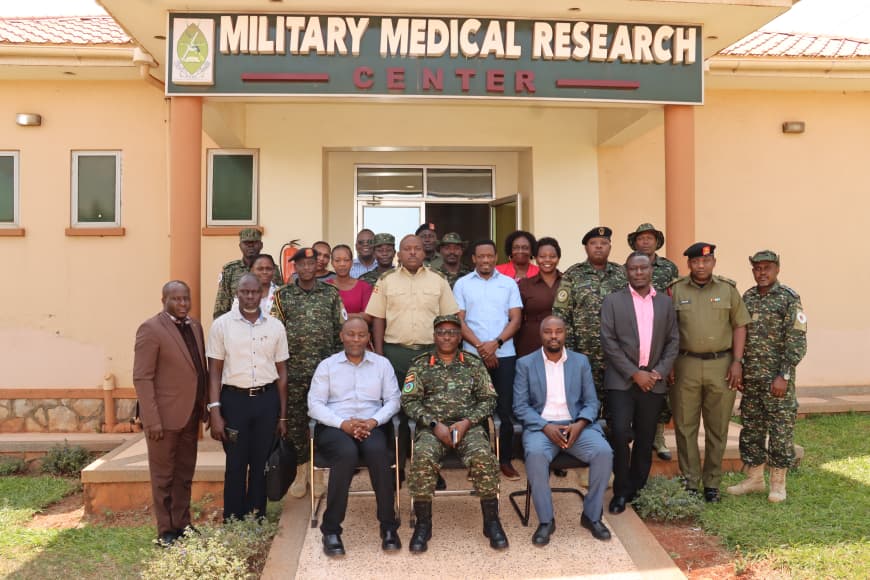
Col. Dr. Francis Xavier seated (Centre) Dr Emmanuel (Right) Dr Denis Bwayo (Left) in a group photo
He said Uganda remains among the countries with a high burden of TB and HIV, with many cases still going undetected.
"Uganda is one of the high-burden countries for TB and HIV. We are only diagnosing approximately 60 per cent of TB cases, while the remaining 40 per cent remain undetected in the community. This remains a challenge for both the civilian population and the UPDF," Col. Bakehena said.
He explained that the military's TB control strategy focuses on early detection, prompt treatment, and the rollout of Tuberculosis Preventive Therapy (TPT) for individuals at risk of developing the disease.
"Our first objective is to identify and treat every TB patient. Secondly, we want to ensure that all eligible individuals receive preventive therapy. However, locating those affected remains one of our biggest challenges," he added.
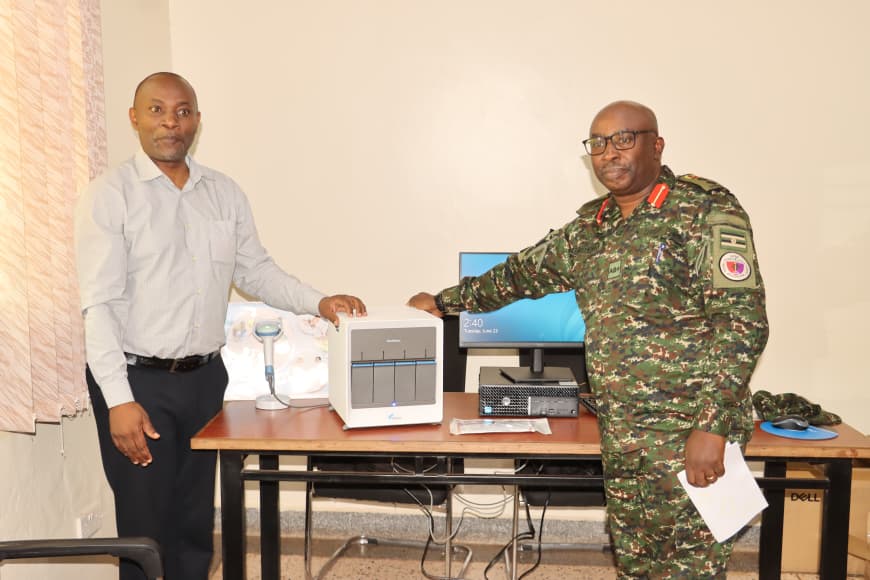
Dr. Denis Bwayo (Left) handing over the gene expert machine to Col Dr Francis Bakehena
Addressing concerns about the security, maintenance, and sustainability of the equipment, Col. Bakehena assured stakeholders that the machines would be properly safeguarded and integrated into the military health system.
"Our laboratory managers understand the responsibility of safeguarding this equipment. The machines will be installed in secure locations with restricted access, while maintenance and quality assurance measures will be strictly followed. We are also rolling out electronic medical record systems across our health facilities to ensure information generated from these machines is shared efficiently and contributes to better decision-making," he said.
University Research Co. (URC) Programme Director Dr Denis Bwayo said the organisation implements military-specific health interventions with support from the United States Government through the President's Emergency Plan for AIDS Relief (PEPFAR), in partnership with the Directorate of HIV/AIDS and the UPDF Joint Staff Health Services.
He said the GeneXpert machines were procured in line with Ministry of Health standards to ensure compatibility with Uganda's national health system and facilitate maintenance through existing service mechanisms.
"We wanted to ensure that the equipment we procured was exactly what is recommended by the Ministry of Health. This means the machines can be serviced through existing national mechanisms and integrated seamlessly into Uganda's health system," Dr Bwayo said.
Representing the Ministry of Health, Dr Emmanuel Twongere described the machines as a significant contribution towards Uganda's goal of eliminating tuberculosis and leprosy as public health threats.
He noted that the country has made considerable progress in reducing TB-HIV co-infection rates, with current levels standing at approximately 33 per cent, compared to much higher rates recorded in previous decades.
Dr Twongere emphasised that early diagnosis remains critical in controlling TB, noting that laboratory confirmation is essential before treatment can begin.
"The advantage with TB is that it is curable. However, every patient must first be confirmed to have TB. Many other conditions, including pneumonia, malnutrition, and other respiratory illnesses, can mimic TB. The only way to confirm the disease is through laboratory testing," he said.
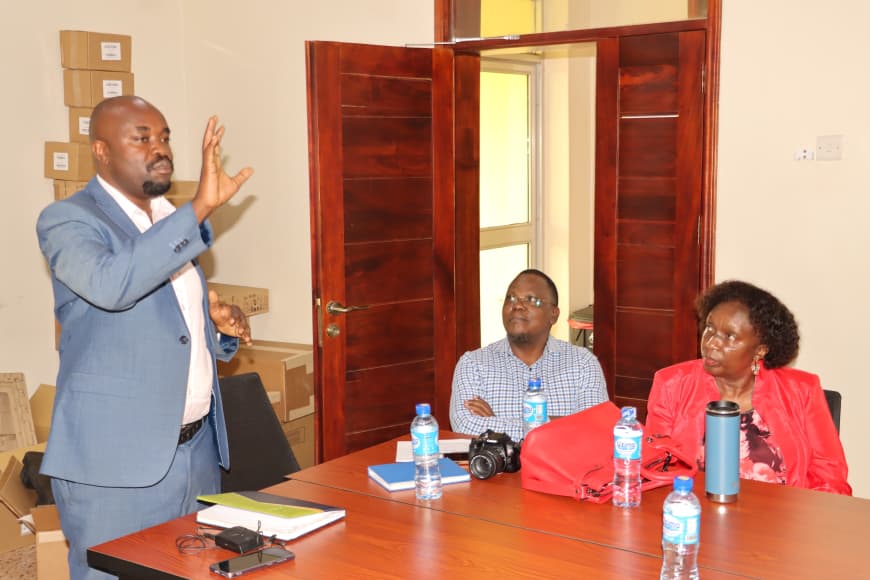
Dr. Emmanuel Twongere giving remarks
He commended URC and its partners for expanding access to diagnostic services through the provision of the GeneXpert machines.
"As a country, we currently have about 397 GeneXpert machines, but we still face a gap of nearly 200 machines. Every additional machine helps us move closer to universal access to TB diagnosis," Dr Twongere added.
The handover ceremony was attended by the Director of Logistics, Lt Col Emma Arinaitwe; Deputy Director of HIV/AIDS, Maj Solomon Kandole; Director of the Rear Public Health Laboratory, Maj Dr Daniel Bulwada; Head of Laboratories at Joint Staff Health Services, Maj Peter Okello; Stephen Mpiima from CEPHEID; Isaac Newton Okeba, a Laboratory Technologist from the Ministry of Health; and other UPDF medical officers.
The introduction of the GeneXpert machines is expected to strengthen TB screening, improve early diagnosis, enhance patient management, and support Uganda's broader efforts to eliminate tuberculosis as a public health threat.



