Written By | Jovita Hasto
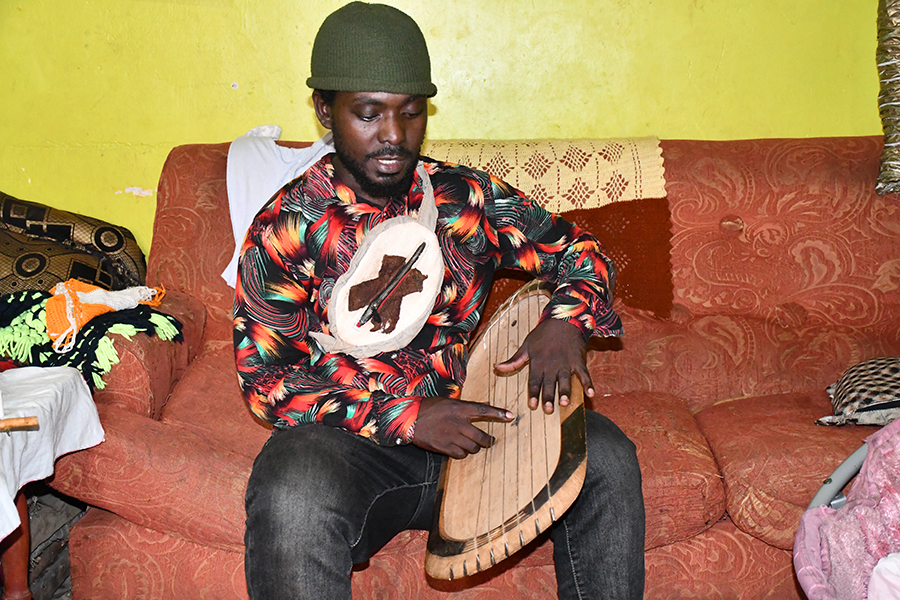
Haka Mukiga playing a trough zither, a musical instrument among the Kiga and Ankole cultures, during entertainment. [PHOTO: JOVITA HASTO]
INTERVIEW
Born and raised in Kigezi, Timothy Arinaitwe Rurihoona (35), popularly known as Haka Mukiga from the Basigi clan, lost his father at the age of six and was raised by his mother. He is now a father of three children and also takes care of and mentors other young people into conservation music as a career.
Despite a challenging childhood marked by hardships, Rurihoona recalls fond memories of his late father, who was frequently hired to perform at village functions during the reign of former Ugandan president, the late Milton Obote. “My father mentored me into music. I would accompany him to perform for guests at village parties. Through this, I developed enthusiasm for music at a young age, inspired by my father’s ability to make people happy,” he said.
Mr Rurihoona began his education at St Alex Primary School in Mukono, where he actively participated in Music, Dance and Drama (MDD). While pursuing a Bachelor’s degree in Arts at Makerere University, majoring in Tourism and Music, he discovered conservation music—a branch of tourism—which he now applies in society to promote the rich culture and values of the Kigezi sub-region.
As a way of preserving Bakiga culture, he considers conservation music a powerful tool for protecting the Banyakigezi way of life.
What Inspired You to Pursue Conservation Music?
“I was drawn into conservation music after surviving a serious accident in 2019. After completing university, my family put a lot of pressure on me to pursue a conventional career. At the time, I used to ride my sports bike frequently to communities around Bwindi Impenetrable National Park. During one of those trips, I got into a terrible accident.
“I survived with a ruptured eardrum and a fractured skull. That experience forced me to reflect deeply on life and death. I realised that while people celebrate births in hospitals, others mourn loved ones lost to death. I asked myself why I should take life for granted when I had been given a second chance.
“I thanked the Creator and decided to focus on conservation music during the first COVID-19 lockdown in 2020. That is when I formed a band called Azamba Africa,” he explained.
Despite family pressure to abandon music for employment abroad, Rurihoona chose to work with communities around Bwindi, teaching the Batwa how to play traditional flutes, choreography, and creating cultural designs using wax.
“I was inspired by my late father, who also led a troupe that performed at political and social functions, including during the visit of President Milton Obote to Kigezi. Watching him perform gave me a deep urge to pursue conservation music,” he added.
When Did You Write Your First Song?
“I wrote my first song in Senior Five during a history lesson on Napoleon Bonaparte at St Mary’s College Mukono. Earlier, in Senior Four, we had studied forestry in British Columbia, yet at the same time Mabira Forest was being cleared for sugarcane plantations. That contradiction troubled me.
“The song, titled Historian, was never produced, but it anchored my decision to become a musician inspired by what I learned in school,” he said.
After the COVID-19 period, Rurihoona began writing songs and documentaries inspired by African traditional society, which he believes is losing its heritage due to modern pressures, including artificial intelligence.
He adopted the name Haka, a Rukiga word meaning home, to reflect his identity and bond with Kigezi culture. He notes that conservation music bridges the gap between natural resources and cultural tourism, contributing to national development. 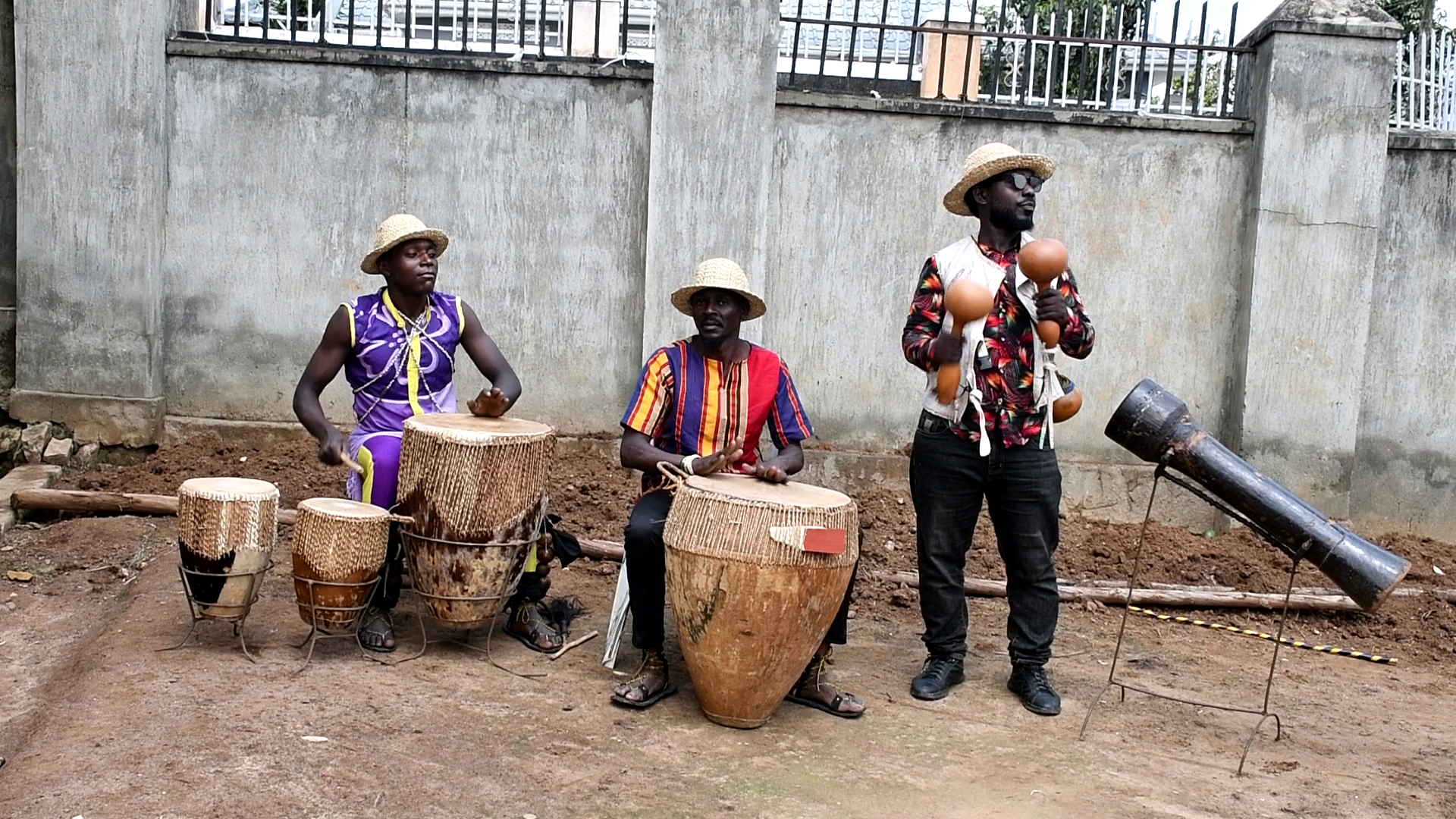
Haka Mukiga playing traditional instruments with performers in the trouple. The traditional cultural values have been ignored among the youth. [PHOTO JOVITA KYARISIIMA]
Music, Education and Cultural Identity
Through his education, Rurihoona realised how music could be a powerful means of communication. While still in school, composing songs opened doors for him to learn instruments such as the guitar and flute, cultural dance, filmmaking, photography, visual art, and documentary scriptwriting.
He also became aware of what he calls “miseducation,” which fuels self-hate and cultural neglect.
“Many young people do not appreciate their local languages or traditional dances, assuming they are primitive. This has led to cultural decay. Music should instil history, values, and a sense of the future,” he said.
Impact of Conservation Music on Society
Since completing his university studies in 2017, Rurihoona says his music has evolved to focus on depth and cultural relevance rather than studio production alone. “One of my songs, Omuti Murungi, is rich in traditional proverbs that teach good conduct. The song emphasises hard work, generosity, and moral responsibility,” he explained.
Addressing Domestic Violence and Family Stability Through Music
Another song, Nyesiga (“Trust Me”), addresses love, trust, and the breakdown of marriages in modern society. “Marriage today is often driven by materialism rather than values. Culture teaches that marriage is a communal and spiritual process. Ignoring this leads to instability,” he noted.
His song Kyomugyisha also highlights how poverty contributes to family instability and the importance of financial responsibility.
Achievements and Challenges
Haka Mukiga has performed at major cultural platforms, including Bakiga Nation events, Nyege Nyege, Bayimba International Festival, Yele Cultural Festival, Milege World Music Festival, Kampala Carnival, and Ongea Festival in Tanzania. He has worked with institutions such as Grace Villa in Kabale, Bwindi Batwa Rock and Cave, Lake Bunyonyi communities, Echuya Forest Batwa groups, and Lake Mburo National Park communities, teaching traditional music and instrument-making.
One of his major challenges internationally is the language barrier, as he sings in Rukiga. He is also struggling to complete a documentary titled The Music Road due to limited funding. He plans to publish a book next year titled Learn How to Play Omukuri/Omubanda, documenting traditional flute knowledge.
Message to National Leadership and the Youth
Rurihoona praised President Yoweri Kaguta Museveni for promoting African culture and Pan-Africanism.
“If given the opportunity, I would ask the President to strengthen cultural preservation through music, film, and education, because traditional knowledge is nearing extinction,” he said.
He urged young people to embrace their cultural heritage, work with elders, protect the environment, and innovate within cultural tourism to build sustainable livelihoods.
“Culture gives identity, belonging, and self-love. If preserved, it can drive national development through tourism and creative industries,” he concluded.
Torch Media Africa



