Written By | Evan Sande Ndahura

Evan Sande Ndahura is a Ugandan writer, poet, and social commentator whose work interrogates power, identity, culture, and social justice
By Evan Sande Ndahura
Its earliest indicators are mechanical and human: crowded markets in cities and urban centres where people buy bulky foodstuffs and clothes, stocking up for village celebrations; buses and taxis overloaded with sacks of rice, boxes of bread, cartons of drinks, goats tied at the back, and mattresses balanced on rooftops.
As December approaches its final days, the 20th–24th traffic jam becomes a national ritual—roads clogged with buses, taxis, private cars, and trucks crawling toward the countryside. Fuel consumption rises sharply, transport charges more than double, shops close early, offices shut down, and cities temporarily empty. These are the unmistakable signs: Christmas is not in the city—it is in the village.
Eating after eating, and then eating again and again, is the first lived experience of Christmas in the village. Food flows freely and abundantly. Animals are slaughtered in the open, fires burn from morning to night, and cooking becomes a communal activity rather than a private routine. Meat, rice, bread, matooke, groundnuts, sweet potatoes—foods rarely enjoyed throughout the year—suddenly dominate village homes. What is “special” in the village is “ordinary” in urban life, where such items are consumed daily and therefore lose their festive meaning. In the village, abundance itself becomes a celebration. 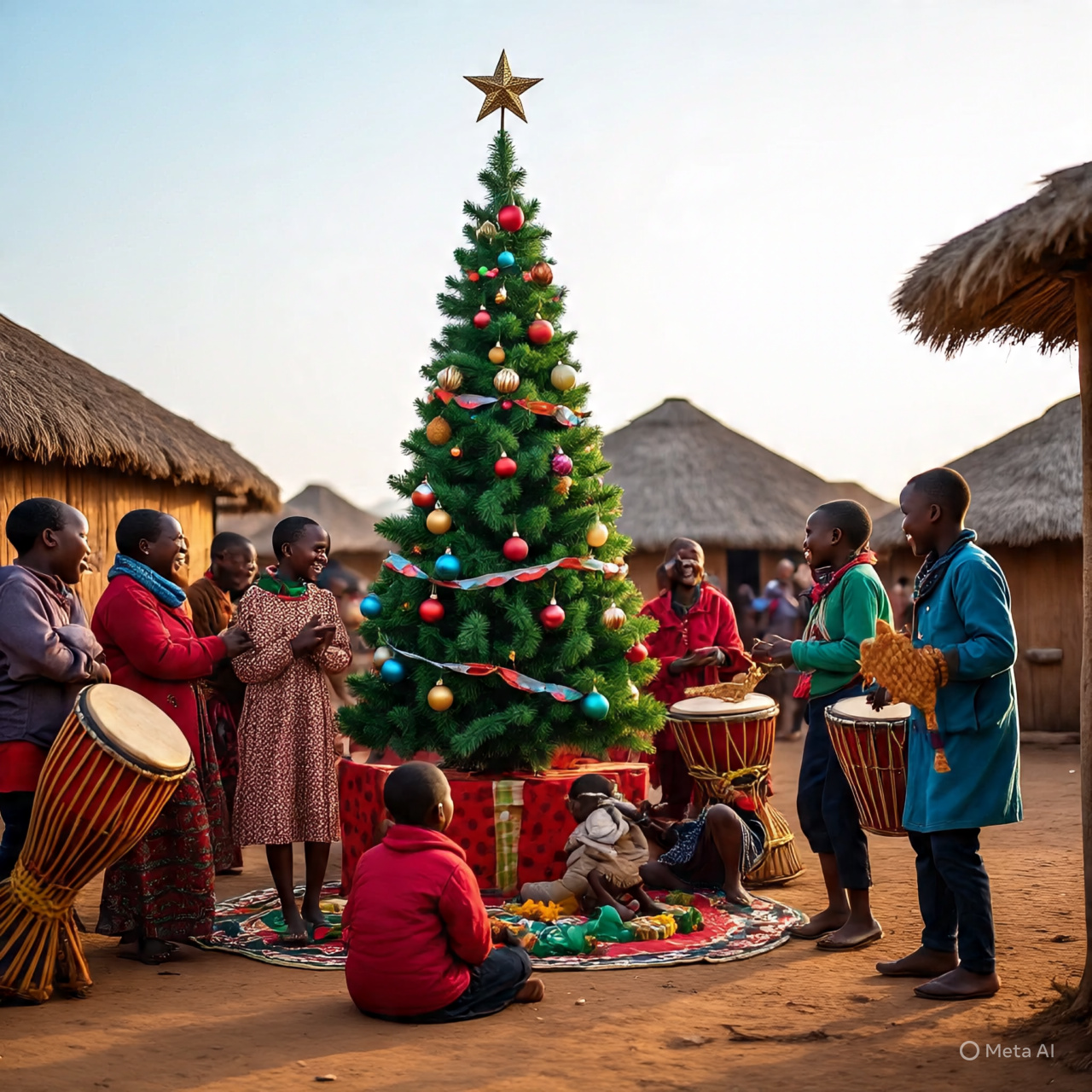
Urban life shall never fully witness the beauty of the Christmas season because the environment and experience remain unchanged. Beaches, entertainment spots, restaurants, and nightlife are daily norms in cities; doing the same on Christmas adds little memory. In the village, however, even a simple walk to the trading centre, a football match on a dusty pitch, or sitting under a mango tree sharing stories becomes historic. One achievement on Christmas in the village becomes a lifetime memory.
Christmas in the village is the great reunion of families scattered across the world. Sons and daughters return from Kampala, Nairobi, Juba, Kigali, and beyond. Relatives who have not seen each other for twelve months finally meet in places of worship, exchange greetings, and share laughter. It is in church, mosque, or community gathering that people truly see Christmas—faces long absent suddenly present. This social gathering is deeper and more meaningful than celebrating with friends in town because it restores blood ties, ancestry, and belonging.
Village Christmas exposes the truth about urban living. Urban areas are segregative by nature—people live behind gates, walls, and schedules. Neighbours barely know each other. In contrast, the village dissolves barriers: everyone eats, greets, and celebrates together. The abundance of food in villages during Christmas sharply contrasts with the hidden scarcity in cities, where many struggle quietly behind closed doors. Christmas finds honesty in the village.
Urban elites who dodge Christmas celebrations in villages often reveal a deeper failure—the failure to develop and invest in their ancestral homes. Concentrated in cities, they disconnect from their roots and avoid returning because the village reflects what they neglected.
Christmas in the village forces self-audit. One tours their land, homes, gardens, and unfinished projects, thinking deeply about what is lacking and what must be improved before the next year. Christmas becomes not only a celebration but also accountability.
We go out to cities to work, to hustle, and to change our homes. Failure to return home for Christmas is often a sign that we failed the purpose of leaving in the first place. Christmas is the checkpoint of the year—the moment to report back, to rest, to evaluate progress, and to renew commitment to where we come from.
In Ugandan villages, people truly relax. Time slows down. Laughter is unplanned, joy is shared, and celebration is collective. Children run freely, elders tell stories, and families eat without counting portions. This is why Christmas belongs to the village. The city may host the calendar date, but the village hosts the soul of Christmas.
About the Writer
Evan Sande Ndahura is a Ugandan writer, poet, and social commentator whose work interrogates power, identity, culture, and social justice. Through essays such as “With a Mighty Pen, Not the Gun,” “Sports Betting — the New Mental Prison of the Unemployed Youth,” and “The Ugandan Opposition’s Dark Spot,” alongside reflective poems and philosophical commentaries, he explores African political consciousness, youth struggles, and the tension between modernity and tradition. His writing blends realism with moral inquiry, consistently calling society back to responsibility, unity, and purpose. Ndahura’s voice is marked by clarity, cultural grounding, and an unflinching commitment to truth, making his work both socially instructive and deeply human.
Torch Media Africa



