Written By |
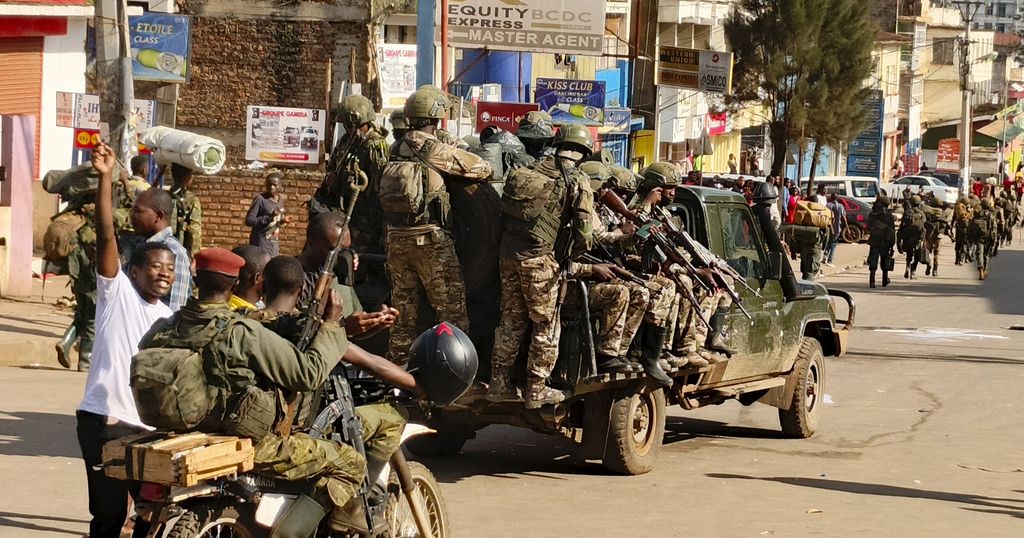
M23 marched south into Bukavu on Saturday, although conflicting reports initially made it difficult to confirm the extent of its advance.
Rwanda’s Kagame Defiant Amid Accusations of Backing M23 Rebels
The escalating war in the Democratic Republic of Congo (DRC) is set to dominate discussions at this weekend’s African Union (AU) summit. However, hopes for a diplomatic breakthrough remain slim as M23 rebels continue their advance and Rwandan President Paul Kagame, accused of supporting them, has vowed to "spit in the face" of anyone seeking to punish him.
The ongoing conflict in eastern DRC has sparked fears of a broader regional war, reminiscent of the deadly conflicts of the 1990s and 2000s that claimed millions of lives. With M23 rebels advancing towards Bukavu—approximately 200 kilometers south of Goma, which they seized last month—regional tensions are at a boiling point.
AU summit: A test for African diplomacy
The AU summit in Addis Ababa, scheduled for Saturday and Sunday, was expected to serve as the next stage in diplomatic efforts to halt the fighting. However, last week’s regional summit failed to yield results, as rebels ignored calls for peace and continued their military push.
“This is arguably the most serious crisis in Africa right now. It is time for the AU to demonstrate its strength,” said Stephanie Wolters, a senior research fellow at the South African Institute of International Affairs.
Global leaders have called on Rwanda to cease its alleged support for M23, which UN experts claim includes direct military assistance and advanced weaponry. The United States has warned of possible sanctions against both Rwandan and Congolese officials, while the European Parliament on Thursday urged the EU to suspend direct budgetary support to Rwanda.
Kagame remains defiant
Despite mounting pressure, Kagame remains unyielding.
Rwanda has consistently denied backing M23, instead insisting that it is acting in self-defense against Hutu militants operating in DRC. Kigali and M23 claim that these militants, linked to the Democratic Forces for the Liberation of Rwanda (FDLR), continue to pose a threat to Tutsis nearly 30 years after the 1994 genocide.
“We have faced existential threats for years. We suffered the worst tragedy in '94. And now, you come to me with threats of sanctions because I am defending myself? Do you think I fear that?” Kagame said in an interview with France's Jeune Afrique magazine this week.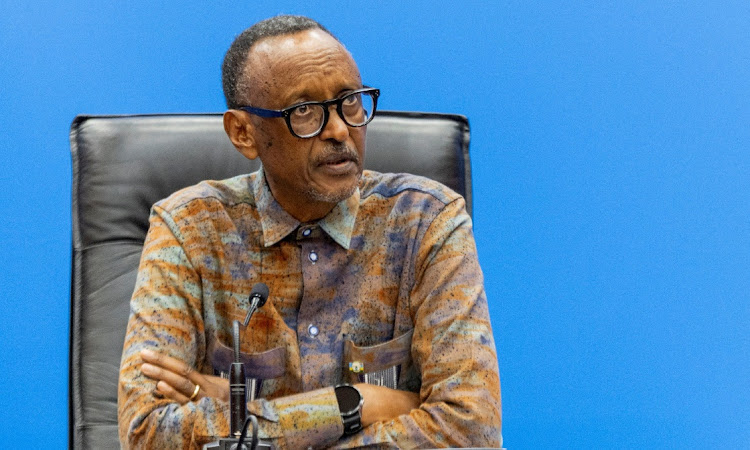
Despite mounting pressure, Kagame remains unyielding
He recalled a moment from the genocide, describing how a woman, faced with execution, was told to choose how she wanted to die. Instead, she spat in the face of her assailants.
“You can imagine how much I am going to spit in the face of anyone who tells me to choose between which death I should face,” Kagame added defiantly.
Tshisekedi seeks international support
As the crisis worsens, DRC President Félix Tshisekedi is actively seeking international intervention. On Thursday, he traveled to Germany to participate in the Munich Security Conference, where he is expected to push for greater global involvement in resolving the conflict. He is scheduled to proceed to the AU summit afterward, according to a source in the presidency.
M23 last seized Goma in 2012 but withdrew under intense international pressure, threats of aid cuts to Rwanda, and an aggressive African-led military response. However, analysts believe the current situation is different, as global leaders remain preoccupied with multiple crises, making them more reluctant to confront Rwanda.
Cheers and confusion as M23 rebels enter Bukavu city centre
A crowd of civilians celebrated the arrival of M23 rebels in Bukavu's city centre with chants and cheers.
It is the second regional capital city in the Democratic Republic of Congo that the rebels have taken since early January, when they launched a lightning-speed offensive on Goma in neighbouring North Kivu.
M23 marched south into Bukavu on Saturday, although conflicting reports initially made it difficult to confirm the extent of its advance.
They seemingly encountered little to no resistance. Congolese soldiers and allied troops from Burundi had reportedly retreated from Bukavu's military bases on Friday, the same day that M23 took control of a regional airport around 30 kilometres outside of Bukavu.
Reports emerged of sporadic gunfire and the looting of a World Food Programme depot and supermarkets in Bukavu. Despite the chaotic scenes, most streets of the city were actually deserted for hours as residents hid in their homes from looters and the rebels. Faced with the growing risk of a regional war, the international community has stepped up its calls for deescalation and a ceasefire.
Antonio Guterres, Secretary-General of the UN, reiterated during an African Union summit on Saturday to " avoid a regional escalation at all costs."
Agencies