Written By | Business Experts
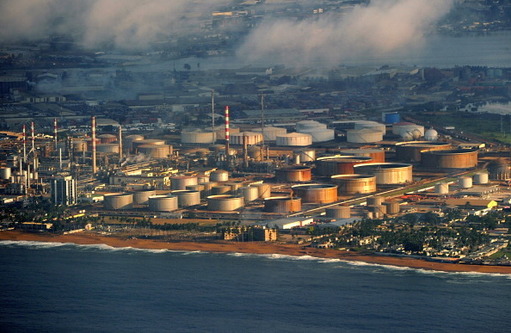
Equatrorial Guinea is running down a finite asset that once made it the richest country per head in sub-Saharan Africa, and it is doing so on a schedule that no longer bends to price.
Most African economies in difficulty are fighting a shock: a currency crisis, a debt cliff, a drought, a war. Equatorial Guinea is fighting something slower and, in policy terms, harder. It is running down a finite asset that once made it the richest country per head in sub-Saharan Africa, and it is doing so on a schedule that no longer bends to price. Oil output is falling because the fields are old, not because the market is weak. That distinction now organises almost everything in the country's macroeconomic file.
The numbers published by the African Development Bank in its June 2026 country outlook are unambiguous. The economy contracted by 6.0 per cent in 2025, after growing 0.9 per cent in 2024. The cause was a 16.8 per cent fall in oil production, attributed to temporary production shutdowns, ageing fields and the absence of new producing sites. The non-oil sector grew 2.3 per cent — respectable in isolation, but far too small a share of output to offset the hydrocarbon decline. The Bank projects further contraction of 1.7 per cent in 2026 and 1.4 per cent in 2027, with hydrocarbons down another 2.6 per cent this year even as non-extractive activity expands 2.9 per cent.
A contraction without a crisis
What is striking is how orderly the decline looks on the conventional indicators. Inflation fell to 3.1 per cent in 2025 from 3.4 per cent in 2024, and the AfDB expects it to ease further to 2.9 per cent in 2027. The IMF, reporting on the third review of its Staff-Monitored Programme, recorded consumer price inflation falling from a peak of 3.5 per cent in March 2023 to 2.6 per cent by October 2025. Public debt stood at roughly 37 per cent of GDP in 2025 on the AfDB's estimate and 39.2 per cent on the IMF's, up from 36.4 per cent in 2024 — elevated by the standards of the country's boom years, but not by any regional or global benchmark. The budget deficit widened to 2.1 per cent of GDP from 0.6 per cent, and the current account deficit to 1.9 per cent from 0.7 per cent.
These are not crisis readings. They are the readings of an economy shrinking in a controlled way while the state trims to match. The problem is that controlled shrinkage is not a strategy, and the two indicators that do look alarming sit outside the headline set. The first is the non-hydrocarbon tax take, which the AfDB puts at 3.7 per cent of GDP in 2025 — a figure so low that it effectively means the non-oil economy does not finance the state at all. The second is the banking system: non-performing loans stood at 30.0 per cent in 2025, down from 32.5 per cent in 2023 but still among the highest ratios anywhere on the continent. Roughly 80 per cent of government revenue and 95 per cent of exports come from hydrocarbons.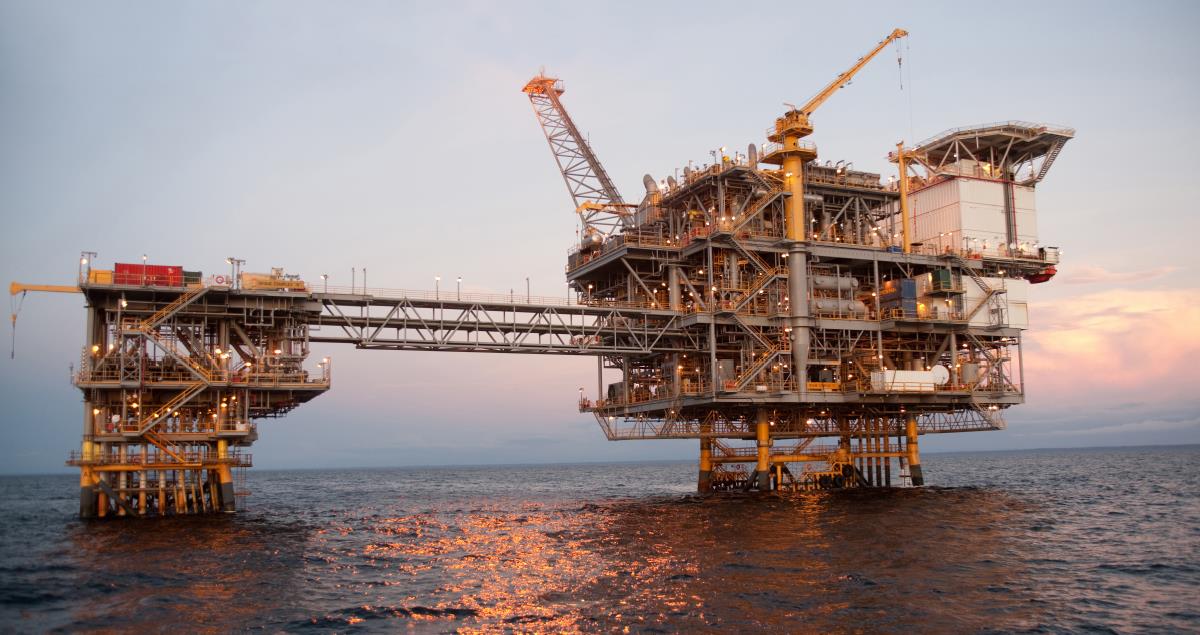
The balance sheet the World Bank asked the country to read
The most useful recent framing of Equatorial Guinea's position did not come from a growth forecast. It came from the World Bank's 2025 Equatorial Guinea Economic Update, released in Malabo in July 2025 under the title Managing Equatorial Guinea's Wealth for Sustainable Growth and Development, with country economist Djeneba Doumbia as lead author. Rather than treating the country as an income statement, the report treated it as a balance sheet, and asked what happened to the proceeds of the boom.
The answer is mixed in a specific and instructive way. Produced capital — roads, buildings, ports, power plants — increased a hundredfold between 1995 and 2020, financed by public investment after the major oil and gas discoveries. That is a real achievement, and it is visible in Malabo and Bata. But capital accumulation slowed sharply once the boom ended, and the offsetting entry is stark: non-renewable natural capital fell 30 per cent between 2005 and 2020. Hydrocarbons still accounted for over 80 per cent of revenues and nearly 46 per cent of GDP in 2024. Human capital, the third component, has improved in education and health outcomes but remains, in the Bank's assessment, out of line with what countries at Equatorial Guinea's income level typically achieve.
Read together, those three lines describe a conversion of subsoil wealth into concrete and consumption rather than into the capability that generates income after the subsoil is gone. The report also drew attention to a fourth asset most resource analyses ignore. Forest cover fell from an estimated 97 per cent of land area in 2000 to 94.5 per cent in 2020. Provisioning services — timber, fuelwood, wild resources — have grown and remain vital to rural livelihoods, but regulating services such as carbon sequestration and sediment control are under pressure. The Bank argued for compensating Congo Basin states for forest preservation and for building wood processing, ecotourism and agriculture on top of those ecosystem services, which, unlike the oil, do not deplete if managed.
The social ledger
Equatorial Guinea's social indicators have long sat oddly against its income statistics, and the 2025-26 data do nothing to resolve that. The AfDB records poverty at 50.7 per cent in 2024, with extreme poverty estimated at 8 per cent, a Human Development Index value of 0.674 in 2025, and unemployment at 8.3 per cent. The World Bank, measuring at the $6.85 2017 purchasing-power-parity line, puts 57 per cent of the population below the poverty line in the same year, and attributes the increase to rising food prices, sluggish growth and limited employment opportunities. The two institutions are using different lines rather than contradicting each other, but the range itself — roughly half to nearly three-fifths of the population — is the relevant fact for a country whose per-capita GDP fell another 4 per cent in 2025.
The policy response has been modest and, notably, targeted at household cash flow. Authorities have increased spending on health and education, and among the structural measures the IMF logged under its programme was the elimination of public school bus fees, framed explicitly as easing the burden on families. That is a small measure to cite in a macroeconomic review, which is itself informative about how little fiscal room exists for anything larger.
A programme with no money in it
Equatorial Guinea's relationship with the IMF is unusual. It has been running a Staff-Monitored Programme — a non-financing arrangement that carries no disbursement and no Executive Board endorsement, only staff monitoring — since July 2024. The Fund approved the first and second reviews together with a twelve-month extension on 25 June 2025, and the Executive Board concluded the 2025 Article IV consultation on 23 July 2025, with the press release issued on 25 July. Management approved the third review on 16 December 2025, announced on 6 February 2026.
Performance has been better than the country's reputation would suggest. The authorities met all end-June 2025 quantitative conditionality and two of the four end-September 2025 structural benchmarks, and passed a 2026 budget consistent with programme objectives, satisfying an end-December benchmark. The reform list is the standard public financial management agenda but has been unusually widely implemented: tax and anti-corruption measures, a new procurement law, audits of the largest state enterprises, rollout of the ASYCUDA customs system, progress toward a Treasury Single Account, a debt management system, and a gradual phase-out of fuel subsidies.
The candid reading is that this is a country demonstrating creditworthiness it currently has no way to use. With no Fund financing attached, no meaningful access to international capital markets, and a financial system the AfDB describes as undercapitalised and shallow — financial inclusion scored at 0.122 for 2017 to 2021 — the SMP functions as a reference, a signal to bilateral partners and potential investors that the fiscal accounts are being kept properly. The AfDB's own recommendation list reflects the constraint: partial guarantees to lower the cost of external borrowing, green and blue bonds, concessions and public-private partnerships for infrastructure, and completion of the new tax law to broaden the base.
The gas pivot
The one genuinely new element in the 2026 picture is a change in how Equatorial Guinea proposes to use what it already has. On 6 February 2026, Cameroon and Equatorial Guinea signed a unitisation agreement for the cross-border Yoyo-Yolanda gas fields, estimated to hold about 2.5 trillion cubic feet. The agreement consolidates blocks that had been managed separately on either side of the maritime boundary into a single development framework, with Chevron-affiliated Noble Energy Cameroon and Noble Energy Equatorial Guinea reaffirming support, and production directed to the Punta Europa complex on Bioko Island.
Punta Europa is the strategic asset in this story. It already hosts LNG, methanol and LPG facilities and is one of sub-Saharan Africa's most developed gas processing hubs. Its problem is feedstock: output from the legacy Alba field, which has supplied the complex for two decades, is declining. The Gas Mega Hub concept answers that by treating Punta Europa as regional infrastructure rather than national infrastructure — processing third-party volumes from Cameroon and potentially Nigeria, monetising gas that would otherwise be stranded, and avoiding the capital intensity and execution risk of a greenfield LNG build.
It is a sensible piece of industrial logic and, in the near term, the most plausible route to arresting the export decline. It is also, on the evidence of the past three decades, exactly the kind of project that does not by itself change a country's development trajectory. Unitisation is a framework, not a final investment decision; engineering, financing and development approvals still lie ahead. And a gas hub is a capital-intensive enclave that employs few people directly, taxed through a hydrocarbon regime that already delivers 80 per cent of revenue. It buys time. What it does not do is broaden the base.
What is supposed to grow instead
The official answer is Agenda 2035 and the National Economic and Social Development Plan for 2020-2035, which organise diversification around what the government calls the blue, green, yellow and digital economies, plus tourism. In 2026 the only parts of that visibly moving are fisheries and construction, which the AfDB identifies as the drivers of the projected 2.9 per cent expansion in non-extractive activity. Aquaculture infrastructure was scheduled for completion in the first quarter of 2026, and Equatorial Guinea holds the largest maritime territory of any CEMAC member — a genuine comparative advantage that has never been developed at scale.
The obstacles are well documented and structural rather than cyclical. The AfDB lists an unfavourable business climate, a perception of high country risk that raises the cost of external finance, an undercapitalised banking sector, shallow capital markets and the absence of risk-hedging instruments. None of those is fixed by a better oil price.
The regional stake
Equatorial Guinea's difficulties are not contained within its borders. As a member of the Central African Economic and Monetary Community, it shares the CFA franc and pools reserves at the Bank of Central African States. The IMF's assessment following the 2025 Article IV was explicit that a drain on regional reserves is expected to continue over the medium term as hydrocarbon production declines. A country running persistent current account deficits inside a fixed-exchange-rate union exports part of its adjustment problem to its neighbours. With the AfDB projecting the current account deficit widening to 2.4 per cent of GDP in 2026 and 3.3 per cent in 2027, and the fiscal deficit to 2.4 and then 3.4 per cent, that drain is projected to deepen before it eases.
What to watch
Three things will tell observers whether 2026 was a turning point or another year of managed decline. First, whether the Yoyo-Yolanda framework converts into a final investment decision with a construction timetable, or joins the long list of Gulf of Guinea cross-border gas projects that were signed and then waited. Second, whether the non-hydrocarbon tax ratio moves off 3.7 per cent of GDP, which is the single cleanest test of whether diversification is real or rhetorical — a diversified economy that pays no tax is not financing anything. Third, whether the 30 per cent non-performing loan ratio comes down, because until banks can lend, the fisheries, agriculture and tourism sectors named in Agenda 2035 have no capital to grow with.
The AfDB's own list of upside risks is telling: new hydrocarbon discoveries, rigorous implementation of structural reforms, and higher hydrocarbon prices driven by conflict in the Middle East. Two of the three are things that happen to Equatorial Guinea rather than things it does. The middle one is the only item on the list the country controls, and it is the one the World Bank's wealth accounting suggests matters most — because the entry that has been falling for twenty years is the one that cannot be replaced.



