Written By | International News Agencies
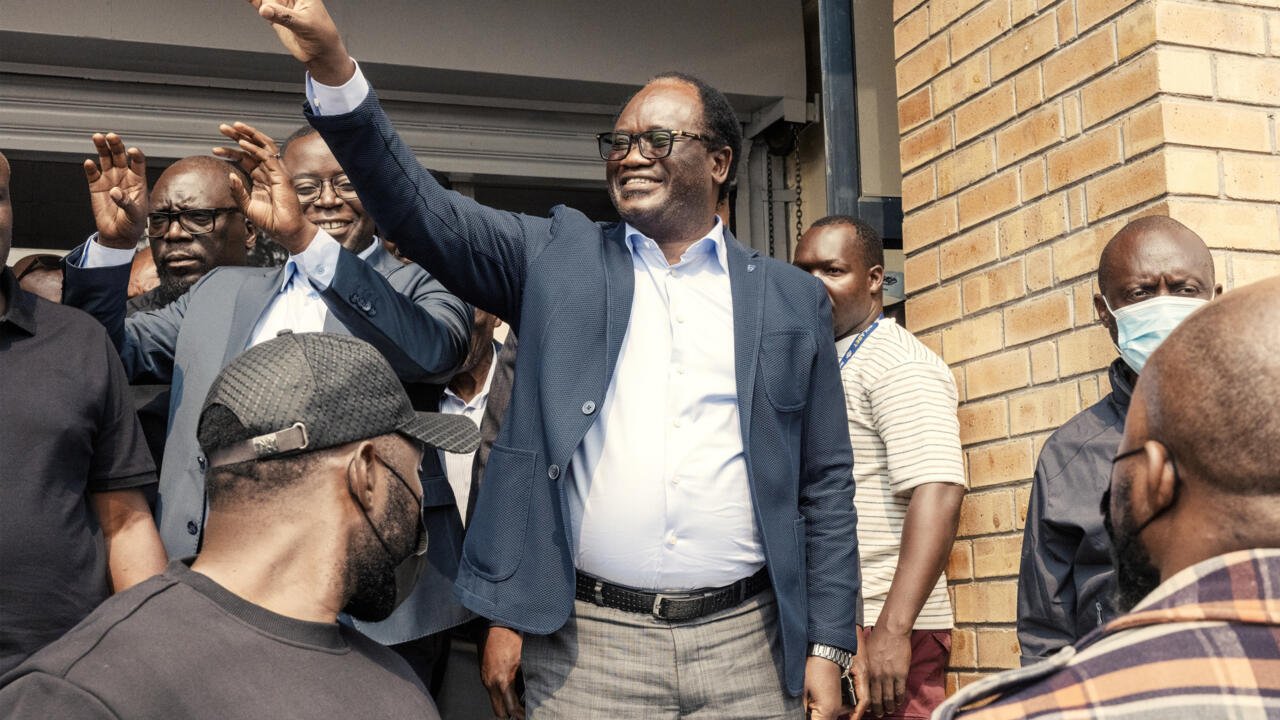
Haimbe had been one of the sharpest critics of the original terms
LUSAKA
Zambia was due on Thursday to sign a five-year, $1.5 billion health financing agreement with the United States after Washington dropped demands for broad access to Zambian medical data and, according to Zambian officials, severed the link between the aid and a minerals deal. For President Hakainde Hichilema's government, the agreement is a diplomatic win that shows a mid-sized, copper-rich African state can bargain with a major donor on its own terms.
The same week, the main opposition candidate from August's presidential election, Brian Mundubile, remains detained and unconvicted on treason-related allegations, with a High Court hearing on his detention weeks away. The two stories, one about national sovereignty and one about domestic political space, are now being read together by diplomats, donors and Zambians themselves.
The deal: what Zambia says it secured
Health Minister Roma Chilengi announced at a news conference in Lusaka on Tuesday, Oct. 6, that the government would sign the agreement on Thursday, according to Reuters. Under the terms he described, the United States would provide $1.5 billion in health funding over five years and Zambia would spend $2.1 billion. The United States is already a major funder of Zambia's HIV/AIDS, malaria and public health programs.
Chilengi said data sharing has been narrowed to the information needed to monitor and evaluate U.S.-funded programs. A proposed clause requiring Zambia to hand over patient medical specimens to the United States on request has been removed. Asked whether the money was tied to mining access, Chilengi said "there is no mention of critical minerals" in the health pact, and that he was not aware of a separate critical-minerals agreement being negotiated with the United States.
The announcement ended a months-long standoff. Reuters reported that earlier in 2026, talks stalled over Zambia's data-privacy concerns and a U.S. attempt to link the funding to access to critical minerals. Zambia, like several other African countries, had objected to an initial U.S. condition requiring broad sharing of medical data in exchange for funding.
At the time of writing, no signing had been confirmed. The Lusaka Times, citing Zambian officials, reported that the revised grant was finalized and cleared for signing. The paper's account also does not explain how the full $1.5 billion would be disbursed, and no U.S. government statement on the final terms was available.
How the breakthrough came
According to the Lusaka Times, the decisive talks took place on the sidelines of the 81st United Nations General Assembly in New York in late September. Foreign Minister Mulambo Haimbe met Chris Kulukundis, a U.S. deputy assistant secretary of state. Haimbe said afterward: "I believe that it has now been agreed that those provisions be replaced completely." On the minerals link, he said it "has also been set aside."
Haimbe had been one of the sharpest critics of the original terms. The Lusaka Times quoted him as saying the data provisions "would have violated our citizens' right to privacy" and that health aid must rest on humanitarian cooperation, not commercial extraction. Devex reported that in May, Haimbe accused Washington of explicitly tying an earlier version of the financing, which Devex described as about $1 billion, to a bilateral compact requiring mining concessions from Zambia. It also noted that in December 2025 the U.S. embassy in Lusaka confirmed that a package of support, including a five-year public health partnership, depended on "collaboration in the mining sector and clear business sector reforms."
Haimbe also used Zambia's address to the General Assembly, delivered on Hichilema's behalf under the theme "Restoring Trust, Managing Transformation," to argue that the global system should not protect the powerful at the expense of the vulnerable. He sought to balance the message. "Me being in Beijing does not mean that I'm against Washington, and vice versa," he said, according to the Lusaka Times, describing Zambia's mining ties with both Western countries and China as a matter of independence rather than hostility.
A regional split over health data
Zambia's decision lands in a continent-wide argument over how Africa should accept American health money. The Trump administration's changed approach to foreign aid is intended to move poorer countries from aid toward self-reliance, Reuters reported. Kenya, Tanzania and Uganda have signed similar U.S. health pacts, it said. Ghana and Zimbabwe rejected deals over U.S. data-sharing demands.
Zimbabwe's case shows the cost of refusal. New Zimbabwe, republished by allAfrica on Thursday, reported that Zimbabwe turned down a $367 million U.S. health proposal earlier this year, calling the terms "lopsided" and a breach of national sovereignty, particularly over sensitive health data and biological samples. According to that report, the United States was set to end all bilateral health funding to Zimbabwe by the end of September, just before malaria season. Researchers warned that, "as a consequence of full PEPFAR withdrawal and no additional government or international support," Zimbabwe could record more than 75,000 new HIV infections within a year. That figure is a projection from the researchers cited, not a measured outcome.
Zambia, in other words, appears to have secured a better deal than its neighbor by holding out longer, a point likely to be studied in Accra and Harare.
The domestic picture: an election and its aftermath
Hichilema won re-election in the Aug. 13 presidential vote with roughly 60 percent of valid votes, according to results declared on Aug. 18 by the Electoral Commission of Zambia. Mundubile, the opposition candidate, took about 38 percent, which The EastAfrican called an "unexpectedly strong showing" fueled by frustration with hardships despite an economic turnaround. Hichilema was sworn in on Sept. 1.
The dispute began on election week. The commission suspended counting on Aug. 14, citing violence against polling staff and the theft of marked ballot papers, and later lifted the suspension, according to the Lusaka Times. The European Union's election observation mission said the suspension was followed by a decline in tabulation transparency. Police arrested 11 people, including opposition figures, in a raid involving gunfire. Al Jazeera reported that former cabinet minister Mutotwe Kafwaya was shot and killed in the operation; the opposition says he was shot inside Mundubile's residence, while the government says he was fatally wounded in an exchange of fire at a property in Kabulonga, where it says restricted military equipment was recovered. The government alleges militia activity that, it says, had been under surveillance for years. Mundubile denies wrongdoing.
Under Zambia's constitution, a petition against a presidential result must be filed within seven days of the declaration, and filing automatically pauses the swearing-in. Al Jazeera reported that on Monday, Aug. 24, the last valid day to file, the entire judiciary was closed for "security reasons," blocking the opposition. The Constitutional Court said the next day that it had received no petition. Chief Justice Mumba Malila said he later received a petition from a member of the public on his private email, which he called "highly irregular" and referred to the Constitutional Court. Human Rights Watch called the closure "a blow to the administration of law, transparency, and due process in Zambia."
The detention of Mundubile
Mundubile, who Al Jazeera reported spent two weeks at an international human rights organization after a police raid on his home, surrendered to police in Lusaka on Aug. 27. He and running mate Makebi Zulu were questioned in connection with an alleged treason offense. The Tonse-Pamodzi Alliance says the two have been held at Mukobeko Maximum Security Prison, about 150 kilometers north of Lusaka, "without a day in court for 42 days," along with 16 other detainees.
Separately, the pair face a sedition case in Solwezi tied to social media posts after the election. Mundubile is accused of posting that his party led the vote according to parallel vote tabulation data and demanding that the commission resume counting; Zulu is accused of posting that Mundubile would soon address the nation. The case was adjourned to Oct. 5 and 6 for a plea, before Principal Resident Magistrate Mambwe Mukonde, the Lusaka Times reported on Oct. 4. Reports differ on whether the treason allegation has been formally charged, and none of the coverage reviewed describes a court appearance on it.
The detainees' lawyers have filed a constitutional petition against the state. A panel of three High Court judges is due to hear it from Oct. 26 to Nov. 6, the Lusaka Times reported.
Director of Public Prosecutions Gilbert Phiri has defended the pace, saying it is "appalling that suspects in Zambia are expected to appear in court a day after arrest" regardless of complexity and that due diligence must come first. State House spokesman Clayson Hamasaka said an arrest "establishes neither guilt nor persecution." The Law Association of Zambia, the Council of Churches in Zambia and Catholic bishops have all raised concerns about detention without trial, and Transparency International Zambia has said the timing of the arrests suggests political motivation, according to Lusaka Times headlines.
Analysis: two sovereignty stories
The government's argument abroad and its conduct at home pull in different directions. Haimbe's case against the U.S. terms rested on citizens' privacy and national control over resources. Critics at home, including the Socialist Party's Fred M'membe, argue the same principles of due process are being tested by the arrests. "Cannot be swept under the rug in the name of 'moving forward,'" M'membe said of post-election tensions, according to the Lusaka Times.
The government has a strong economic narrative. Inflation, reported at about 24 percent when Hichilema took office in 2021, had fallen to 6.5 percent by June 2026, and the government cites roughly $12 billion in new mining investment, according to a Rio Times account that should be treated with caution because that outlet says its pages are produced by an automated newsroom system. Zambia also restructured its external debt after its 2020 default.
Yet Al Jazeera notes that every change of president since multiparty politics returned in 1991 has come through elections, a record rights groups say is now at risk of being tarnished by the handling of this one. Western governments that praised Zambia as a democratic and reform-minded partner now face a choice between engagement with a government they need on minerals and public pressure on its treatment of the opposition. Having just conceded on health data, Washington may find it has less leverage to press the point.
What to watch next
The signing itself, and its published text, will show whether the data and minerals clauses were truly removed. The High Court hearing starting Oct. 26 will test whether judges are willing to review the detentions. Whether the treason allegations are formally charged or dropped, and whether the unresolved election petition is ever heard, will determine whether Zambia's second Hichilema term begins with a reputation for reform or for narrowing political space. Both stories will be read by the continent's other governments, and by investors with eyes on Africa's second-largest copper producer.



