A bombshell study of more than 111,000 women has revealed that popular GLP-1 weight-loss drugs are associated with a 30 percent reduction in breast cancer risk. The findings are already triggering clinical trials — and forcing a complete rethink of what these blockbuster drugs can do.
PHILADELPHIA
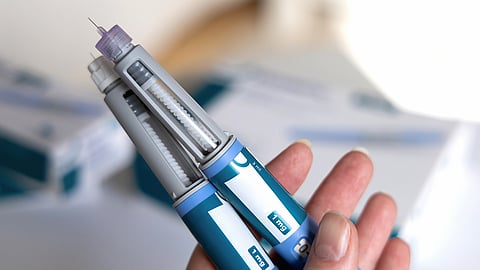
They were already transforming how America treats obesity and diabetes. They've since been linked to improvements in heart disease, kidney disease, and addiction. Now, GLP-1 receptor agonists — the class behind Ozempic, Wegovy, Mounjaro, and Zepbound — may be about to become the most powerful breast cancer prevention tools medicine has ever seen.
A landmark study unveiled at the 2026 American Society of Clinical Oncology Annual Meeting found that women taking GLP-1 medications were approximately 30 percent less likely to develop breast cancer than non-users.
The study, conducted by researchers at the University of Pennsylvania Perelman School of Medicine and published in JCO Oncology Practice on June 2, 2026, analyzed health records from 111,646 women — one of the largest real-world datasets ever assembled to examine the cancer effects of this drug class.
The Numbers That Stopped A Conference
The study was led by Dr. Elizabeth McDonald, MD, PhD, a professor of Radiology at Penn Medicine, who presented the findings at ASCO 2026 (Abstract 10506). The scope was striking: 111,646 women, ages 45 to 80, all with a BMI of 25 or above, who had undergone breast imaging within the Penn Medicine system between January 2022 and June 2025.
Of that group, 15,264 women (13.7%) had documented GLP-1 prescriptions. The remaining 96,382 (86.3%) had no exposure.
Analysis Method Risk Reduction
Full cohort comparison 35.1% lower odds
Propensity score matching 30.5% lower odds
The consistency across different analytical approaches significantly strengthened the credibility of the finding.
What Are GLP-1 Drugs And Why Are They Everywhere?
GLP-1 receptor agonists mimic a naturally occurring gut hormone that suppresses appetite and slows digestion. Originally developed for diabetes, they became global phenomena when clinical trials revealed dramatic weight loss.
- Semaglutide (Ozempic for diabetes, Wegovy for weight loss) — Novo Nordisk
- Tirzepatide (Mounjaro for diabetes, Zepbound for weight loss) — Eli Lilly
GLP-1 receptors are present in multiple organ systems beyond the gut — including the pancreas, heart, kidneys, and brain — fueling research into effects far beyond their original indications.

Why Would A Diabetes Drug Prevent Breast Cancer?
The biological mechanisms are multiple and interconnected.
Most straightforward explanation: Weight loss itself reduces breast cancer risk. Obesity is one of the most well-established modifiable risk factors for postmenopausal breast cancer.
Adipose tissue produces estrogens through peripheral aromatization. In postmenopausal women, higher body fat means higher circulating estrogen levels — and estrogen drives many common breast cancers. By reducing body fat, GLP-1 drugs may reduce this peripheral estrogen source.
Beyond estrogen, obesity is associated with chronic inflammation and elevated insulin levels — both linked to cancer development. GLP-1 drugs address all these downstream effects by tackling the root cause.
Alternative hypothesis: GLP-1 drugs may also have direct anti-cancer effects independent of weight loss. GLP-1 receptors have been identified in breast tissue, and the drugs may modulate cellular proliferation directly. This is one of the central questions the new clinical trial aims to answer.
The Cancer Burden GLP-1 Drugs Could Transform
Breast cancer is the most commonly diagnosed cancer in women worldwide. In the U.S. alone, approximately 316,000 women are diagnosed with invasive breast cancer each year, and roughly 42,000 die annually.
Current prevention strategies are limited: risk-reduction surgeries, chemoprevention drugs like tamoxifen, and lifestyle interventions.
A widely used, well-tolerated medication that could reduce breast cancer incidence by 30% in overweight and obese women — a group accounting for more than 70% of American adults — would represent a seismic shift in cancer prevention.
Expert Perspective
"While our study was observational and does not definitively confirm an association, it does add to the growing body of evidence suggesting that it's worth investigating these weight-loss drugs as potential cancer prevention tools," said Dr. Elizabeth McDonald, the study's lead author.
McDonald's cautious framing reflects the inherent limitation of observational research. Without randomization, it's impossible to fully exclude that some unmeasured characteristic of women prescribed GLP-1 drugs explains part of the risk reduction. This is precisely why a randomized controlled clinical trial has already been triggered.
Oncologists at ASCO noted that a 30% risk reduction is comparable to or greater than established chemoprevention drugs like tamoxifen — which are used only in high-risk women due to side effects. GLP-1 drugs, by contrast, are generally well-tolerated and already taken by millions.
Data presented at ASCO 2026 also indicated GLP-1 promise across multiple cancer types — colorectal, pancreatic, and endometrial — all with known links to obesity.
What This Means For You
If you are a woman currently taking a GLP-1 medication for obesity or diabetes, this study is not a reason to change your regimen — but it may offer additional reassurance about the benefits of your treatment.
If you are a woman considering a GLP-1 medication for weight management and have a family history of breast cancer, this research adds another data point for a conversation with your doctor.
Important caveats: This was an observational analysis, not a clinical trial. It cannot prove causation. A randomized controlled trial is needed before GLP-1 drugs could be formally recommended as breast cancer prevention agents. That trial is now in development.
For women not currently candidates for GLP-1 medications but concerned about breast cancer risk, established prevention strategies remain essential: healthy weight, exercise, limited alcohol, regular screening.
For healthcare providers: GLP-1 drugs are emerging as systemic health interventions with implications for oncology, cardiology, nephrology, and neurology.
The Bottom Line
The Penn Medicine study adds a stunning new dimension to the GLP-1 story. What began as a class of drugs designed to lower blood sugar has become arguably the most consequential pharmaceutical development of the early 21st century — with benefits that keep expanding beyond anything their original developers anticipated.
A 30 percent reduction in breast cancer risk, if confirmed in clinical trials, would not just be a medical finding. It would be a public health transformation.
More than 111,000 women's health records told the story this time. The randomized trial will tell us whether it's the truth. Either way, the oncology world will never look at Ozempic the same way again.
Published By | Features Editor