YAOUNDE
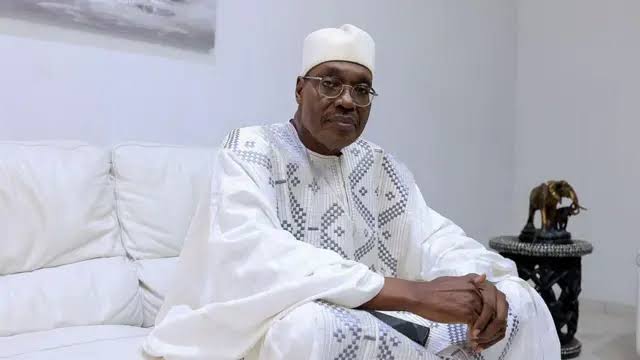
Exiled Cameroonian opposition leader Issa Tchiroma Bakary is asserting what he calls his constitutional right to preside over the country's Armed Forces Day celebrations on Aug. 14 as commander-in-chief, a direct challenge to 92-year-old President Paul Biya that threatens to turn a normally ceremonial military holiday into a flashpoint in Cameroon's worst political crisis in decades. The claim, laid out in a message Tchiroma posted to his official Facebook account and addressed to the National Gendarmerie, the Army, the Air Force, the Navy and the Fire Brigade Corps, rests on his continued insistence that he — not Biya — won the Oct. 12, 2025, presidential election. Tchiroma is currently living in what he describes as "forced exile" in The Gambia, and his appeal culminates in a direct plea to Cameroon's security services: "I solemnly ask you to come and take me home from The Gambia where I find myself in constrained and forced exile."
The dispute traces back to results announced after the October election, in which Cameroon's electoral authorities declared Biya the winner with 53.7% of the vote to Tchiroma's 35.2%, securing an eighth consecutive term for a leader who has governed since 1982 and is, at 92, the world's oldest serving head of state. Tchiroma rejected the outcome from the outset, declaring himself "president-elect" before official results were even announced, and has maintained that position for nearly ten months, backing it with claims — unsupported by Cameroon's official results — that he received overwhelming support from the electorate, including from within the defense and security forces themselves.
A Contested Election and a Deadly Aftermath
The scale of the crackdown that followed the October election has become one of the most closely documented instances of state violence against protesters in recent Central African history. According to data shared with Reuters by two U.N. sources, Cameroonian security forces killed 48 civilians in the post-election unrest, the majority struck by live ammunition, with others dying from injuries sustained in beatings with batons and sticks. Biya's government has not released its own death toll from the crackdown, and a government spokesperson did not respond to requests for comment on the U.N. figures, according to reporting on the U.N. data. The violence broke out in multiple locations as early returns signaled that Biya — in power for 43 years — would secure an eighth term despite widespread public fatigue with his rule and mounting defections from within his own governing coalition in the run-up to the vote.
Tchiroma's subsequent movements have themselves become a diplomatic subplot to the crisis. Cameroonian authorities sought his return following the disputed election, and for a period he was reported to be under the protection of Nigerian security operatives in Yola, the capital of Adamawa State, after Nigeria declined a request from Cameroonian authorities to hand him over. He has since relocated to The Gambia, from where he has continued to challenge Biya's government both politically and legally — filing a complaint in the Paris Judicial Court against Biya and 20 other senior Cameroonian officials over what he describes as the "repression of demonstrators" during and after the October election.
The Aug. 14 Claim
In his most pointed escalation to date, Tchiroma used his July message to Cameroon's security services to argue that, as the legitimate winner of the 2025 election, it is his constitutional duty to preside over this year's Armed Forces Day celebrations on Aug. 14 in the capacity of commander-in-chief — a role that, under Cameroon's actual governing institutions, unambiguously belongs to Biya as sitting president. Addressing rank-and-file soldiers directly, Tchiroma paid tribute to the military's role in defending the country's territorial integrity and maintaining peace, and pledged that, if he assumed office, he would modernize the armed forces and improve conditions for personnel. "Under my leadership, I will ensure a more professional, stronger and more modern army with a status that matches your role and the risks and threats we all face," he wrote. He went on to urge troops to remain faithful to their oaths to the Cameroonian people rather than the current government, telling them: "You must take your responsibilities and not allow yourselves to be drawn into this calamitous path with no future."
Tchiroma also accused the Biya administration of refusing to recognize the will of the electorate and alleged that ordinary Cameroonians face continued persecution and intimidation at the hands of what he called "misguided elements" within the security services — an allegation Cameroonian authorities have not publicly addressed.
There is no indication that Cameroon's military leadership, which remains under Biya's nominal command, has responded favorably to Tchiroma's appeal, and no sign that any organized faction within the armed forces intends to facilitate his return. Still, the symbolism of the date he has chosen to contest is deliberate: Armed Forces Day is one of the most significant events on Cameroon's national calendar, traditionally featuring a parade presided over by the president as commander-in-chief, and Tchiroma's decision to publicly claim that role — however unrealistic in practice — is calculated to keep pressure on the legitimacy of Biya's government at a moment of maximum symbolic visibility.
A Presidency Under Strain
The standoff is unfolding against the backdrop of persistent questions about Biya's own capacity to govern. Cameroonian media have reported periodic reshuffles within the presidential palace establishment at Etoudi, with some outlets suggesting his prolonged absences from public view have stoked unease even among his own inner circle — concerns that predate the election crisis but have taken on new urgency given his age and the seriousness of the current standoff. Biya's government, which has led Cameroon continuously since well before most of the country's population was born, has offered no public roadmap for succession, and the opposition's fragmentation — Tchiroma shares the opposition landscape with other veteran figures such as Maurice Kamto and Akere Muna, who have struggled to unite behind a single challenger in successive elections — has repeatedly limited its ability to convert public frustration into a coordinated political threat.
Despite that fragmentation, Tchiroma's continued defiance from exile, sustained nearly ten months after the election and backed by an ongoing international legal complaint, indicates he has calculated that his claim to victory retains enough domestic resonance to be worth maintaining indefinitely, even without any near-term prospect of actually assuming office.

Why It Matters Now
Cameroon's crisis carries significance well beyond its borders. The country anchors Central Africa both economically and militarily, and instability there — layered atop the long-running Anglophone separatist conflict in its northwest and southwest regions and the continuing threat from Boko Haram-linked militants in its far north — would have ripple effects across a region already strained by conflicts in Chad, the Central African Republic and, more broadly, the Sahel. A politically motivated crackdown or mass mobilization around the Aug. 14 anniversary could reignite the kind of violence seen after the October election, particularly if Tchiroma's supporters interpret his claim as a call to demonstrate, even though he has offered no explicit instruction to do so beyond his appeal to the security services.
The core uncertainty going into Aug. 14 is less about whether Tchiroma will physically return to preside over the parade — there is no credible pathway for that to happen against the wishes of Cameroon's military command — and more about how the government responds to the symbolic challenge, and whether it becomes a rallying point for renewed protests nearly a year after the deadliest crackdown of Biya's long rule.
What to Watch
Analysts and diplomats will be watching for several signals in the days around Aug. 14: whether Cameroonian security forces move preemptively against Tchiroma supporters or opposition figures inside the country in the days before the holiday; whether Biya's government issues any formal response to Tchiroma's claims, which it has so far largely ignored publicly; whether the Paris legal complaint against Biya and his officials gains any traction in French courts; and whether other opposition figures inside Cameroon choose to publicly align with or distance themselves from Tchiroma's Armed Forces Day claim. A U.S.-Cameroon economic dialogue is separately scheduled for Aug. 27, which could offer an early indication of how Washington intends to balance continued engagement with Biya's government against the unresolved questions surrounding last October's election and its violent aftermath.
Published By | News Editor