Written By | Business Experts
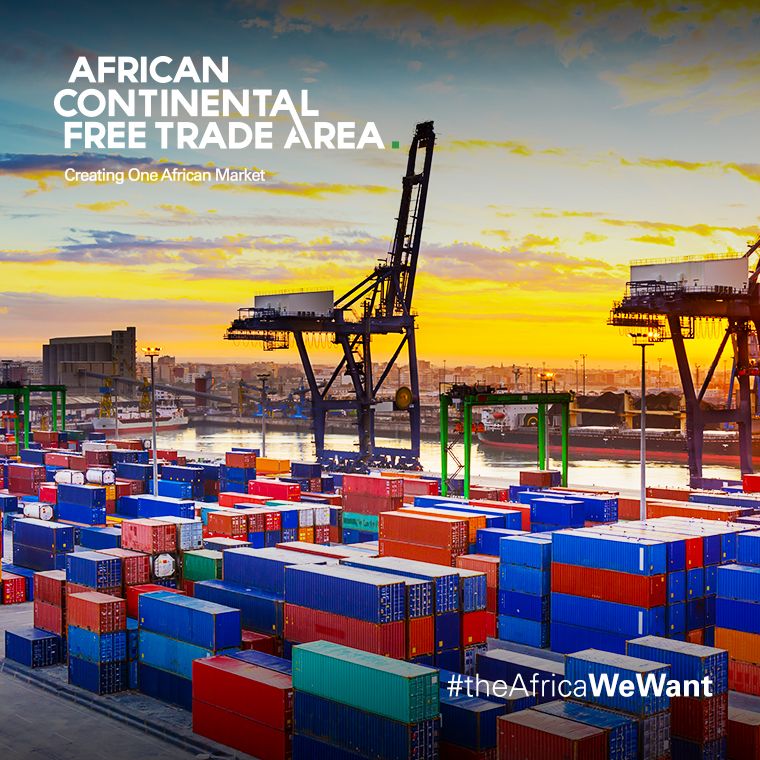
The AfCFTA Secretariat says the agreement covers about 1.4 billion people and a combined GDP of nearly US$3.4 trillion
Economic & Social Transformation
On paper, the African Continental Free Trade Area (AfCFTA) is close to complete. Nearly every African Union member has ratified it, the tariff offers are almost all in, and in early 2026 negotiators finally closed the last disputed rules of origin on cars and clothing. In practice, the continent still trades very little with itself. Afreximbank's African Trade Report 2026 puts intra-African trade at about US$213.8 billion in 2025, roughly 15% of Africa's total trade. That makes Africa the least integrated major trading region in the world, more than five years after AfCFTA trading formally began on 1 January 2021.
This article looks at the distance between the legal agreement and actual shipments. That distance is now the main question for Africa's trade policy, and it has become more urgent as the main US preference scheme approaches another expiry date on 31 December 2026.
The legal architecture is nearly finished
The AfCFTA Secretariat says the agreement covers about 1.4 billion people and a combined GDP of nearly US$3.4 trillion. By number of countries, that makes it the world's largest free trade area. Ratification is almost done. In August 2026, Secretary-General Wamkele Mene spent three days in Mogadishu, and the Secretariat said Somalia would deposit its instrument of ratification in September and become the 50th State Party. The tralac trade law centre's end-September tracker lists 50 deposited instruments. The remaining gaps are a few states affected by conflict or politics, which tralac names as Benin, Libya, South Sudan and Sudan, plus Eritrea's long-standing absence.
The tariff work is also largely done. Fifty tariff offers have been submitted, either by individual states or jointly through the customs unions of CEMAC, the EAC, ECOWAS and SACU. The Secretariat has verified 48 of them. These Provisional Schedules of Tariff Concessions cover the 90% of tariff lines in 'Category A', the goods to be liberalised first, and are published in the AfCFTA e-Tariff Book. South Africa's Department of Trade, Industry and Competition said in its March 2026 AfCFTA newsletter that the outstanding rules of origin for the automotive sector and for clothing and textiles had been adopted, so 100% of rules of origin are now agreed. These two sectors are the most contested and the most important for jobs. For years they had kept the most labour-intensive manufactured goods out of the preferential regime.
But implementation is a half-continent affair
Countries that have ratified and countries that are actually trading under AfCFTA terms are two different groups. According to the same dtic newsletter, about 25 countries had started active implementation by March 2026. That means they had gazetted tariff schedules, configured customs systems and could issue AfCFTA certificates of origin. Somalia's own path shows how many steps remain after ratification. Mene listed four: deposit the ratification instrument, domesticate the e-Tariff Book, have customs configure the preferential tariffs, and finish the EAC's outstanding tariff and services commitments. Somalia's commerce minister, Gamal Mohamed Hassan, noted that five East African countries had already submitted schedules and said he wanted Somalia to be the sixth. Ratification starts the work rather than finishing it.
The Guided Trade Initiative (GTI) started in October 2022 with eight countries: Cameroon, Egypt, Ghana, Kenya, Mauritius, Rwanda, Tanzania and Tunisia. It was meant to prove that AfCFTA paperwork could move real cargo. It has done that, with shipments of ceramic tiles, batteries, tea, coffee, processed meat, starch, sugar, pasta, dried fruit and sisal fibre. Algeria, Nigeria and Ethiopia have since joined. Even supportive analysts admit, however, that GTI volumes are small relative to total African trade. Its importance has been as a demonstration rather than as a commercial force.
What the 2025 trade numbers actually say
Afreximbank's headline figure is encouraging. Intra-African trade rose 5.47% in 2025, from US$202.7 billion to US$213.8 billion, an increase of about US$11.1 billion. That was slightly slower than the 6.1% growth in Africa's total merchandise trade, which reached about US$1.5 trillion, and came as real GDP growth picked up from 3.4% to 4.5%, according to the bank. Three details in the report complicate the picture.
The bank says the growth came mainly from Ethiopia, Uganda, the Democratic Republic of Congo and Zambia. These are largely landlocked or corridor economies, where regional trade is a necessity rather than a choice made because of AfCFTA. Regional blocs have also had a rough year. As this series reported on 10 October, East African Community data showed intra-EAC trade falling 10.4% in the first quarter of 2026. In March 2026 Afreximbank projected that intra-African trade could reach US$230 billion in 2026, about 10% growth, and rise to 16% of total trade. It called that forecast optimistic, and it now looks ambitious given the first-half data.
The plumbing: payments and trade finance
The most concrete recent progress is in payments, not tariffs. A trader in Accra paying a supplier in Nairobi has usually had to convert cedis to dollars and dollars to shillings through correspondent banks outside Africa. That route is slow and expensive and uses up scarce hard currency. The Pan-African Payment and Settlement System (PAPSS), built by Afreximbank to settle payments in local currencies, has expanded quickly. At a briefing in Lagos in September 2026, PAPSS chief executive Mike Ogbalu III said the system now operates in more than 30 countries across all five regions. It connects 24 national and regional central banks, more than 200 commercial banks and payment providers, and 16 national switches. About ten countries joined in 2026.
PAPSS reports that transaction volumes rose about 1,000% and values about 120% compared with the same period in 2025, with Nigeria contributing gains of roughly 1,100% and 125%. It also claims cost savings of 92–95% per transaction and up to an 80% reduction in foreign-exchange requirements. These are the operator's own figures and have not been independently audited. Volume growing much faster than value suggests many small payments rather than large B2B settlements, which fits PAPSS's own statement that its next phase, from 2027, will focus on 'activating' the network. A planned link to Egypt's Instapay system and the PAPSS COWRY conference in Addis Ababa on 26–27 November 2026 are the next milestones.
Trade finance is a harder problem. Afreximbank estimates Africa's trade-finance gap at about US$100 billion a year. Small firms, which the AfCFTA is supposed to help, face this gap most sharply. A certificate of origin does not help an exporter who cannot get a letter of credit.
The social dimension: who actually gains?
The best-known estimate of AfCFTA's potential comes from the World Bank's 2020 study, The African Continental Free Trade Area: Economic and Distributional Effects. It modelled real income gains of about 7%, roughly US$450 billion, by 2035 under full implementation. It projected that about 30 million people would leave extreme poverty and that intra-continental exports would rise by more than 80%, with manufacturing gaining most. The key words are 'full implementation'. Most of those gains came from trade facilitation, meaning faster borders, fewer documents and lower non-tariff costs, rather than from tariff cuts. That is exactly the area where progress has been slowest, because it depends on customs agencies, standards bodies and border officials in 54 countries changing how they work.
The distribution of gains also matters. Much cross-border trade in Africa is small-scale and informal, and women make up a large share of informal traders. The AfCFTA Protocol on Women and Youth in Trade, the Secretariat's SME Booster Initiative (which reached Botswana in mid-2026) and the AfCFTA Adjustment Fund for economies facing tariff-revenue losses are the main tools for spreading the benefits. Their reach is still small compared with the number of informal traders. Businesses in Mogadishu summed up the request in a sentence Mene's team will hear in every capital: 'Somali businesses are ready. What they need is certainty, affordable finance and functioning infrastructure.'
Why the AGOA clock makes 2027 a test year
External pressure is building. The US African Growth and Opportunity Act lapsed on 30 September 2025. It was renewed retroactively on 3 February 2026, but only until 31 December 2026, the shortest authorisation in its history. US Trade Representative Jamieson Greer has said he wants to 'modernise' it in line with America First trade policy. South Africa still faces a 30% US tariff, which removes much of AGOA's value for its exporters. AGOA exports were already declining, falling about 13% to roughly US$8 billion in 2024. Apparel exporters in Kenya, Lesotho and Madagascar, many of whom import fabric from Asia, cannot plan production beyond the next eleven weeks. For them, the AfCFTA's newly agreed textile rules of origin matter for practical reasons: the African market is the backup if US access is lost.
What to watch
The AfCFTA has achieved something rare in international economic diplomacy: almost every state on a continent has signed up to one set of rules. Using those rules is the harder task. It depends on customs clearance times, payment systems and access to finance, and on whether a garment factory in Lesotho or a refinery in Lagos finds an African buyer easier to reach than a distant one. The 2025 data shows some movement. It does not yet show a transformation.



