Written By | International News Agencies
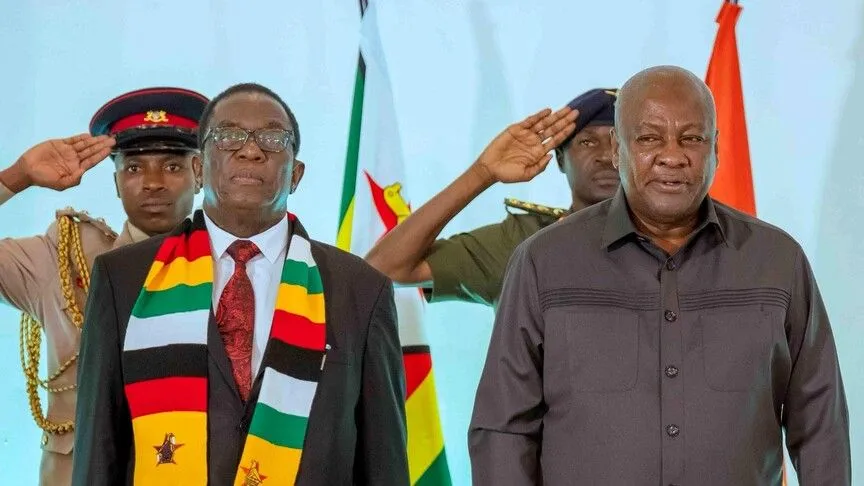
Mnangagwa, who is 84 and serves as President and First Secretary of ZANU-PF, closed the gathering by calling it historic.
HARARE
Three months after President Emmerson Mnangagwa signed a constitutional amendment extending his rule to 2030, Zimbabwe's ruling ZANU-PF has finished the job inside the party itself. At its annual conference in Chinhoyi, which closed on Saturday, the party deferred its elective congress from 2027 to 2029, keeping Mnangagwa at its helm through 2030. Its legal secretary also signalled that members of Parliament, including senior officials and deputy ministers, who failed to turn up for the votes on the amendment will face discipline.
The Lede: A Party Aligns Itself With the Amendment
The conference, the 23rd of its kind, ran under the theme "From Resolutions to Results: Consolidating Economic Development and Deepening Empowerment Towards Vision 2030," according to NewZimbabwe. Delegates resolved to bring the party's own rules into line with the Constitution of Zimbabwe Amendment (No. 3) Act, known as CAA3. The practical effect is that ZANU-PF will not hold the elective congress that would normally decide who leads it into the next election cycle until 2029, and Mnangagwa remains party leader until 2030.
Mnangagwa, who is 84 and serves as President and First Secretary of ZANU-PF, closed the gathering by calling it historic. "We are a juggernaut that can never be stopped," NewZimbabwe quoted him as saying, and he described the party as "supreme." He added that the government "is not slowing down."
The disciplinary threat is the less expected development. Reporting by the Daily News, dated Oct. 19, said ZANU-PF Legal Secretary Ziyambi Ziyambi told the Chinhoyi conference that the party would act against lawmakers who missed key parliamentary votes on CAA3. AllAfrica's Oct. 20 roundup said the MPs concerned include senior officials and deputy ministers. The Daily News article was partly paywalled, so the precise sanctions and the number of absent lawmakers were not available in the material reviewed for this story.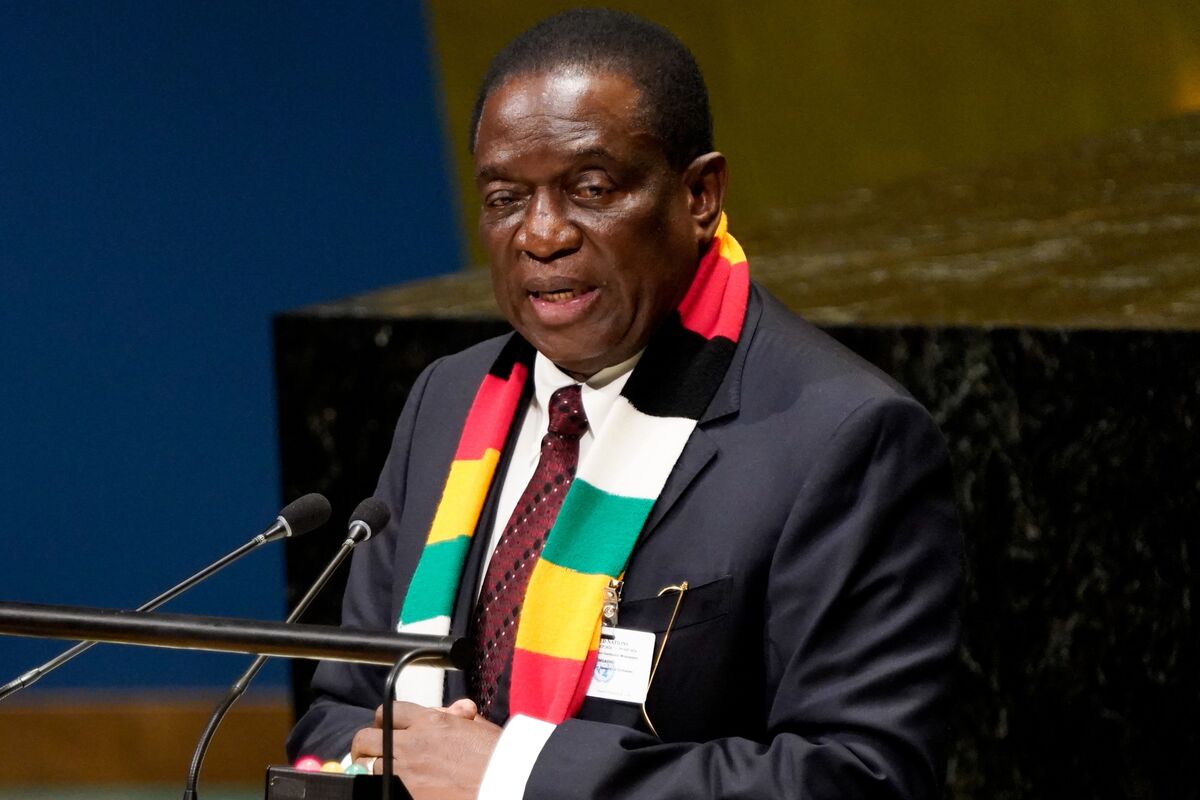
Background: How the Amendment Came to Pass
The amendment is the product of a process that began early this year. According to the timeline compiled on Wikipedia, Cabinet approved the draft on Feb. 10, 2026, and the government gazetted it on Feb. 16, which started the 90-day consultation period required under Section 328(3) of the 2013 Constitution. Public hearings ran from about March 30 to April 2, and written submissions closed on May 17. The government says it received more than 500,000 submissions and claims most supported the bill. Critics said the hearings were too short and poorly run, and the same account records that human rights lawyer Douglas Coltart was assaulted in Harare.
The bill passed the National Assembly on June 18 by 216 votes to 42, according to Eastleigh Voice, comfortably clearing the two-thirds threshold. The Senate followed on June 24 with a vote of 75 to 4, and one senator is recorded as abstaining in the Wikipedia account. That article notes that its own infobox gives a different Assembly tally, so the figures should be read with some caution. Mnangagwa signed the act on July 7, Daily Sabah reported, and government spokesman Nick Mangwana confirmed it.
The law makes several far-reaching changes. It lengthens the terms of the president, Parliament and local authorities from five years to seven. Transitional provisions apply the new term to the sitting president and legislature, so the next general election moves from 2028 to 2030. The president will no longer be chosen by popular vote but by a joint sitting of the Senate and National Assembly. The Senate grows from 80 to 90 members, with the president appointing the additional 10. Voter registration shifts from the Zimbabwe Electoral Commission to the Registrar-General, a new commission takes over the delimitation of constituencies, and public interviews for judicial appointments are scrapped.
Mnangagwa came to power in November 2017 after the military removed Robert Mugabe. He won disputed elections in 2018 and 2023, both of which opposition parties challenged. The 2013 Constitution limits a president to two five-year terms, and 2028 was to be the end of his second.
The Constitutional Dispute
At the heart of the argument is whether the amendment needed a referendum. Section 328 of the Constitution requires one for changes to term limits, and it contains a provision, described by critics as a "no-benefit" clause, that is meant to stop a sitting president from gaining from an extension of his own tenure. The government maintains, citing advice from the Attorney-General, that no referendum is required. Opposition parties, civil society groups and some constitutional lawyers say the opposite.
The Law Society of Zimbabwe took a more nuanced position, according to the Wikipedia summary: it said that extending terms for incumbents does require a referendum, while holding that moving to parliamentary election of the president was not substantively unconstitutional, though it dilutes direct participation.
The courts have not settled the matter. On June 17, the Constitutional Court struck off two challenges, brought by Lovemore Madhuku and Prince Dubeko Sibanda, without ruling on the merits, saying the issues belonged first in the High Court. Opposition and civil society groups have called the changes a "constitutional coup." Mangwana rejected that label and called the process a "legitimate legislative exercise." The government describes the package as "constructive reforms" that support stability and what it calls Vision 2030, and says they will reduce "election-related toxicity."
Among the critics are figures from the Citizens Coalition for Change, including Tendai Biti and Jameson Timba, and Douglas Mwonzora of the MDC Alliance, who argue that the changes centralise power and remove the voter's direct role in choosing the head of state. One analyst, D. Tinashé Hofisi, called the bill "executive consolidation by constitutional disruption."
The Fault Line Inside ZANU-PF
What distinguishes today's story from the passage of the law in June and July is that the pressure is now on the ruling party's own members. ZANU-PF holds a commanding parliamentary majority, so the amendment never depended on opposition votes. The party's problem, as the Ziyambi remarks suggest, is that some of its own lawmakers did not show up when it counted.
Their absence matters for two reasons. The first is optics: a constitutional change that the party presents as the settled will of its membership looks less convincing if senior officials stayed away from the chamber. The second is that the amendment sits against a backdrop of friction at the top. AllAfrica's July 7 report said Mnangagwa told critics "whoever wins, wins," amid rising tension with his deputy, Constantino Chiwenga, and said retired army generals, senior civil servants and civil society figures argued that the changes contravene liberation-war understandings. Chiwenga, a former army commander who helped lead the 2017 operation that removed Mugabe, is widely seen as a rival for the succession. The sources reviewed for this story do not document any statement by Chiwenga on the disciplinary move, and it would be speculation to link specific absent MPs to his camp.
A threat of party sanctions, combined with the postponement of the congress where leadership challenges would normally be mounted, closes off formal routes for dissent. The deferral of the elective congress is therefore as important politically as the constitutional text itself: it removes the one party forum in which Mnangagwa's succession could have been contested before 2029.
Analysis: What the Two Moves Add Up To
Taken together, the constitutional change and the party resolutions form a coordinated structure. The state-level amendment fixes the calendar for national elections and shifts the choice of president from the electorate to Parliament, where ZANU-PF dominates. The party-level resolution fixes the calendar for internal succession. Between them, the two decisions limit when, and by whom, Mnangagwa can be challenged.
Supporters will see this as continuity. The government argues the extension provides the "policy continuity and political stability" needed to complete long-term economic programmes, according to the Daily Sabah account. Zimbabwe has struggled with currency instability, high unemployment and inflation, and officials contend that an electoral contest in 2028 would distract from delivery.
Critics see a template that is increasingly familiar on the continent, in which governing parties use legislative supermajorities to rewrite the rules of succession. Zimbabwe fits a pattern of an incumbent using formal legal channels rather than force to change the rules.
The legal risk is not entirely behind the government. Because the Constitutional Court did not rule on the merits in June, a properly framed challenge could still reach the courts, although critics argue the amendment weakens judicial independence by scrapping public interviews for judicial appointments. A ruling against the government would be a major surprise.
What to Watch
Several developments will show how durable the arrangement is. The first is the content and scale of any disciplinary action. If the party names and sanctions senior figures, it would confirm that the absences were more than administrative lapses and could provoke open dissent. If it limits itself to warnings, the signal is of a party that is more anxious than confident.
The second is the opposition's response. It has promised court action, but the sources reviewed do not report any large protest in recent weeks. The third is the economy. A government that has staked its legitimacy on stability and "empowerment" will face pressure if inflation and currency volatility return.
Finally, the succession question remains open rather than closed. The 2029 congress and the 2030 election now frame the contest, and in a party where the military has historically been the final arbiter, an extended timetable gives every faction more time to organise. For now, the Chinhoyi conference has shown a leadership determined to project unity. The disciplinary threat suggests that unity is something the party feels it has to enforce.



