Written By | Health News Agencies

For 40 years, scientists called the KRAS gene mutation behind most pancreatic cancers impossible to target. This week, the FDA approved the pill that proves them wrong
SCIENCE & HEALTH
Pancreatic cancer has one of the most brutal reputations in all of medicine. It's the disease that took Alex Trebek, Ruth Bader Ginsburg, Patrick Swayze, and Steve Jobs. It's usually caught late, spreads fast, and has a five-year survival rate that, for decades, barely cracked double digits. Oncologists have a grim nickname for it: "the silent killer," because by the time symptoms show up, the cancer has often already spread beyond the point where surgery can help.
But this week, for the first time in a generation, doctors treating this disease got something they've never had before: a pill that directly attacks the genetic engine driving the cancer in nine out of ten patients — and it just got the U.S. Food and Drug Administration's official green light.
On August 26, 2026, the FDA approved daraxonrasib, sold under the brand name RASONQUE, made by California biotech Revolution Medicines. It's a once-daily tablet for adults with metastatic pancreatic adenocarcinoma — the most common and most aggressive form of pancreatic cancer — who've already gone through at least one round of chemotherapy or who aren't strong enough candidates for standard multi-drug chemo regimens. The FDA is calling it the first-in-class targeted therapy for this specific cancer, and doctors who've watched patients suffer through it for their entire careers are using words like "landmark" and "unprecedented" to describe what it can do.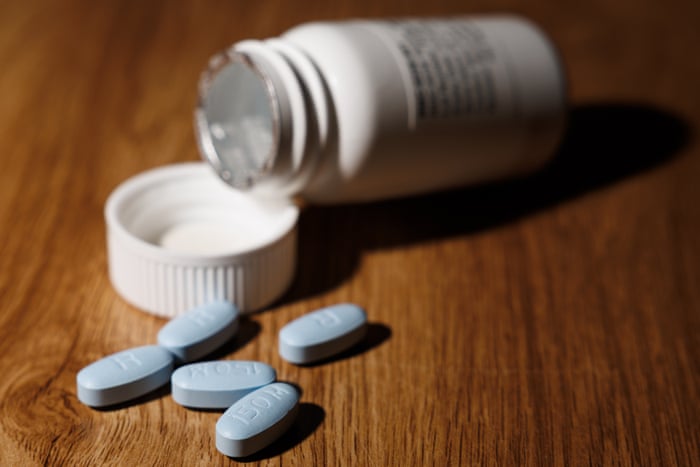
The gene doctors said couldn't be touched
To understand why this is such a big deal, you have to understand KRAS — a gene that, when mutated, acts like a gas pedal stuck to the floor, telling cancer cells to grow and divide uncontrollably. KRAS mutations drive more than 90 percent of pancreatic cancer cases, making it arguably the single most important genetic culprit in the entire disease.
There's just one problem: for roughly 40 years, KRAS was considered "undruggable." Its smooth, pocket-less protein structure gave chemists nothing to grab onto — no obvious surface for a drug molecule to bind to and switch it off, the way many other cancer drugs work. Generations of pharmaceutical researchers tried and failed to crack it. It became something of a graveyard for promising drug-discovery careers.
Daraxonrasib is the drug that finally cracked it — not by targeting just one mutated version of KRAS, but by going after the RAS GTPase family more broadly, hitting multiple mutant forms of the protein at once. That's a crucial distinction, because pancreatic tumors are notoriously good at evolving around narrow, single-target drugs. A broad-spectrum RAS inhibitor is much harder for the cancer to outsmart.
The trial that made oncologists sit up
The approval is based on the Phase 3 RASolute 302 trial, a rigorous head-to-head study that randomized 500 patients with previously treated metastatic pancreatic cancer into two groups: one received daraxonrasib, the other received the physician's choice of standard chemotherapy.
The results, first unveiled in a plenary session at the 2026 American Society of Clinical Oncology (ASCO) Annual Meeting in Chicago this past May and June, stunned the room. Patients on daraxonrasib had a median overall survival of 13.2 months. Patients on standard chemo: just 6.7 months. That's essentially a doubling of survival time — a jaw-dropping result in a cancer type where clinical trials typically fight over survival gains measured in mere weeks. The statistical strength of the result was described as a hazard ratio of 0.40 with a p-value below 0.0001, which in plain English means researchers can be extremely confident this wasn't a fluke.
Dr. Brian Wolpin, a leading pancreatic cancer researcher at Dana-Farber Cancer Institute involved in evaluating the drug, put it in stark terms: "This is the first RAS inhibitor evaluated in a large, randomized trial for patients with pancreatic cancer, and it demonstrates how important an impact these novel medicines are likely to have on the treatment of the disease. It is exciting to see that we may soon be able to help patients with metastatic pancreatic cancer in ways we haven't been able to before, improving both survival and quality of life."
That last phrase — quality of life — matters just as much as the survival numbers to people actually living through this disease. Traditional chemotherapy for pancreatic cancer tends to come with brutal side effects: crushing fatigue, anemia, dangerously low white blood cell counts, and painful nerve damage. Daraxonrasib's side-effect profile looks different. The most common issues reported in trials were rash, diarrhea, mouth sores (stomatitis), nausea, fatigue, vomiting, abdominal pain, swelling, appetite loss, and bleeding. Skin-related side effects were common — occurring in 86 percent of patients, with about 10 percent experiencing severe (Grade 3) reactions — but importantly, far fewer patients had to stop treatment altogether because of side effects compared with those on chemotherapy. And because it's a pill you take at home rather than an IV infusion you sit through at an infusion center for hours at a time, it fundamentally changes what daily life looks like for patients trying to hang onto some normalcy while fighting cancer.
What it costs — and who pays
Revolution Medicines set the wholesale acquisition cost of RASONQUE at $39,800 for a 30-day supply at the recommended dose. That's a steep sticker price, though it's roughly in line with other modern targeted oncology drugs, and it doesn't reflect what any individual patient will actually pay out of pocket. The company has said it's setting up patient assistance programs, and industry analysts note that some privately insured patients could end up paying close to nothing in co-pays, while others — particularly the uninsured or underinsured — could face devastating costs without financial assistance. Advocacy groups are already pushing for broad insurance coverage now that FDA approval has been secured, since coverage decisions by Medicare and private insurers typically follow close behind an approval like this one.
Expert perspective
The Pancreatic Cancer Action Network — the leading patient advocacy group for this disease — didn't hold back its enthusiasm. Dr. Anna Berkenblit, PanCAN's chief scientific and medical officer, said: "I believe this drug will transform how pancreatic cancer is treated, giving people the opportunity for more time with loved ones, the possibility of a better quality of life and optimism that continued research may lead to even greater advances."
That phrase "continued research" isn't just hopeful filler — it's a preview of what's coming next. Revolution Medicines has already begun the RASolute 304 trial, testing whether daraxonrasib can help patients even earlier in their disease course: those with resectable (surgically removable) pancreatic cancer, given after adjuvant chemotherapy, to try to prevent recurrence in the first place. If that trial succeeds, the drug's impact could extend far beyond the metastatic setting it's approved for today, potentially helping patients before their cancer ever reaches the terminal stage that made this disease so feared in the first place.
What this means for you
If you or someone you love has been diagnosed with metastatic pancreatic adenocarcinoma and has already been through one round of chemotherapy, this is a conversation worth having with your oncologist immediately. Ask specifically whether your tumor has been tested for KRAS mutation status, and whether you're a candidate for daraxonrasib. Because the drug targets multiple mutant forms of RAS rather than just one specific variant, a large majority of pancreatic cancer patients — remember, more than 90 percent carry some form of KRAS mutation — could potentially be eligible.
If cost is a concern, ask your care team or the drugmaker directly about patient assistance programs; these typically launch alongside a major approval like this one specifically to help bridge the gap before insurance coverage fully catches up.
And if you don't have a personal connection to this disease, there's still a reason to pay attention: pancreatic cancer has functioned for decades as a proving ground for how badly cancer research needed a breakthrough against "undruggable" targets. KRAS mutations don't just drive pancreatic cancer — they're also implicated in a significant share of lung cancers and colorectal cancers. A drug platform that can successfully hit multiple mutant forms of RAS at once could eventually ripple out into treatment options for some of the most common cancers in the world, not just the rarest and deadliest one.
The bottom line
For four decades, KRAS sat at the top of oncology's most-wanted list as the mutation nobody could touch. This week, that changed. RASONQUE won't cure metastatic pancreatic cancer, and it isn't a miracle — patients on the drug still face a life-limiting diagnosis, and the side effects, while more tolerable than chemo, are real. But a doubling of median survival time, in a disease this ruthless, is the kind of number that makes hardened oncologists use words like "unprecedented" without exaggerating. For a cancer that has stolen away household names and ordinary people alike with terrifying speed, that's not just a statistic. For thousands of families, it's more time.



