Written By | Entertainment Desk
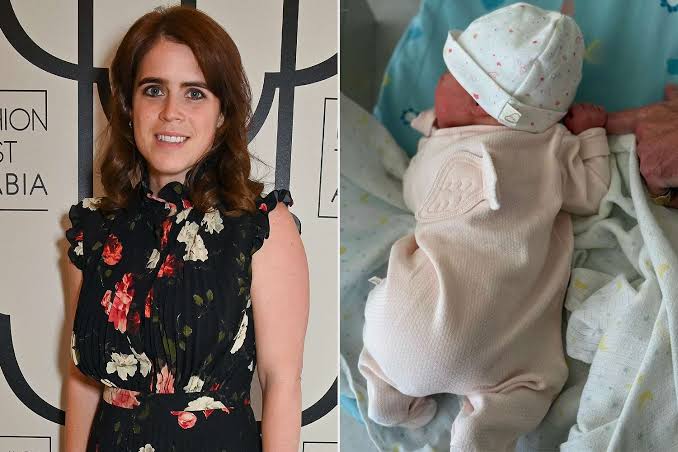
Princess Eugenie has welcomed her first daughter in Lisbon — and in doing so, nudged her uncle Prince Edward one step further from the throne
LISBON
Royal fans woke up this week to news that felt both intimate and quietly momentous: Princess Eugenie, granddaughter of the late Queen Elizabeth II and daughter of Prince Andrew, has given birth to her third child — and first daughter — with husband Jack Brooksbank. Buckingham Palace confirmed the arrival on Tuesday, though the baby was actually born the day before, on Monday, August 3, at a hospital in Lisbon, Portugal, where the family splits part of its time. The newborn weighed a healthy 6 pounds 9 ounces and joins two older brothers, August Philip Hawke, 5, and Ernest George Ronnie, 3.
It's a story that, on its surface, is simply a happy family milestone. But because this family happens to be the House of Windsor, even a private birth carries public consequences — in this case, a small but real reshuffle of the line of succession to the British throne.
Fifteenth in Line, and Counting
The new princess enters the world as 15th in line to the throne, a position that pushes her granduncle, Prince Edward, Duke of Edinburgh, down to 16th place. Edward's own two children, Lady Louise Windsor and James, Earl of Wessex, each slide down a spot as well, landing at 17th and 18th respectively. It's a reminder of how the modern British monarchy's succession rules work: children, regardless of gender, now take precedence over their parents' siblings and cousins purely by birth order within their own generation, a change codified by the Succession to the Crown Act of 2013 that replaced centuries of male-preference primogeniture.
None of this changes anyone's day-to-day life in any practical sense — Eugenie's children were never going to sit on the throne barring an almost unthinkable chain of events, and Edward, now further from the crown, remains a working member of the family with his own defined role. But these small shifts matter to royal watchers precisely because they're one of the few remaining rituals that make the abstract idea of hereditary succession feel concrete: an actual, numbered list that grows and rearranges itself every time a new baby arrives.
A Name Steeped in Family History
Buckingham Palace has not yet announced the baby's name, but royal commentators have already begun speculating that a middle name of "Elizabeth" — honoring the late Queen — would fit a pattern the family has leaned on for other recent arrivals. Whatever name Eugenie and Brooksbank choose, it will mark the first time in the modern line of Eugenie's immediate family that a daughter has been born, a detail that outlets covering the story have noted adds an extra layer of sentiment, given that Eugenie herself grew up as one of two daughters of Prince Andrew and Sarah, Duchess of York.
For Eugenie, 36, motherhood has increasingly become the defining thread of her public life. Since marrying Brooksbank in a lavish 2018 ceremony at St. George's Chapel, she has largely stepped back from a heavier calendar of royal engagements to focus on her young family and her continued work as a director at the Hauser & Wirth gallery — a career she has kept up even as her family has grown. Friends and royal biographers have long described her as one of the more private members of the extended family, someone who has deliberately built a life partly outside the traditional rhythms of royal duty, splitting time between London and Portugal.
Why a Birth Still Makes Headlines
It would be easy to ask why a family that isn't even in the direct line of succession — Eugenie is a granddaughter of the monarch, not a child — still generates this much coverage. Part of the answer is simple human interest: a healthy baby, a happy family, a name still to be revealed, are the kind of low-stakes, feel-good stories that cut through in a news cycle otherwise dominated by heavier fare. But there's also something deeper at work. The British royal family functions, whether by design or accident, as one of the world's longest-running generational sagas, and every birth is effectively a new character being written into a story millions of people have been following for decades, in some cases their entire lives.
There's also a quieter cultural undercurrent here worth noting: coverage of this birth has focused heavily on the succession mechanics — who moved up, who moved down — in a way that reflects how thoroughly the 2013 reforms have been absorbed into how the public understands the monarchy. A decade ago, headlines about a royal birth further down the line rarely dwelled on gender-neutral succession math; today it's treated as a matter of course, a sign of how much the institution's public image has evolved even as its structure remains fundamentally unelected and hereditary.
What This Means for Readers
For most people, this story offers exactly what royal news at its best tends to offer: a low-stakes, feel-good distraction and a small history lesson wrapped into one. It's a chance to think, even briefly, about how institutions adapt — or don't — and about the strange modern spectacle of a centuries-old monarchy still capturing global attention over something as universal as a new baby.
For Eugenie and Brooksbank, the coming weeks will likely be spent doing what most new parents of a third child do: adjusting, introducing an older sibling duo to their new sister, and, eventually, choosing a name that will be picked apart and analyzed the moment it's made public. Buckingham Palace has given no timeline for that announcement, but given the pace of royal news coverage this week, it's unlikely to stay private for long.
In the meantime, the newest addition to the Windsor family tree has already made her mark — not through any action of her own, of course, but simply by arriving, and in doing so, quietly rewriting one line on a very old, very closely watched family register.



