Written By | International News Agencies
Knesset committee approves bill gutting powers of attorney general for final readings
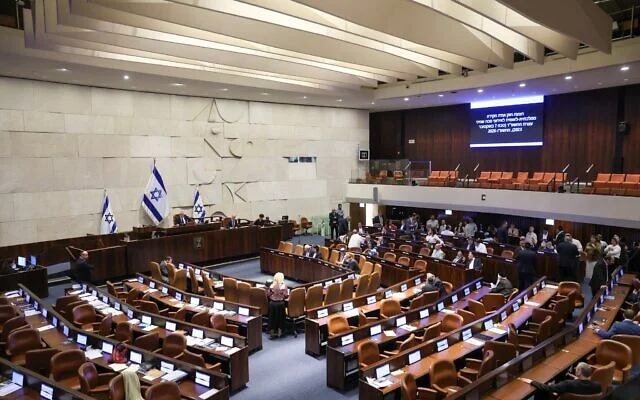
With the Knesset days from dissolving itself ahead of an October 27 election, Prime Minister Benjamin Netanyahu's coalition is racing to push through the most consequential change to Israel's system of checks and balances since the 2023 judicial overhaul: a bill that would strip the attorney general's legal opinions of their binding force on the government and hand the coalition effective control over who holds the office and how long they stay in it. The legislation cleared its Knesset committee for final readings last week and was split into two tracks on July 6 in a 59-45 vote, a maneuver critics say is designed to smuggle its most radical provision through before lawmakers dissolve parliament and head into an election campaign.
Background
Israel has no written constitution, and the office of attorney general has long functioned as one of the country's few institutional checks on executive power. Unlike the U.S. attorney general, Israel's AG is not a political appointee who serves at the pleasure of the prime minister; the position combines the roles of the government's chief legal adviser, the state's top prosecutor, and the arbiter of what the executive branch may lawfully do. Critically, the AG's legal opinions have historically been binding on the government -- if the attorney general says a proposed action is illegal, ministries are required to treat it as illegal unless a court rules otherwise. That arrangement has made the office both indispensable to Israel's system of legal accountability and, in the eyes of Netanyahu's coalition, an unelected veto point over elected officials.
The current attorney general, Gali Baharav-Miara, was appointed in 2022 under the previous government and has repeatedly clashed with Netanyahu's coalition, most notably by maintaining a conflict-of-interest arrangement -- first imposed by her predecessor, Avichai Mandelblit -- that bars the prime minister from personally directing judicial appointments or legislation touching on the judiciary because of his ongoing corruption trial, in which he is charged with bribery, fraud and breach of trust. That trial has continued in parallel with the legislative fight; on July 15, Netanyahu attended a hearing at the Jerusalem District Court where Interior Minister Ze'ev Elkin testified about conversations between Netanyahu and Yedioth Ahronoth publisher Arnon Mozes, one of the threads in the so-called Case 2000 media-bribery allegations.
The current bill is widely described in Israeli media and by legal scholars as "stage two" of the judicial overhaul that Justice Minister Yariv Levin launched in January 2023, which sought to curb the Supreme Court's power of judicial review and give the coalition control over judicial appointments. That earlier push triggered the largest sustained protest movement in Israeli history, was paused after the outbreak of the Israel-Hamas war in October 2023, and has since resurfaced piecemeal, including a March 2025 law expanding coalition control over judicial appointments. Attempting to curb the attorney general's power specifically has been a long-standing goal of Justice Minister Levin and coalition figures such as Justice Minister ally Gideon Sa'ar, who -- despite having appointed Baharav-Miara himself in 2022 -- has since said the office as currently constituted is "dictator-like" and must be broken up.
Key Developments
The bill's central and most contested provision would end the attorney general's binding legal authority over the government: instead of an AG opinion automatically constraining a ministry's action, the government would be empowered to determine for itself that the attorney general's position does not reflect the law, effectively allowing ministers to act first and litigate later. An earlier draft would have split the single office of attorney general into three separate positions -- a legal adviser, a state prosecutor and a third office -- but the coalition dropped that structural split from the version advanced for final readings, in part because the Knesset Constitution, Law and Justice Committee ran out of time to prepare it before the chamber's expected dissolution. What survived intact is the override mechanism, along with a provision that would let the incoming government -- to be seated after the October election -- decide within 30 days of the law's taking effect how the next attorney general is appointed and removed.
The procedural vote to split the bill passed 59-45 on July 6, and the House committee has since approved the trimmed-down legislation for its second and third Knesset readings, which the coalition is aiming to hold before parliament dissolves. That dissolution is itself moving on a fast track: a separate bill to dissolve the Knesset passed its first reading unanimously, 106-0, and Knesset Speaker Amir Ohana and coalition whip Ofir Katz have both signaled that dissolution is expected around July 17, which under Israeli election law would trigger a national vote on October 27 -- the latest date the law permits. That timeline means the attorney general legislation, if it becomes law, would take effect just as a new government is being formed, handing whichever coalition emerges from the October election wide latitude to reshape the office to its liking within its first month in power.
The bill's advancement has occurred against the backdrop of a country still absorbing a string of other major stories -- the collapsed U.S.-Iran ceasefire and renewed strikes across the Gulf, the killing of U.S. Senator Lindsey Graham, and Netanyahu's own upcoming travel to Washington -- but Israeli legal commentators argue the attorney general bill may prove to be the more consequential domestic story precisely because it is being rushed through with reduced public attention while other crises dominate headlines.
Reactions
Attorney General Baharav-Miara has been unusually blunt in her own defense, calling the legislation "stage two of the judicial reform" and warning that the coalition is engaged in a race to dismantle democratic institutions before the Knesset dissolves and voters can render a verdict. In formal legal opinions and public statements, she has argued that removing the binding force of her office's opinions would deal a blow to "the foundations of government, the rule of law, the fight against corruption and human rights," and that allowing ministers to self-certify the legality of their own actions eliminates a check that has existed since the state's founding.
Opposition lawmakers have echoed that alarm. Justice Minister-aligned coalition figures argue the current arrangement lets an unelected official override democratically elected ministers, but opposition MK Karine Elharrar countered that the attorney general's binding authority "protects citizens against the tyranny of the majority," and vowed that a future government led by the current opposition would repeal the law if it passes. A group of former attorneys general and Supreme Court justices published a joint opinion piece warning that the bill would not merely restructure an office but would functionally end the Attorney General's Office as it has existed since 1948, comparing the trajectory to Recep Tayyip Erdogan's Turkey, where formal democratic structures were preserved even as the institutions capable of restraining executive power were steadily hollowed out.
Coalition figures have defended the move as a needed correction to what they describe as decades of unchecked bureaucratic overreach by the legal establishment, arguing that Israel is unusual among democracies in giving a single unelected legal official binding authority over elected ministers. International reaction has been more muted than during the 2023 overhaul fight, in part because attention is divided among the region's other crises, though European officials and Israeli civil-society groups have both signaled concern that the timing -- pushing the bill through in the final days before an election -- is designed to avoid a public reckoning at the ballot box.
What's Next
The coalition is aiming to pass the second and third readings before the Knesset dissolves around July 17, and if it succeeds, the law's implementation would fall to whatever government forms after the October 27 election -- meaning the practical effect of the override mechanism will depend heavily on the outcome of that vote. If Netanyahu's coalition wins reelection or a similarly aligned government takes power, it would gain wide discretion within 30 days to redefine how the next attorney general is chosen and dismissed, potentially installing a more pliable successor to Baharav-Miara. If the opposition prevails, lawmakers such as Elharrar have already promised to seek repeal, though undoing entrenched legislation is often far harder than passing it.
A legal challenge before Israel's Supreme Court is widely expected regardless of the election outcome, given that the Court has previously intervened -- most notably striking down part of the 2023 "reasonableness" law -- in disputes over the judiciary's own authority to review Knesset legislation touching on the balance of power. That sets up the possibility of a direct constitutional confrontation between the Knesset and the Supreme Court over whether the court can review a law that curbs the very legal-oversight mechanism the court itself often relies upon. In the shorter term, all eyes will be on whether the bill reaches a final vote before dissolution, and on how prominently the fight over judicial independence features in the October campaign, alongside the wars in Gaza and against Iran that are likely to dominate the election.



