World Politics
Overview
After months of stalling, Hungary has stepped aside from one of the last procedural obstacles in the way of Ukraine's European Union accession talks. According to reporting that surfaced on October 7, Budapest has lifted its block on the screening results for two further negotiating clusters, covering the internal market and competitiveness, allowing the bloc to ask Ukraine and neighbouring Moldova to table their formal negotiating positions. An EU official quoted by the Financial Times described the step as "procedural but symbolic," and the description is apt: nothing has been formally opened yet, and Hungary's full political backing is explicitly tied to a bill now before Ukraine's parliament that would expand education rights for ethnic minorities.
The development matters well beyond the technical vocabulary of clusters and screening reports. For three years Hungary under Viktor Orbán was the single most reliable brake on Kyiv's European path, and the change of government in Budapest this spring has turned that brake into a bargaining table. What is now unfolding is a test of whether the new Hungarian leadership can deliver a different relationship with Ukraine without abandoning the cause that has long been popular with its own conservative voters: the rights of the Hungarian minority in Transcarpathia.
Background: From Orbán's Veto to Magyar's Bargain
Ukraine applied for EU membership within days of Russia's full-scale invasion in February 2022 and was granted candidate status that June. Accession talks, however, require unanimity at nearly every stage, and Hungary used that leverage repeatedly. Under Orbán, Budapest tied its consent to demands over the language and education rights of the roughly 80,000 ethnic Hungarians living in Zakarpattia, the western Ukrainian region that borders Hungary. Ukrainian education and language laws passed in the late 2010s, which expanded the use of Ukrainian in schools, were the original grievance, and Budapest never let the issue rest.
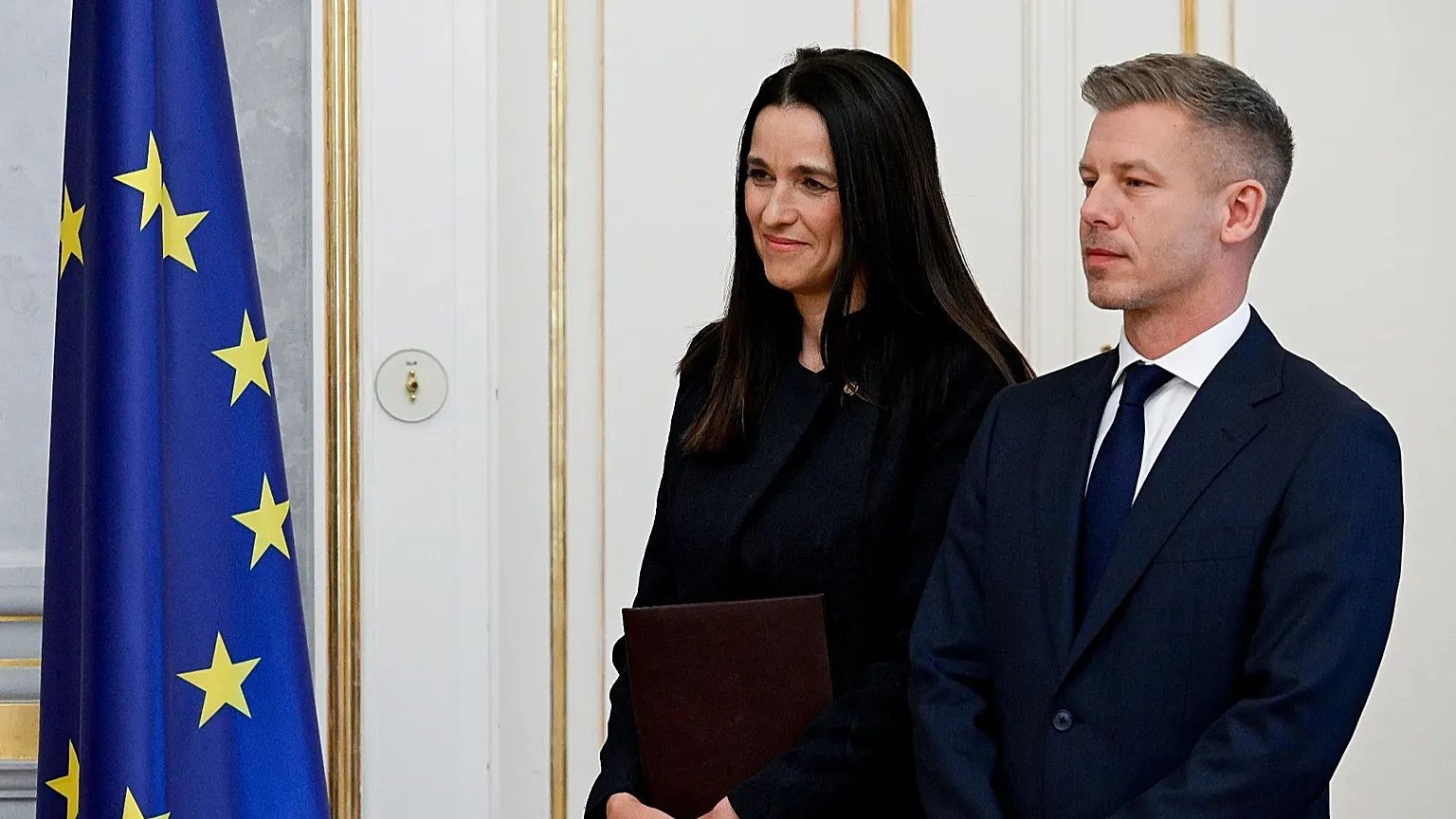
That changed with Hungary's April election, in which Orbán lost power. His successor, Péter Magyar, took office in May at the head of the Tisza government and has tried to repair ties with Kyiv while keeping the minority question at the centre of the agenda. Reporting from Euronews and others indicates that in June the two governments agreed an 11-point plan on minority rights, and that Hungary then allowed progress on the accession file. Ukraine opened its first negotiating cluster, the "Fundamentals" group covering democratic institutions, judicial independence and the rule of law, in June 2026. Sources differ on how many clusters are currently open: one outlet says only the first, while another suggests two have been opened. That discrepancy should be treated with caution until the Council publishes an authoritative tally.
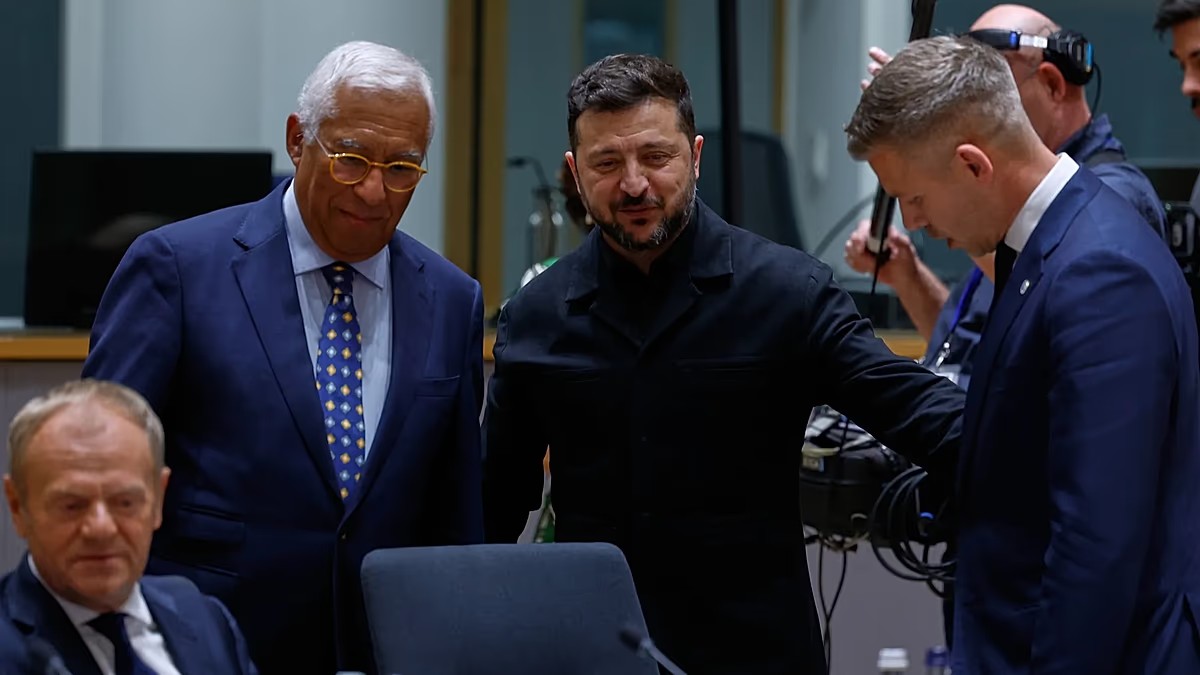
The relationship has not been frictionless. Euronews reported that Magyar and Ukrainian President Volodymyr Zelensky had planned a meeting that Magyar made conditional on progress on minority rights, and that the two governments clashed roughly two weeks earlier over Zelensky's C8 regional initiative. The picture is of a government that wants a deal but is not prepared to give Kyiv a free pass.
Key Developments: What Hungary Actually Agreed To
The decision was first reported by European Pravda, citing an unnamed EU source, and carried by UNITED24 Media on October 7. According to that account, Hungary lifted its block on approval of the screening results for Cluster 2, the internal market, and Cluster 3, competitiveness and inclusive growth. The enlargement working group known as COELA approved the screening results, and EU ambassadors meeting in the Coreper committee agreed to ask Ukraine and Moldova to present their negotiating positions. In September, the same report says, Hungary had been the only member state withholding consent. It is worth stressing that this rests on a single anonymous source and that neither the Hungarian government nor Kyiv had issued an official statement in the coverage reviewed.
The Financial Times, citing two unnamed sources, had signalled the move earlier. It reported that Magyar told diplomats not to block the letters to Kyiv and Chișinău about opening the next two clusters, and that Hungary's full political support depends on the Verkhovna Rada passing the education law. The newspaper also noted that the bill was drafted with input from Hungarian officials, and that Brussels hopes for another step forward on Kyiv's application by the end of October, ahead of a European leaders' summit.
The bill itself was formally registered in the Rada on October 1, according to the Kyiv Independent, with a vote expected on October 12. Its main provisions would allow schools in which more than half of pupils study in a minority language to receive special status, and would require the head or deputy head of such a school to be proficient in that language. Notably, the text applies only to minority languages that are official languages of the European Union. Hungarian is one of the EU's 24 official languages; Russian is not, and the drafting is widely read as a safeguard against opening a door to Russian-language promotion. On October 2, Hungarian Foreign Minister Anita Orbán said Hungary welcomed the step, and Magyar wrote that everyone has the right to receive education in their mother tongue and that Budapest expects those rights to be fully respected. Hungarian-language outlets in Ukraine were reported to have expressed satisfaction with the draft.
The Calendar: Two Dates and a Discrepancy
The timetable now being discussed is tight. The European Pravda source said COELA is expected to prepare EU negotiating positions for both clusters in the coming days, that member states could approve them as early as October 12, and that an EU-Ukraine intergovernmental conference could follow on October 13, when clusters 2 and 3 might be formally opened. The Kyiv Independent, by contrast, points to a General Affairs Council meeting on October 13 as the usual venue for formal decisions on accession talks. These descriptions are not necessarily contradictory, but they do not describe the same event in the same way, and the dates are expectations rather than confirmed schedules.
Everything hinges on the October 12 Rada vote. Analyst Dániel Hegedűs of the Institut für Europäische Politik told Euronews that without stable majorities in the Ukrainian parliament, passing the required laws in October is ambitious, and that it remains unclear whether Hungary would back the opening of all clusters or only some. Euronews also reported that the broader package of laws required under the June deal is due by year-end, and that a separate bill on language and cultural rights is expected before the Rada later in October. In other words, the minority-education bill is the first piece of a larger legislative sequence, and Hungary has so far avoided signing a blank cheque.
Reactions and the Politics on Both Sides
In Budapest, the government has framed the process as a success of a different style of diplomacy. Ukrainian press coverage of October 2 carried a headline attributed to Hungarian officials boasting that they had achieved in months what Orbán failed to do in a decade, a claim that is self-serving but reflects the political incentives. Hungary's conservative electorate remains wary of Kyiv, yet defending ethnic Hungarians abroad is popular on the right, which gives Magyar room to claim a win for the minority while allowing Ukraine's file to move. Euronews makes the same point: the minority issue is the domestic cover for flexibility.
In Kyiv, official comment has been sparse, but the stakes are plain. Ukraine has said repeatedly that it wants to open all six negotiating clusters by the end of 2026, a goal EU officials have also embraced. The European Commission has said for more than a year that Ukraine is technically ready, and in August it urged member states to move forward, noting progress. Each cluster opened is both a practical step and a signal to a society fighting a war that the European path remains alive. For Moldova, which has been paired with Ukraine in the process, the clearance of the same two clusters is similarly meaningful, though the sources reviewed offer little Moldova-specific detail.
Hungary's wider posture is also in flux. The same week, according to the Euronews daily roundup, the EU agreed to add more than 1,600 people and entities to its Russia sanctions list, and Hungary's relations with Moscow have been deteriorating, as seen in the exchange of diplomatic expulsions earlier this month. Even so, Budapest's heavy dependence on Russian oil and gas limits how far it can pivot, which is one reason that observers treat the new government's Ukraine policy as pragmatic rather than ideological.
What Comes Next
The immediate question is whether the Rada delivers on October 12. If it passes the education bill, the road to a formal opening of clusters 2 and 3 on or around October 13 becomes straightforward, and Brussels will be able to present progress at the leaders' summit later this month. If the vote slips, Hungary could revert to withholding consent, and the "procedural but symbolic" gesture would turn out to have been conditional all along.
Beyond that lie harder fights. The Kyiv Independent reports that clusters four and five are expected to draw objections from countries such as Poland, which worry about Ukrainian competition in agriculture and trucking. Because accession decisions need unanimity, Hungary is no longer the only potential veto player, and Ukraine's hope of opening everything by the end of the year looks ambitious. The EU also has to decide how it will treat the fact that screening and cluster-opening can proceed even as the war continues and as the bloc's own enlargement methodology and budget debates remain unresolved.
For now, the significance of the week's news is that the most persistent political obstacle has begun to move through negotiation instead of obstruction. Whether that holds will depend on a parliamentary vote in Kyiv, a Hungarian government that has promised to keep watching, and a European Council that is rarely as fast as its press releases suggest.
Published By | News Editor