BUSINESS
Ibrahim Wafula crossed back into Uganda at Busia on Sunday carrying a mattress, a bag and a set of jerry cans. He left everything else in a rented room in Embakasi, Nairobi, where he had been working in public transport. 'A section of the population in Kenya has a feeling that we have taken their jobs,' he told the Daily Monitor. 'They were threatening to attack foreigners; that is why I left.'
He was one of hundreds of East Africans who fled Kenya over the weekend after President William Ruto, addressing micro, small and medium enterprise traders on 2 September, ordered a crackdown on foreigners engaged in small-scale trade and said retail should be left to Kenyans. Enforcement began on Monday. For Uganda, this is not primarily an immigration story. It is a story about the plumbing of the country's most important agricultural export market.
The order, and the walk-back
Kenyan officials have spent the past three days narrowing what the President said. Trade Cabinet Secretary Lee Kinyanjui framed the exercise as a compliance measure, saying some foreigners had been 'misusing visa applications' by trading while on investor or tourist status, and that visa-free entry 'does not in itself confer the right to engage in employment, trade or business in Kenya'. Foreign Affairs Principal Secretary Abraham Korir Sing'oei said documented East Africans remain legally protected. Government spokesperson Charles Owino announced on Monday evening that a formal registration window is being prepared, that those registering will be presumed legally present for its duration, and that the government has 'zero tolerance' for harassment, intimidation or xenophobia. Police spokesperson Michael Muchiri dismissed reports of attacks as speculation.
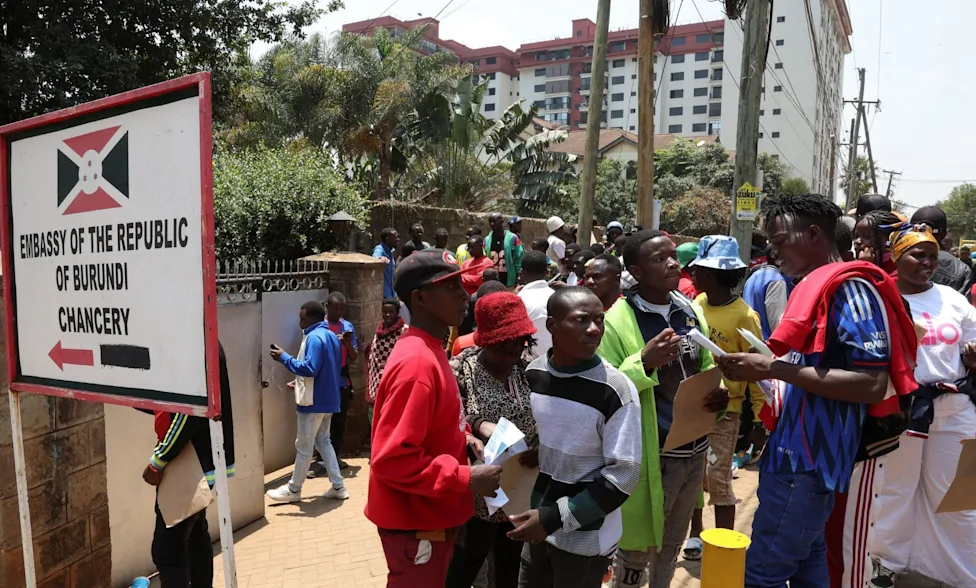
The clarifications arrived after the panic. Hundreds of Burundians queued outside their embassy in Nairobi seeking travel documents. Videos circulated of youths looting food stores belonging to suspected foreigners and stopping motorcyclists in the street. Arnold Kimera, a Ugandan trader in Nairobi, said most Ugandan shopkeepers simply did not open on Monday. David Irangagisha, who hawked bed sheets in Eldoret, Bungoma and Homa Bay, fled on Sunday after traders began seizing merchandise without paying. Musirimu Balikowa left his shop stock behind entirely: 'The ultimatum given by President Ruto was too short.'
Why this is an agriculture story
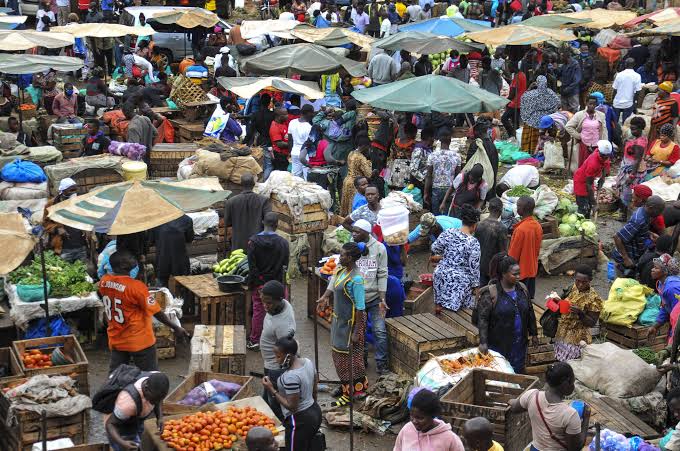
Kenya is the single largest destination for Uganda's agricultural exports, and East Africa as a bloc absorbs more than 80 percent of them. UN COMTRADE data put Uganda's total exports to Kenya at about US$589.6 million in 2024, of which cereals accounted for roughly $39.4 million and maize alone about $33.5 million. Those customs figures capture only part of the flow. A large share of the matooke, beans, milk, poultry, fish, tomatoes, onions and sugar that moves east through Busia, Malaba and Suam travels in small consignments handled by individual traders — precisely the category of person the crackdown targets.
The distinction matters. Bulk grain contracted by licensed exporters, cleared at customs and trucked to millers in Nakuru or Nairobi is not touched by an immigration sweep. What is touched is the semi-formal layer beneath it: the Ugandan with a stall in Gikomba, the woman selling matooke in a Nairobi estate, the boda rider distributing produce from a wholesale yard. That layer is the retail end of a chain that begins with a village buyer in Bugiri or Kapchorwa, and it is the end that returns cash upcountry.
The timing is the sting
Kenya declared a maize deficit of about 25 million bags this season after Trans Nzoia lost some 20,000 hectares and Uasin Gishu recorded a 60 percent drop. Kenyan buyers have been trucking directly into Bugiri, Iganga, Mbale, Kapchorwa, Mubende, Mityana and Nakaseke. The effect on Ugandan prices has been dramatic: a 100kg bag in Kampala's Kisenyi and Nakawa markets moved from Shs105,000–125,000 to Shs135,000–150,000, and farm-gate maize in Mbale and Busia rose from about Shs900 to Shs1,400 a kilogramme. Kenya's dairy sector is short too — formal deliveries fell 3.7 percent between June and July to 81.3 million litres, and Nairobi supermarkets have been rationing milk.
So Kenya has never needed Ugandan food more than it does this quarter, and it has chosen this quarter to make Ugandan traders feel unwelcome. Both things can be true because they are decided by different arms of the same state: the food ministry wants supply, the political calculus wants visible action on youth unemployment and MSME grievance.
The second-order damage
For farmers the risk is not that Kenya stops buying maize. It is that credit chains break. Across eastern Uganda, farmers routinely release produce to traders on credit and collect after the trader sells — the practice documented among cotton and grain growers in Pallisa and Bukedea. If a trader abandons a consignment in Eldoret and comes home through Busia with a mattress, the debt does not travel back with him. Perishables are worse: matooke, tomatoes and milk cannot wait for a registration window to open.
There is also a price risk that cuts both ways. If the buying spree stalls even briefly, farm-gate maize could give back part of its Shs900-to-Shs1,400 gain, hurting farmers who planned around it, while offering some relief to Ugandan consumers facing headline inflation of 4.1 percent and a food-crops index that has been climbing. Neither outcome is a policy choice anyone in Kampala made.
A Common Market on paper
Kenya is a signatory to the East African Community Customs Union and the Common Market Protocol, which provide for free movement of goods, services, labour and capital and for the right of establishment. Mr Kinyanjui said Kenya will 'consider' those protocols when dealing with citizens of partner states — a formulation that does considerable work. Mr Owino linked the registration exercise to the proposed Local Content Bill, framing it as protection for vulnerable sectors of the domestic economy.
This lands on a pile of existing frictions. Kenya's Finance Act 2026 imposed an excise equivalent to about $308 a tonne on Ugandan sugar imports. Uganda's Dairy Development Department at MAAIF has repeatedly cited non-tariff barriers as the reason a national milk surplus of roughly 15 million litres a day cannot find its way into Kenyan supermarkets that are rationing. Poultry and egg consignments have faced similar treatment. Adding a labour-mobility dispute to a list of trade disputes narrows the space for the quiet technical fixes that usually resolve these matters.
Capt Mike Mukula, the former NRM chairman for eastern Uganda, made that point on Monday, warning that the Kenyan President was 'opening a Pandora's Box' and that the correct route was the EAC Heads of State Summit. He also drew the historical contrast: after Kenya's 2007-08 post-election violence, Kenyans who crossed into Uganda settled, farmed and traded without interference, and many never went back. The South African precedent is the less comfortable one — a deportation drive there this year left more than 1,000 Ugandans homeless and requiring evacuation.
What to watch
Four things will determine whether this is a fortnight's disruption or a structural shift. Whether Kenya's registration window opens quickly and is honoured in the markets rather than only in press statements. Whether Ugandan traders return, and how much stock and receivables they write off if they do not. Whether Kampala escalates through the EAC Secretariat and the Summit rather than settling for bilateral reassurance. And whether the Grain Council of Uganda's proposal for structured, warehouse-based bidding through its network of certified warehouses gains traction — a system in which Ugandan grain is sold on contract to Kenyan millers, rather than carried across a border by individuals whose right to stand in a Nairobi market can be revoked in an afternoon.
That last point is the real lesson for Uganda's farm economy. A trade that depends on one neighbour buying, and on people who can be sent home in a day, is not an export sector. It is an arrangement.
Published By | News Editor