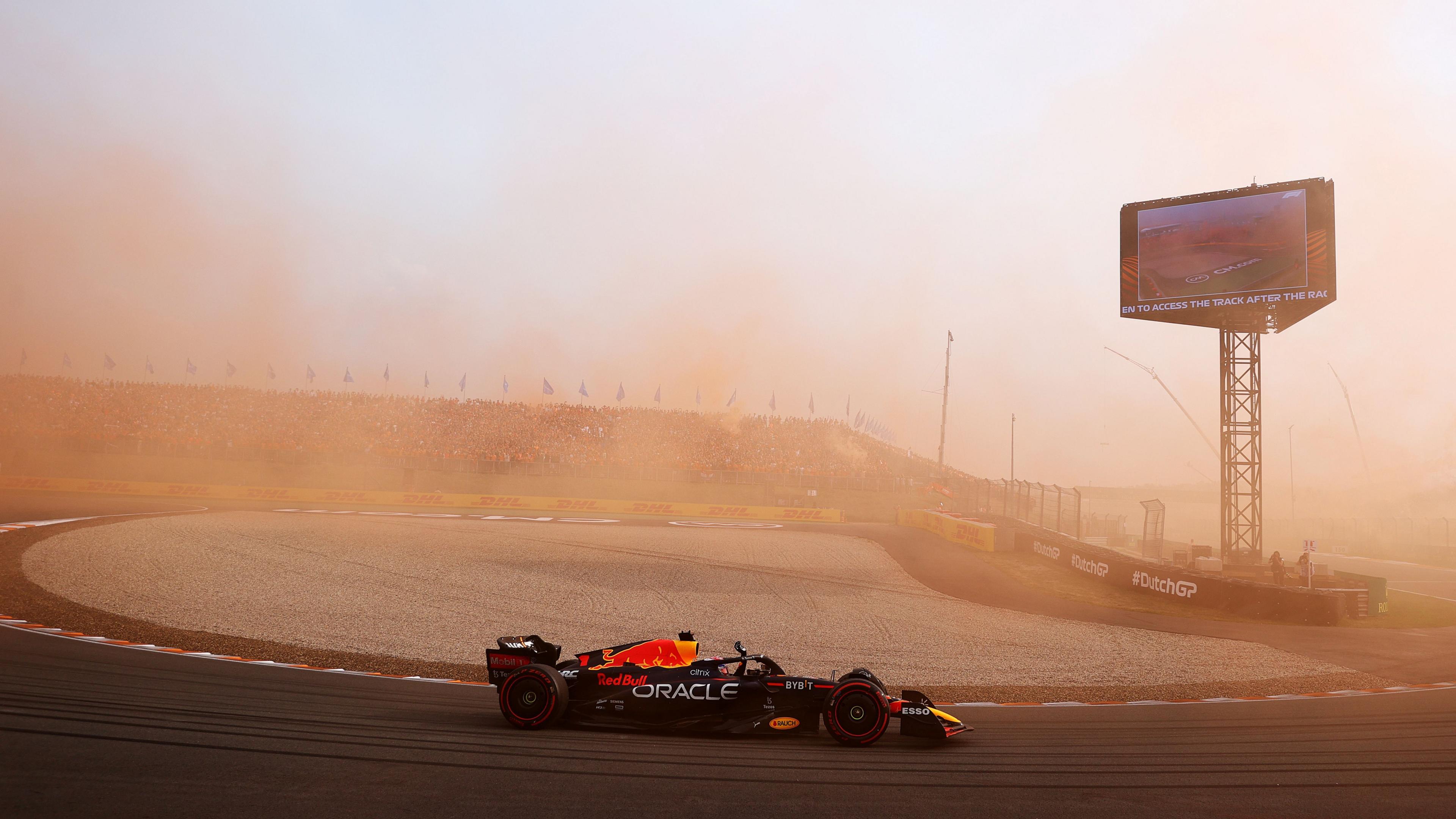
Zandvoort, the Netherlands, August 21, 2026 — For three days every August, a Dutch seaside town of fewer than 18,000 people swells to bursting with something closer to a football World Cup than a car race. Orange smoke drifts over the dunes. Campervans line the coast road for miles. And somewhere in the middle of it all, Max Verstappen tries to do what he has done better than almost anyone in the sport's history: win in front of the people who love him most.
This weekend, that ritual carries an asterisk. Circuit Zandvoort — the low, fast, banked ribbon of tarmac squeezed between the North Sea dunes — is hosting what is currently its final scheduled Formula 1 race before dropping off the calendar after 2026. It is also, for the first time in the track's modern history, a Sprint weekend, adding an extra qualifying session and a Saturday sprint race to the usual three-day rhythm. And it arrives at a moment when Verstappen, the sport's most dominant recent champion, is having the strangest season of his career: winless, unusually mortal, and, for the first time in years, not the man everyone in the paddock is talking about.
A Circuit Built for a Legend, Now Bidding Him Farewell
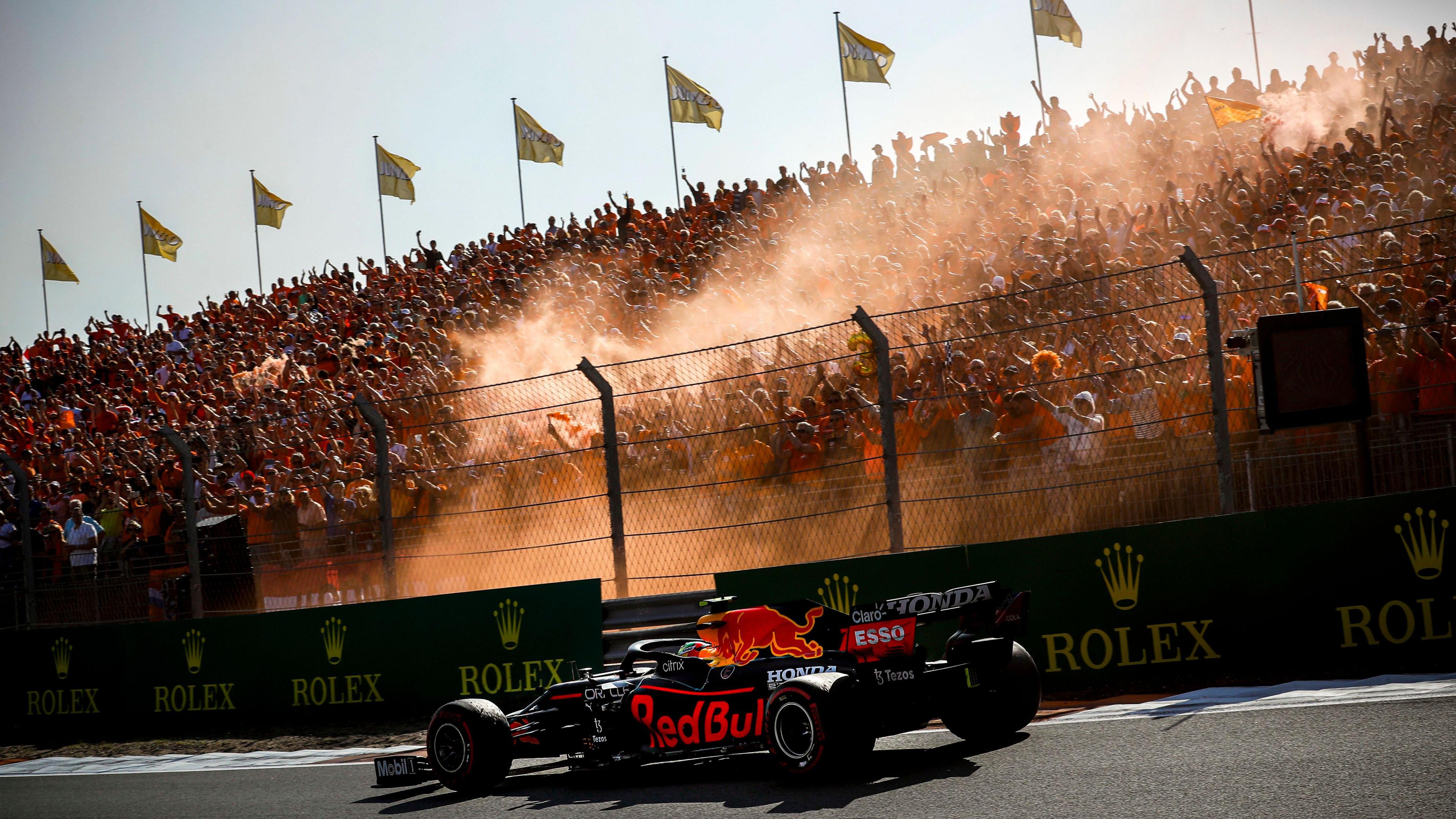
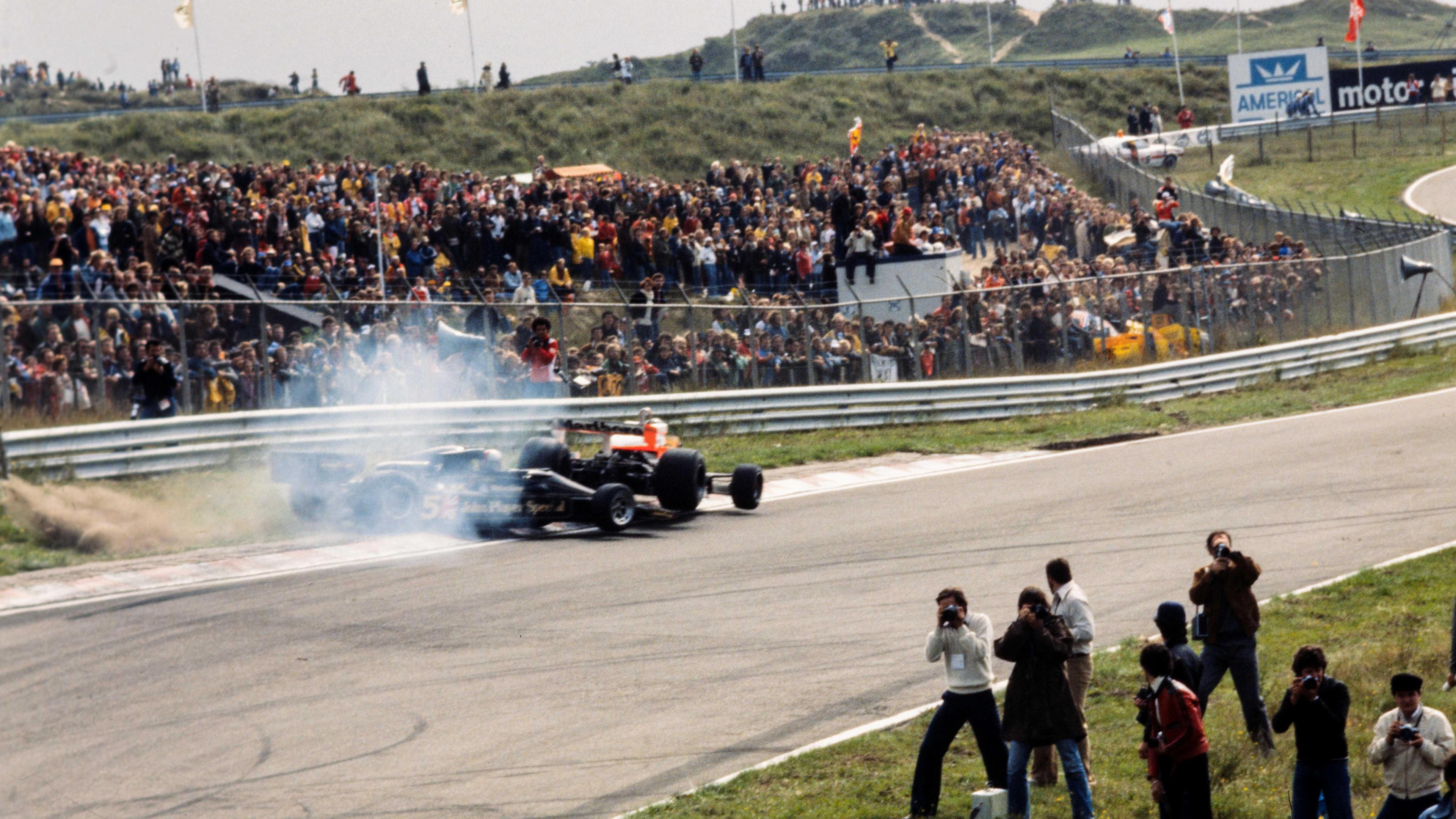
Zandvoort's return to the F1 calendar in 2021, after a 36-year absence, was built almost entirely around one storyline: a hometown hero good enough to justify reviving a circuit that had fallen off the sport's map since 1985. It worked spectacularly. Verstappen won the first three editions of the modern Dutch Grand Prix — 2021, 2022 and 2023 — turning the circuit's steep, banked corners into a personal fiefdom and the surrounding dunes into an annual sea of orange not seen at a European sporting event since, arguably, Dutch football's glory years. Lando Norris broke the streak in 2024, and Oscar Piastri won from pole in 2025, evidence that the McLaren era was arriving even as Verstappen's stranglehold on Zandvoort loosened.
Now the track faces an uncertain future on the calendar, and Verstappen faces this race without the security of knowing he'll be back next August to try again. "I have had so many good memories here in Zandvoort, and to have been able to race in front of my home crowd for the past few years has been a privilege and one of my many highlights," Verstappen said ahead of the weekend, a rare moment of sentimentality from a driver more often defined by clipped, businesslike answers to reporters.
The Strangest Season of Verstappen's Career
What makes this farewell sting more than a simple calendar reshuffle is where Verstappen sits in the championship picture. At the halfway point of 2026, the four-time champion is winless — a state of affairs that would have been unthinkable at any point between 2021 and 2024. He arrives at Zandvoort sixth in the drivers' standings on 109 points, a staggering 110 points behind championship leader Kimi Antonelli, the young Mercedes driver who has emerged as the sport's dominant force this season with 219 points. Lewis Hamilton, in his second full season at Ferrari, sits second, trailing Antonelli by roughly 50 points but comfortably clear of Red Bull's former king.
Verstappen's form has crept upward in recent rounds — a third-place finish at Spa-Francorchamps, followed by a race spent chasing down Norris in Hungary — suggesting the Red Bull car, while no longer the class of the field, is at least trending toward respectability. But a first Grand Prix victory of 2026 remains elusive, and with roughly half the season now behind him, time and opportunities are both running short. Historically, Zandvoort's low-grip, high-banking layout has rewarded cars with strong front-end bite and drivers willing to commit fully into corners most others would lift for — exactly the profile that made Verstappen so dominant here in the circuit's first three modern editions. Whether the current Red Bull retains enough of that DNA to give him a fourth win at his home track, on what may be its final scheduled visit, is this weekend's central question.
Sprint Format Adds a Wrinkle
Adding to the unpredictability is the fact that this is Zandvoort's first-ever Sprint weekend, a format that compresses practice time, front-loads qualifying, and rewards teams that can extract performance from a car without the usual Friday-to-Sunday runway to fine-tune setup. For a Red Bull squad still hunting for consistent pace, the truncated schedule could cut either way: less time to find a working setup, but also less time for rivals like Antonelli's Mercedes and Hamilton's Ferrari to out-develop them across a race weekend. Weather forecasts point to light showers across Friday and Saturday practice and qualifying sessions, with highs around 19°C, clearing to sunshine and roughly 20°C for Sunday's Grand Prix — conditions that could scramble grid positions before the race even begins, and which the Zandvoort crowd, wrapped in orange regardless of the forecast, will treat as simply part of the theater.
What This Means for Fans
For casual sports followers who tune into Formula 1 only a few times a season, Zandvoort 2026 offers a rare, made-for-television convergence: a beloved home hero fighting the clock, a legacy circuit possibly making its last scheduled appearance, and a championship race that has already been effectively decided in Antonelli's favor, freeing everyone else to simply enjoy the spectacle. It's also a reminder of how quickly dominance can shift in elite sport — a driver who won three consecutive home races and four consecutive titles now searching for validation in a single weekend, cheered on by a nation that has never needed much of an excuse to turn a race circuit into a festival.
Whatever happens on Sunday, the sea of orange will be there, just as it has been every August since 2021 — this time, perhaps, singing a little louder, aware that this particular chapter might be closing for good.
Published By | Sports Editor