Written By | Staff Writer
The IMF's Executive Board, concluding its 2026 Article IV review in May, projected average real GDP growth of 2.8% over 2026-2028, a deceleration from the 3.1% recorded in 2025.
Economic & Social Transformation
A Budget Milestone Decades in the Making
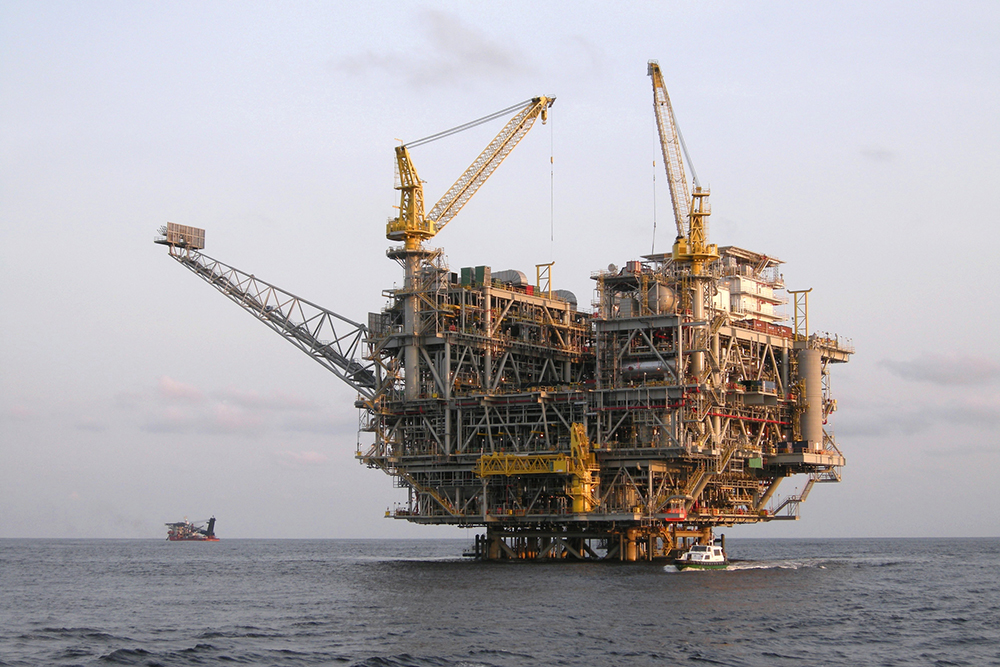
For the first time in Angola's history as an oil-producing state, the government's 2026 budget projects that non-oil revenue will outstrip oil revenue. It is a modest-sounding line item that carries outsized symbolic weight in a country where crude has underwritten the state for half a century. The milestone does not mean Angola has escaped its dependence on petroleum — oil still accounts for roughly 25% of GDP, 60% of fiscal revenue and 94% of export earnings, according to the International Monetary Fund's 2026 Article IV consultation — but it marks the clearest sign yet that Luanda's long-promised diversification push is beginning to show up in the numbers rather than just in speeches.
The IMF's Executive Board, concluding its 2026 Article IV review in May, projected average real GDP growth of 2.8% over 2026-2028, a deceleration from the 3.1% recorded in 2025. Crucially, the Fund tied the entire medium-term outlook to the success of diversification: "the medium-term outlook remains subdued, reflecting a structural decline in oil revenues, with economic growth depending on the success of diversification efforts." The African Development Bank's country office and the World Bank have offered similar, though not identical, projections, with Angola's own 2026 budget assuming growth near 2.9%, rising to 3.3% in 2027 on the back of higher oil prices, agribusiness and logistics investment tied to the Lobito Corridor, and roughly $2 billion in non-diamond mining and rare-earth projects working their way toward production.
The Non-Oil Engine: Services, Agriculture and Record Diamonds
Angola's non-oil sector is projected to grow around 4% in 2026, driven primarily by services and agricultural production, with transport, digital services, manufacturing, mining and fisheries increasingly carrying overall growth rather than merely supplementing it. Diamond production has reached an all-time high in recent quarters, giving Angola — already one of the world's top producers by value — a second extractive pillar alongside oil that generates hard currency without the price volatility that has repeatedly destabilized the national budget over the past decade.
The diversification narrative is most visible, and most contested, along the Lobito Corridor, the roughly 1,300-kilometre rail line linking the Angolan port of Lobito to the copper- and cobalt-producing Katanga region of the Democratic Republic of Congo and onward toward Zambia. The project reached financial close on a $753 million financing package in July 2026, following agreements signed in late 2025. Lobito Atlantic Railway (LAR), the concessionaire, has committed $455 million to upgrading Angola's side of the line and $100 million to improvements on the DRC side, including 1,500 additional wagons and 35 new locomotives. As of January 2026, LAR was running 360 wagons and 28 locomotives, with the corridor now offering the shortest route from Kolwezi to any African port — cutting inland transit time to roughly seven days, a dramatic improvement over the weeks-long journeys that minerals previously required via southern African ports.
The corridor employs 945 people on the Angolan section and its mineral terminal, 97% of them Angolan nationals — a modest figure set against the scale of investment, and one that has drawn skepticism from local economists. Angolan academics Alves da Rocha and Wilson Chimoco have publicly argued that expectations for the corridor's impact on broader economic diversification remain "very low," a reminder that a single rail line, however strategically located, cannot by itself rewire an economy built for decades around a handful of offshore oil blocks.
Fiscal Arithmetic: Narrower Deficits, Heavier Debt Service
Angola's fiscal position tells a mixed story. The overall budget deficit came in at 4.1% of GDP in 2025, driven by lower oil revenues and expenditure overruns, but the IMF projects the deficit falling below 3% of GDP in both 2026 and 2027 as oil revenues stabilize and non-oil collection improves. Disinflation, falling unemployment in some segments, a shrinking debt-to-GDP ratio and record non-oil investment all featured in the Fund's assessment as evidence of genuine, if incomplete, progress.
The debt-service burden, however, remains heavy. Interest payments on Angola's public debt are set to consume nearly one-third of public revenues in 2026, and the government's total public financing requirement — the amount it must raise through new borrowing and refinancing combined — will equal roughly 11% of GDP. That leaves Luanda with limited fiscal space to cushion the population from oil-price swings even as it tries to fund the roads, ports, agricultural extension services and digital infrastructure that diversification requires. The IMF has flagged oil-price volatility and tighter global financial conditions as the chief downside risks to the entire program: a sustained drop in crude prices would simultaneously shrink the fiscal envelope and raise the cost of external borrowing, squeezing the diversification agenda from both directions.
The Poverty Gap Behind the Growth Numbers
Angola's oil-led growth model has historically delivered wealth concentrated in Luanda and a handful of coastal enclaves while leaving much of the rest of the country behind, and the 2025-26 data show that pattern persisting even as headline GDP figures improve. National poverty stood at 40.6% in 2025, alongside a Gini coefficient of 0.51 — among the more unequal income distributions on the continent — and youth unemployment of 43.3%. Informality remains pervasive, with 78.6% of the workforce operating outside the formal economy in 2025, limiting both tax collection and access to social protections. Only around a third of the population has access to electricity, a constraint that touches nearly every other diversification ambition, from agro-processing to digital services growth.
Income per capita has been gradually rising, particularly in metropolitan areas, but the disconnect between national growth statistics and lived experience in rural provinces remains one of the sharpest in southern Africa. The World Bank's most recent Angola Economic Update has focused specifically on inclusive financial development as a lever to close this gap, arguing that broader access to credit, savings and payment systems — beyond Luanda's banked elite — is a precondition for non-oil growth actually reducing poverty rather than simply raising the national average.
What to Watch
Three things will determine whether Angola's 2026 non-oil revenue milestone marks a genuine structural turn or a one-off product of favorable oil prices padding the comparison. The first is whether the roughly $2 billion pipeline of non-diamond mining and rare-earth projects — critical to global battery and electronics supply chains — actually reaches production on schedule, rather than joining the long list of Angolan resource projects that stalled at the feasibility stage. The second is whether the Lobito Corridor's freight volumes, which remain modest relative to the scale of the financing behind them, grow quickly enough to justify the investment and spill over into job creation beyond the rail concession itself. The third, and most consequential for ordinary Angolans, is whether the government can convert a narrower fiscal deficit and improving non-oil revenue into the electrification, agricultural investment and financial-inclusion programs needed to bring poverty and informality down from their current levels. On the IMF's own telling, the entire medium-term growth outlook depends on getting this sequencing right.



