Commentary
Every generation inherits a question from history.
Some generations are asked to fight for independence.
Others are asked to defend democracy.
Others are asked to rebuild nations after conflict.
Our generation has been handed a different challenge: the responsibility of deciding what kind of cities future Ugandans will inherit. The debate currently unfolding across Kampala and other urban centres is therefore larger than demolitions, evictions, wetlands, road reserves, markets, or physical planning. It is ultimately a debate about the kind of society Uganda wishes to become.
Will Uganda build cities that merely impress visitors?
Or will Uganda build cities that serve citizens?
Will development become a privilege enjoyed by a few?
Or will it become a shared national achievement?
These questions lie at the heart of the tears, frustrations, and hopes currently shaping the country's urban future.
The Future Cannot Be Built Upon Permanent Crisis
One of the greatest dangers facing developing nations is governing through perpetual emergency.
When planning is delayed for decades, governments often find themselves attempting to solve accumulated problems through abrupt interventions.
What should have been addressed gradually becomes addressed suddenly.
What should have been implemented through consultation becomes implemented through enforcement.
What should have been corrected through long-term planning becomes corrected through crisis management.
Uganda's urban challenges did not emerge this year. They did not emerge last year.
They are the product of many decades of institutional weaknesses, inconsistent enforcement, political compromises, demographic pressures, economic inequalities, and policy failures.
The citizens now facing displacement did not create these conditions alone.
The state itself must acknowledge its own historical role.
The responsibility for urban disorder is collective.
Consequently, the burden of correction must also be collective.
Justice demands no less.
The Affordable Housing Question
Perhaps no issue better illustrates Uganda's urban dilemma than housing.
Urban planners can correctly identify illegal settlements.
Environmental authorities can correctly identify encroached wetlands.
Physical planners can correctly identify unregulated developments.
Yet one question remains unavoidable:
Where should the affected citizens go?
A nation cannot remove settlements without simultaneously addressing housing.
Housing is not merely a private matter.
It is a public policy issue.
The experience of successful cities around the world demonstrates that affordable housing programmes are among the most important investments governments can make.
Singapore understood this reality.
Many European countries understood it.
Several Latin American cities increasingly recognise it.
Housing provides more than shelter.
It provides stability.
It provides security.
It provides dignity.
Without affordable housing, urban planning risks becoming an endless cycle of demolition followed by relocation, followed by new informal settlements, followed by further demolition.
The cycle continues because the underlying problem remains unresolved.
A sustainable urban future requires a national conversation about housing affordability.
Not for the wealthy.
Not for the political elite.
But for the ordinary workers whose labour sustains the city every day.
The Need for Participatory Urban Governance
One of the most overlooked principles of successful urban development is participation.
People rarely resist development because they oppose progress.
They resist development when they feel excluded from decisions affecting their lives.
Communities possess knowledge.
Residents understand local realities.
Market vendors understand commercial patterns.
Transport operators understand mobility challenges.
Environmental activists understand ecological risks.
Academics understand policy implications.
Government institutions possess legal authority.
The wisest urban governance combines all these perspectives.
Participation does not weaken development.
Participation strengthens development.
Citizens are more likely to support difficult reforms when they are treated as partners rather than subjects.
The city belongs to all who live within it. Its future should therefore be shaped collectively.
Urbanisation and the Constitution
The Constitution of Uganda offers a moral compass for navigating these challenges.
Article 20 affirms that rights and freedoms are inherent.
Article 21 guarantees equality before the law.
Article 26 protects property rights.
Article 39 guarantees the right to a clean and healthy environment.
These provisions are often presented as separate principles.
In reality, they are interconnected.
Property rights matter.
Environmental protection matters.
Human dignity matters.
Equality matters.
The task of constitutional governance is not to choose one value at the expense of another.
It is to harmonise them.
A constitutional state must be capable of protecting wetlands without abandoning people.
It must be capable of enforcing planning laws without undermining justice.
It must be capable of pursuing development without sacrificing dignity.
That is the true meaning of constitutionalism.
Corruption: The Silent Architect of Urban Disorder
No discussion of Uganda's urban challenges would be complete without confronting corruption.
Many of today's planning crises were not inevitable.
They were facilitated.
Illegal developments often emerged because regulations were ignored.
Protected areas were occupied because enforcement failed.
Road reserves were encroached upon because oversight was weak.
In some instances, public officials authorised what should never have been authorised.
In others, violations occurred openly without consequence.
Corruption functions as an invisible architect.
It designs future crises while remaining hidden from public view.
Years later, when demolitions begin, attention focuses on the affected communities.
Far less attention is directed towards those whose actions or omissions permitted the problem to emerge in the first place.
True accountability requires addressing both.
The citizen who violates the law must answer for their conduct.
The public official who facilitated that violation must also answer.
Anything less creates selective justice.
Environmental Protection and Social Justice
The climate crisis adds urgency to Uganda's urban challenges.
Flooding events are becoming more frequent.
Environmental degradation continues to threaten livelihoods.
Wetlands remain under pressure.
Water systems face increasing strain.
These realities demand decisive action.
Yet environmental protection and social justice are not enemies.
They are allies.
A society that protects ecosystems while neglecting people creates instability.
A society that protects people while destroying ecosystems creates unsustainability.
The future belongs to nations capable of pursuing both simultaneously.
Uganda's environmental policies must therefore be accompanied by social policies.
Restoration should be paired with resettlement.
Conservation should be paired with compensation.
Protection should be paired with inclusion.
Only then can environmental justice become genuinely just.
The Economic Argument for Inclusion
Some may argue that social protection is expensive.
The truth is often the opposite.
Exclusion carries enormous costs.
Displacement can increase unemployment.
Unemployment can increase crime.
Crime discourages investment.
Social instability undermines economic growth.
Poorly managed urbanisation ultimately becomes more expensive than inclusive planning.
Development economists increasingly recognise that inclusive cities are more productive cities.
When citizens have access to housing, transportation, education, healthcare, and economic opportunities, urban economies become stronger.
Inclusion is not charity.
It is investment.
A city that invests in its people invests in its future.
The Moral Test of Development
Every nation eventually faces moments that reveal its deepest values.
This is one such moment for Uganda.
Future generations will not merely ask whether wetlands were restored.
They will ask how restoration occurred.
They will not merely ask whether roads were built.
They will ask who benefited.
They will not merely ask whether cities became cleaner.
They will ask whether citizens became more secure.
History evaluates outcomes.
But history also evaluates methods.
The means by which a nation develops are often as important as the development itself.
A city may acquire modern infrastructure.
A nation may attract investment.
Economic indicators may improve.
Yet if progress is accompanied by widespread suffering that could have been avoided, difficult moral questions remain. Development must never lose sight of humanity.
The Tears of the Sun
There is a reason this series bears the title Tears of the Sun.
The sun symbolises progress.
It symbolises growth.
It symbolises the promise of a brighter future.
Yet sunlight can also expose uncomfortable truths.
It reveals inequalities long ignored.
It illuminates injustices hidden in shadows.
It forces societies to confront realities they would rather avoid.
Across Uganda today, the sun of urban transformation is rising.
New roads are being constructed.
Environmental restoration is underway.
Cities are changing.
The future is arriving.
The question is whether that future will belong to everyone.
For development that excludes millions is not national progress.
It is selective progress.
Development that enriches some while impoverishing others is not transformation.
It is displacement.
Development that ignores human suffering risks becoming detached from its own purpose.
The ultimate objective of governance is not simply to build cities.
It is to build societies.
And societies endure not because of the strength of their concrete but because of the strength of their compassion.
One day, future generations will walk through the cities we leave behind.
They will inherit our roads.
They will inherit our buildings.
They will inherit our environmental decisions.
They will inherit the consequences of our policies.
May they also inherit a nation that understood a simple truth:
That the most beautiful city is not the one with the tallest buildings.
It is the one where justice lives beside development, where dignity walks alongside progress, and where no citizen is forced to shed tears so that others may admire the sun.
The End
About the Writer
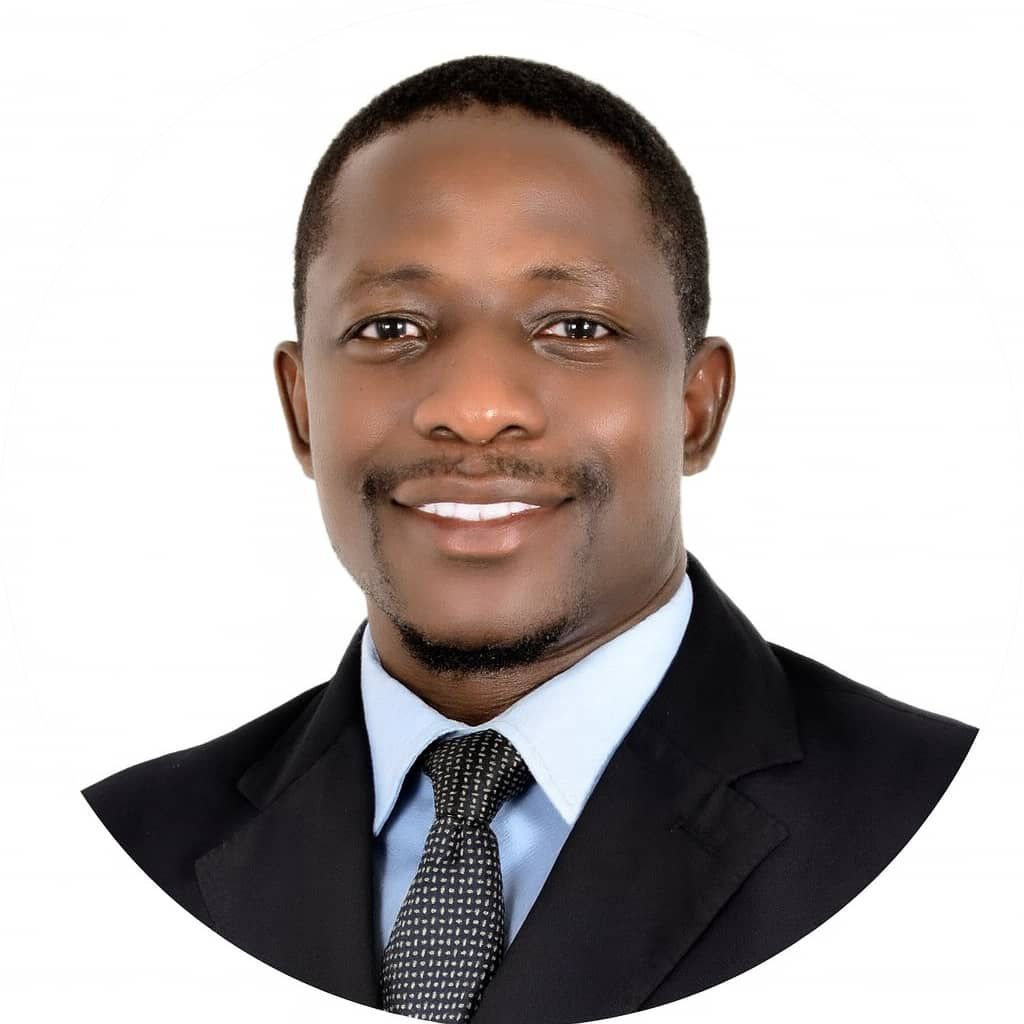
Evan Sande Ndahura is a Ugandan political and legal commentator, columnist, poet, and social justice advocate whose writings focus on governance, constitutionalism, democracy, and the political economy of power in Africa. He is widely published on issues of judicial accountability, electoral justice, human rights, and institutional reform, with particular emphasis on Uganda's political and legal systems. Ndahura writes from a Pan-African critical perspective, interrogating the failures of state institutions and the lived realities of ordinary citizens under entrenched systems of power. He believes that the liberation of Africa will occur through a mighty pen, not the gun.
Published By | Features Editor