Written By | Health News Agencies
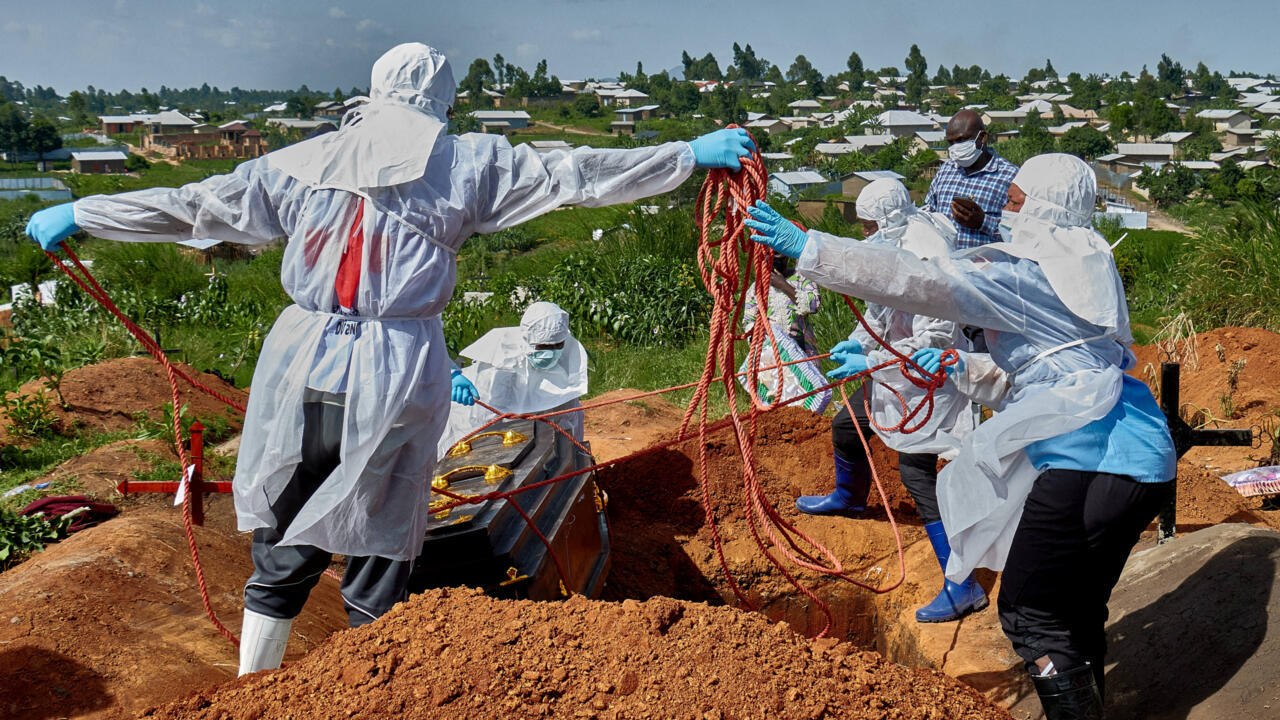
Bundibugyo outbreak blows past 10,060 confirmed cases and 4,887 deaths in DR Congo, with infections now reported in Kenya, Nigeria, Uganda and a diplomat's wife evacuated to Switzerland
HEALTH WATCH | BREAKING
KINSHASA / GENEVA
The numbers are now impossible to ignore. Government data released on Tuesday showed that the Democratic Republic of Congo has passed 10,000 confirmed Ebola cases: 10,060 people infected and 4,887 dead, according to figures reported by Al Jazeera. Nearly one in every two confirmed patients has died.
It is the fastest-growing Ebola outbreak in the country's history and its deadliest. Across the wider region it is now the second-largest and second-deadliest Ebola epidemic ever recorded, trailing only the 2014 to 2016 West African catastrophe that infected around 28,600 people and killed more than 11,000.
And here is the part that keeps public health officials awake at night: this is not the Ebola strain the world has a vaccine for. The culprit is the Bundibugyo virus, a rarer cousin of the famous Zaire strain. There is no approved vaccine and no approved treatment. Doctors on the front line are fighting it with little more than gloves, soap, contact tracing and courage.
From a Quiet Mining Town to a Continental Emergency
The crisis was declared on 15 May 2026, after the World Health Organization had been alerted to a possible outbreak in Ituri province on 5 May. Early tests had actually missed the virus, because they were built to detect only the Zaire strain, a stumbling block that cost precious days. The earliest known suspected case began showing symptoms in late April and died within three days.
Within days of the declaration the WHO had declared a Public Health Emergency of International Concern, its highest level of alarm, and raised the risk in the DRC to very high. What began in three provinces' worth of health zones has since spread to 66 health zones across eight provinces.
The WHO's latest Disease Outbreak News, dated 23 October, tells the story in cold statistics. As of 20 October there were 9,704 confirmed cases, including 4,687 deaths, a crude fatality rate of 48.3 percent. In the space of just two weeks, 976 new confirmed cases and 482 deaths were added. Of those 482 deaths, 307 happened in communities rather than in treatment centres, meaning people died at home, away from any medical care.
Ituri and North Kivu: The Epicentre
The pain is concentrated in the east. Ituri province alone has recorded 7,040 cases and 3,271 deaths. Neighbouring North Kivu has 2,146 cases and 1,199 deaths, with a fatality rate of 55.9 percent, the highest of any province.
These are regions already scarred by armed conflict, displacement and chronic poverty. Responders say some treatment centres are overwhelmed, while remote and newly affected areas have run short of medical supplies and health workers. Al Jazeera reports that at least half of the people who died were never admitted for treatment at all.
The knock-on effects reach far beyond Ebola itself. Routine care, including childhood vaccination, has been disrupted, and maternal deaths have reportedly doubled in some provinces as frightened families avoid clinics and stretched staff are diverted.
The Chilling Statistic: 80 Percent of New Cases Are Unseen
Perhaps the most alarming number of all comes from the response itself. According to the reporting, about 80 percent of new cases are arising from outside the chains of transmission that health authorities are monitoring. In plain English: most new patients are people nobody was watching.
Africa CDC has set a clear benchmark. At least 95 percent of new cases must come from known contacts before an outbreak can be considered under control. The WHO says contact follow-up in the DRC currently stands at 79.7 percent, with North Kivu the weakest at 73.3 percent. The gap between where the response is and where it needs to be is wide.
Contact tracing is the backbone of Ebola control. You find the sick, find everyone they touched, and watch those people for 21 days. When the tracing breaks down, the virus runs ahead of the responders.
Attacks, Strikes and Fear
The response has also been hampered by violence and unrest. On Saturday, attackers killed a nurse and seriously injured a colleague in Bafwasende, in Tshopo province, according to the WHO. Last month, local politician Marie-Celestin Karondwa was reportedly beaten to death after defending the Ebola response on the radio, his party said.
Earlier in the outbreak, residents in Rwampara protested over a disputed body and treatment tents were burned, and eighteen suspected patients escaped from a facility in Mongbwalu after an attack. Strikes over unpaid or delayed wages are now common; responders in Nia Nia, in Ituri, stopped work over bonuses owed since late August.
WHO Director-General Tedros Adhanom Ghebreyesus wrote on X: "Everyone working to protect communities from this deadly disease must be able to work in dignity and safety."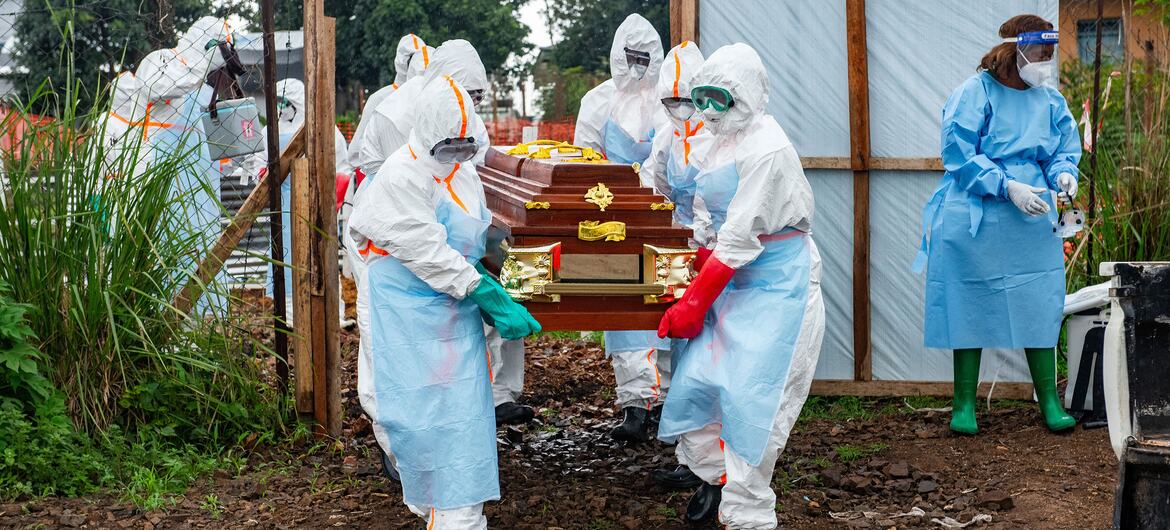
The Virus Goes Abroad
For months the outbreak was largely a Central African story. Now it is increasingly an international one.
In Uganda, Health Minister Chris Baryomunsi announced on Sunday that citizens returning from the DRC must undergo a 21-day quarantine at their own expense. Uganda recorded 20 cases, mostly imported, and two deaths over the summer, though officials say there are currently no active infections.
In Kenya, the WHO reports nine confirmed cases, all linked to a single cluster around an imported index case, with no evidence of wider transmission. Twenty contacts were released from quarantine on Monday while 98 remain under monitoring, and Kenya has screened more than 709,000 travellers.
Then came the case that made headlines in Europe. A woman married to a Swiss diplomat was infected during a September visit to Uganda. She was diagnosed with Ebola while in Nigeria and was evacuated to Switzerland on Monday. Nigeria, now the fourth African country affected, has introduced heightened airport screening. The WHO confirms one imported case in Abuja on 20 October, with 44 contacts under watch.
Despite the alarming headlines, the WHO's risk assessment, last updated on 14 August, rates the risk as very high in the DRC, high in countries that share a land border with it, and low for the rest of the African region and globally. The agency says a revision is under way, and it continues to advise against any restriction of travel to, or trade with, affected countries.
The Race for a Vaccine
There is one glimmer of hope. On Friday 23 October, the WHO announced the start of the first clinical trial of vaccines against the Bundibugyo virus. The TUMAINI Phase 2/3 trial has enrolled its first participants in Bunia, in Ituri province, the heart of the outbreak.
The Coalition for Epidemic Preparedness Innovations (CEPI) has been funding three candidate vaccines, from IAVI, Moderna and Oxford, according to earlier reports. Existing Ebola vaccines and treatments were designed for the Zaire strain, and the evidence that they help against Bundibugyo is limited at best.
Trials in the middle of an outbreak are never simple, and the sheer size of this epidemic means data could arrive faster than usual. But a vaccine that works will take time to test, manufacture and deploy, and the virus is not waiting.
Money, Politics and the Missing Superpower
International funding has flowed, with earlier reports citing pledges of up to 20 million pounds from the UK, 112 million dollars from the United States and 15 million euros from the European Union, while Medecins Sans Frontieres built a 65-bed treatment centre in Ituri. Yet critics, including the Guardian, have described the US as notably absent from the response, pointing to cuts to USAID and US health agencies and its withdrawal from the WHO.
Travel measures have also been controversial. The US earlier imposed an entry ban on non-Americans who had recently been in the DRC, Uganda or South Sudan, while the WHO has consistently argued that travel bans are counterproductive because they push people towards informal border crossings and discourage honest reporting.
What the Experts Say
The WHO's own language is blunt. "Sustained, high-level transmission continues in the Democratic Republic of the Congo," its latest outbreak bulletin states, while describing a substantial scale-up across surveillance, laboratory testing, infection prevention, clinical care, community engagement and contact tracing.
Africa CDC's 95 percent contact-tracing threshold is the yardstick most epidemiologists are watching. Until the proportion of new cases arising from known contacts climbs from the current low levels, experts say, the outbreak will keep growing no matter how many beds are built.
What This Means for You
For the vast majority of readers, the risk of catching Ebola remains very low. The WHO rates the global risk as low, and Ebola spreads through direct contact with the blood or body fluids of a symptomatic person, not through casual contact in the street or on a bus.
If you are travelling to or from affected areas, follow the advice of your national health agency and the WHO, and monitor your health for 21 days after leaving a region with active transmission. Symptoms include fever, severe headache, muscle pain, fatigue, vomiting and diarrhoea, and anyone who develops them after exposure should phone ahead to a health service rather than walking in.
Beware of misinformation. Claims that unproven vaccines already work against this strain, or that the outbreak is a hoax, have circulated widely. The only vaccine trial currently under way has just begun, and there is no approved shot for Bundibugyo.
If you want to help, reputable aid organisations working in the region, including MSF and the Red Cross, accept donations, and supporting accurate information is its own form of help.
The Bottom Line
Ten thousand confirmed cases is not just a milestone. It is a measure of how far a preventable catastrophe has been allowed to run. With almost half of confirmed patients dying, four African countries touched, a patient flown to Europe, and four out of five new cases emerging outside known chains of transmission, the next few weeks will decide whether the response catches up with the virus or the virus keeps writing the headlines.
The first vaccine trial is a genuine reason for hope. But hope is not a strategy. Right now the people stopping Ebola are nurses, burial teams and contact tracers, many of them unpaid, many of them under attack. The world has seen what happens when Ebola is ignored. It is watching again.



