World Politics Briefing
Venezuela is reeling from a natural disaster that has landed atop an already extraordinary political transition. Six months ago, on January 3, 2026, U.S. forces carried out Operation Absolute Resolve, striking infrastructure across northern Venezuela while an apprehension team raided President Nicolás Maduro's compound in Caracas. Maduro and his wife were captured and flown to New York to face drug-trafficking charges. In the chaos, Venezuela's Supreme Court ordered Vice President Delcy Rodríguez to assume the presidency on an acting basis—a transition legal scholars note occurred under deeply contested circumstances, with critics arguing the U.S. operation lacked clear justification under international law.
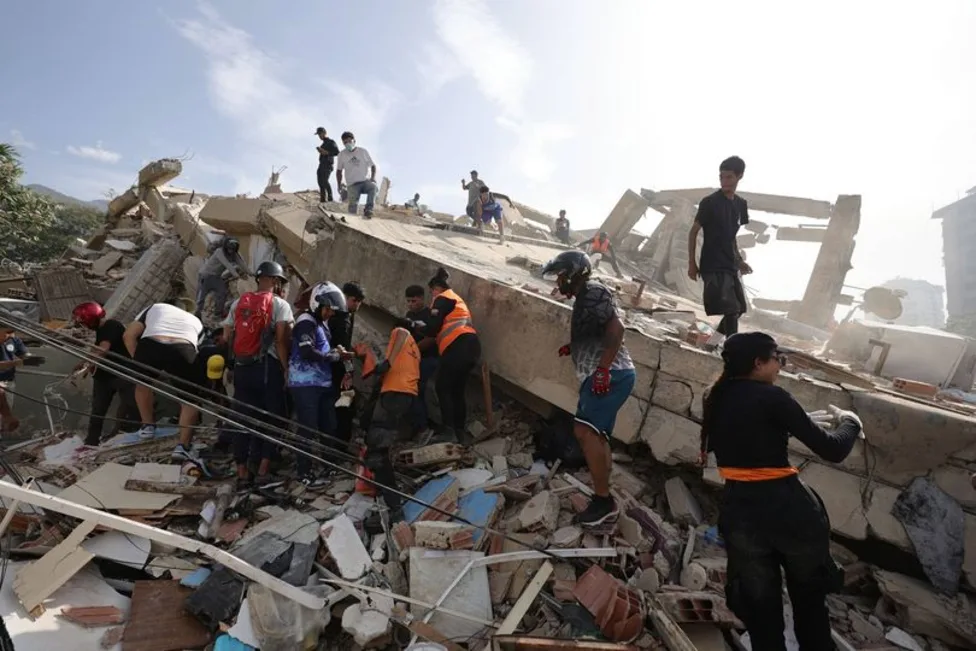
It is into this politically fragile environment—a government of uncertain legitimacy, an economy strangled by sanctions, and institutions stretched thin—that catastrophe struck. On June 24, 2026, two powerful strike-slip earthquakes hit northwestern Venezuela in rapid succession: a 7.2-magnitude quake at 6:04 p.m. local time, followed just 39 seconds later by a 7.5-magnitude mainshock. Both centered near San Felipe in Yaracuy state, roughly 100 miles west of Caracas—the strongest to hit the region in more than a century.

Key Developments
The toll has climbed grimly each day. Early reports put the dead in the low hundreds; by June 26, CNN reported more than 900 killed. Subsequent figures put the death toll at roughly 1,430, with more than 3,200 injured and over 68,000 still listed as missing. The USGS's PAGER system has warned the toll could climb far higher—some projections suggest a worst-case scenario exceeding 100,000 deaths if collapsed structures and unreached areas are fully accounted for. The hardest-hit areas include La Guaira and Caracas, where aging infrastructure and dense housing amplified the damage.
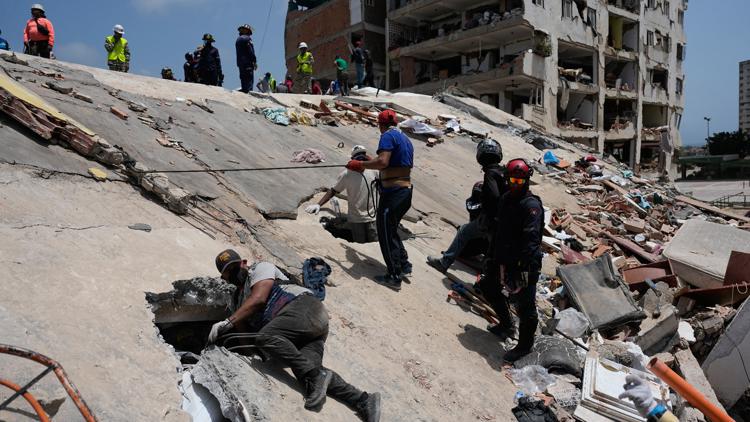
Acting President Rodríguez declared a national state of emergency, mobilizing what resources the government could muster. But the response has been hampered on multiple fronts. Years of economic contraction had already left Venezuela's emergency services and hospital system severely under-resourced. Power outages, communications disruptions, and blocked roads have slowed both damage assessment and relief delivery; residents in several neighborhoods have reported digging through rubble largely by hand.
International aid has flowed in, though unevenly. Brazil, Canada, Mexico, Colombia, El Salvador, Cuba, and the United States have dispatched search-and-rescue teams or supplies, alongside a UN response. India sent two air force aircraft carrying a 41-member medical team, a field hospital, two portable hospital units, 30 tonnes of relief supplies, and six tonnes of medicine. The Red Cross released an initial $2.5 million. Yet aid groups and analysts have warned that long-standing U.S. sanctions—even amid Washington's direct engagement—could complicate logistics and the flow of financial support into the country.
Reactions
Domestically, frustration with the government's response has grown alongside the casualty count. Many Venezuelans have accused Rodríguez's administration of prioritizing the appearance of an efficient relief effort over substance, with reports of bureaucratic delays and uneven aid distribution fueling public anger in a country already exhausted by years of economic crisis and political upheaval.
Internationally, the earthquake response has briefly overridden—without erasing—the extraordinary tension between Washington and Caracas. The U.S. State Department has published guidance on its response even as the legal fallout from Maduro's capture remains unresolved—an unusual juxtaposition of humanitarian engagement and unresolved adversarial history. Regional governments have largely framed their assistance in humanitarian terms, while rights groups continue to press for sanctions to be eased, at least temporarily, to facilitate disaster relief.
Cuba's dispatch of aid was widely read as an attempt to shore up ties with whichever government emerges. Colombia framed its assistance partly as an effort to stabilize a neighbor whose collapse would have direct consequences for border communities. Commentators have noted the irony of Washington funding earthquake relief in a country where it engineered the removal of the head of state months earlier—some argue it reflects a pragmatic separation of humanitarian obligation from unresolved political disputes; others view it more skeptically as an attempt to manage the optics of an intervention that drew international criticism.
What's Next
The coming weeks will be critical on two fronts now deeply intertwined. On the humanitarian side, search-and-rescue operations are racing against time as the survival window narrows; the scale of missing persons suggests the final death toll is likely to keep rising. Longer-term reconstruction—housing, hospitals, water, and power infrastructure—will require sustained international financing that sanctions complications could slow even with goodwill on all sides.
On the political side, how Rodríguez's government performs over the recovery phase could determine whether it consolidates enough standing to govern with any durable legitimacy, or whether the earthquake becomes the moment that exposes how hollow that authority already was. Venezuela's trajectory—disaster relief, sanctions policy, and the unresolved question of its post-Maduro political order—will likely remain a recurring story through the rest of the year.
Published By | News Editor