Written By | Evan Sande Ndahura
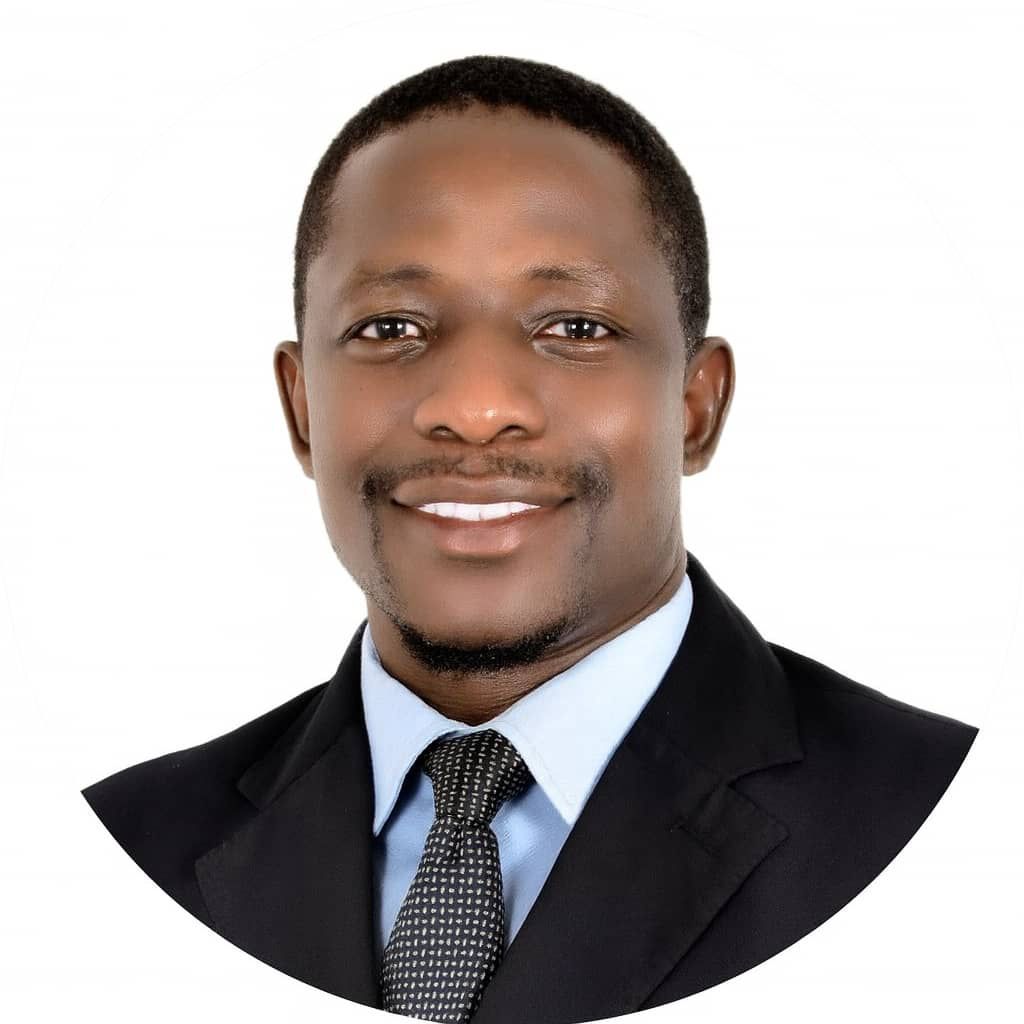
Evan Sande Ndahura is a Ugandan political analyst, columnist and poet whose work has appeared in national online media, international platforms and literary journals
As travellers arrive at Entebbe International Airport or cruise down the Kampala–Entebbe Road, the first political sight is not a neutral welcome to Uganda; it is a wall of yellow posters celebrating President Yoweri Museveni and the ruling National Resistance Movement (NRM). This visual dominance at transport gateways and major thoroughfares symbolises a campaign playing field already tilted before votes are cast.
Numbers Tell a Story: Registers and Representation
According to the official National Voters Register released by the Electoral Commission (EC) in late 2025, Uganda has 21,681,491 registered voters for the 2026 general elections. The breakdown shows approximately 10.3 million male voters (47 percent) and 11.3 million female voters (53 percent) on the official roll.
In contrast, the NRM — not a state institution but a political party — claims between 11 million and 18.5 million members on its voters’ lists, depending on which party statement is cited. Earlier internal audits reportedly reduced nominal figures from about 17 million to approximately 11.4 million authenticated members. However, President Museveni and other party leaders have also been quoted asserting figures of more than 20 million party members, with around 18.5 million designated as “voters” within those numbers — a claim that, if taken literally, would imply that the NRM’s internal list nearly approaches the size of the national voters’ register itself.
This discrepancy raises legitimate analytical questions: how does a party membership tally — neither independently audited nor legally binding as a public electoral record — approach or exceed the total number of registered, eligible voters? Critics argue that such figures risk creating a narrative in which the NRM appears to command a majority even before election day, thereby undermining the credibility and fairness of electoral competition.
Uneven Ground: Security, Media and Competition
President Museveni’s extended tenure — spanning four decades — has not only centralised executive power but also entrenched the institutions surrounding it. Security forces, including the police and military, far from acting solely as neutral guarantors of public safety, have frequently been accused by opposition figures of disrupting rallies, arresting supporters and creating a climate of fear intended to suppress attendance at opposition events, particularly those of National Unity Platform leader Robert Kyagulanyi (Bobi Wine). Heavy deployment of tear gas, arbitrary detentions and the targeting of opposition mobilisers have been widely reported.
This environment of intimidation directly affects the ability of candidates to campaign on equal footing. Political analysts, including scholars and civil society observers, characterise these tactics as forms of pre-ballot manipulation, creating psychological and physical barriers to free assembly that can be as consequential as irregularities at the ballot box itself.
The national broadcaster, Uganda Broadcasting Corporation (UBC), which is mandated to provide equitable access to all candidates, has repeatedly been criticised for giving disproportionate coverage to the incumbent and the NRM flag bearer. Monitoring reports from previous elections consistently note that state media allocate significantly more airtime to the sitting president and government activities than to opposition figures. Critics argue that this pattern has persisted in the current cycle, despite legal obligations to ensure fairness, further disadvantaging challengers seeking to reach voters.
Institutional Muscle: State Resources in a Party’s Hands
Beyond media bias and security constraints, government fuel, vehicles and civil service networks are often deployed in ways that benefit the incumbent. These resources provide a significant advantage in logistics, outreach and daily political visibility — a reality frequently highlighted by political analysts who warn that incumbency in Uganda comes with structural tools of enforcement and persuasion rarely available to opposition parties. Political commentator Dr Maria Musoke observes that the blending of state functions with party operations creates both a perception and a reality in which the NRM’s organisational reach permeates nearly every level of public life, making meaningful competition extremely difficult. This dynamic mirrors trends in other African states where long-serving leaders maintain power through entrenched party systems that dominate formal governance institutions as well as informal networks of influence.
The Numbers on Election Day
If the NRM’s claimed influence were translated directly into votes — with party register figures approaching the size of the National Voters Register — the equation for a competitive election would be fundamentally imbalanced even before campaigns conclude. With over 21.6 million registered voters nationally and the NRM asserting up to 18.5 million members eligible to vote for its candidate, the structural advantage is evident. Whether or not all claimed members actually turn out at the polls, the narrative of inevitability looms large — a narrative that media coverage and security practices on the ground appear to reinforce.
Conclusion: The Mirage of Choice
Uganda’s 2026 election campaign, as it stands weeks before polling day, is a study in asymmetry. It is not simply that one candidate enjoys popularity; rather, the mechanisms of power — from voter registers to radio and television coverage, from security deployments to institutional control — overwhelmingly favour continuity over change. Under such conditions, the prospect of a genuinely competitive election becomes more theoretical than real.
About the Writer
Evan Sande Ndahura is a Ugandan political analyst, columnist and poet whose work has appeared in national online media, international platforms and literary journals. He has published extensively on governance, social justice and electoral integrity in Africa. His previous articles examine the interplay between media, security and civic space in Ugandan politics, while his poetry has featured in anthologies exploring identity, political struggle and the aspirations of Africa’s youth.



