Written By | International News Agencies
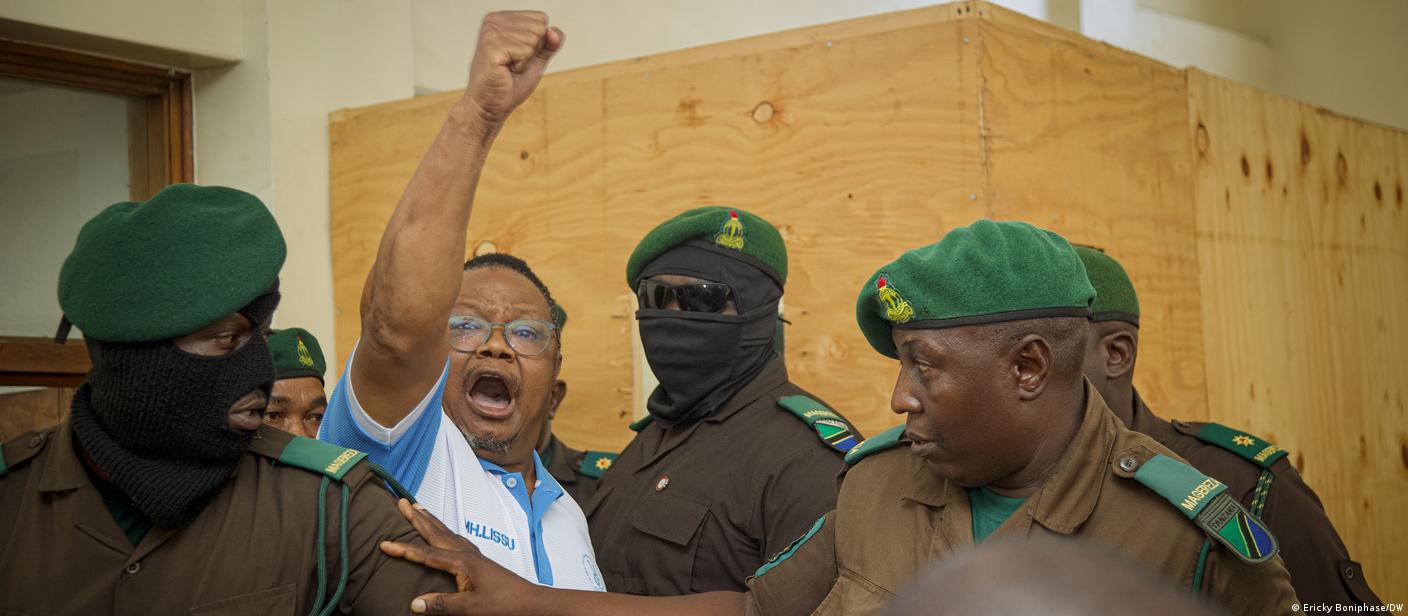
Lissu has been a longtime critic of Chama Cha Mapinduzi (CCM), which has governed since independence in 1961
TANZANIA
A High Court judgment due Friday in the treason trial of Tundu Lissu, Tanzania's best-known opposition leader, will be the clearest signal yet of how President Samia Suluhu Hassan's government intends to handle dissent a year after the country's deadliest postelection violence. Lissu, 58, leads the Chadema party and has been in custody since April 2025. The charge carries a possible death sentence. He denies it, and his lawyers and rights groups call the prosecution politically motivated.
Why the verdict matters now
The ruling lands in a tense week. Chadema declared seven days of mourning, ending Wednesday, for those killed in the unrest that followed the Oct. 29, 2025 election. The anniversary was Oct. 29, and on Oct. 30 UN human rights experts pressed Tanzania to publish the full findings of its official inquiry into the violence. Lissu's case sits at the center of both questions: whether the opposition can operate in Tanzania at all, and whether anyone will be held accountable for the deaths.
Who Lissu is, and what he is charged with
Lissu has been a longtime critic of Chama Cha Mapinduzi (CCM), which has governed since independence in 1961. He survived a 2017 assassination attempt in which, according to Associated Press reporting, he was shot 16 times, and he spent years in exile before returning to Tanzania in 2023. He was the runner-up in the 2020 presidential election, Sahara Reporters noted.
He was arrested on April 9, 2025, after a rally calling for electoral reforms, and charged the next day, AP reported. Prosecutors allege that a speech by Lissu encouraged the public to rebel and disrupt the October 2025 general election. Lissu called for a boycott of the vote unless the electoral process was reformed, and he says that call does not amount to treason, AFP reported. He has pleaded not guilty. The United Nations Working Group on Arbitrary Detention has found his detention arbitrary, according to the UN experts' statement as reported by Devdiscourse.
The October 2025 election and its aftermath
Chadema was barred from the 2025 election after the electoral commission said it had failed to sign an electoral code of conduct, according to Sahara Reporters. The presidential candidate of the second-largest opposition party was also barred, AP reported. Hassan won with 97% of the vote, according to AP; AFP reported her share as 98%. Some international observers said the vote fell short of being free and fair.
Protests led by young people began on election day, Oct. 29, 2025, and turned deadly. The internet was shut down for several days. A government-appointed Commission of Inquiry, chaired by Mohamed Chande Othman, reported on April 23, 2026 that at least 518 people had died. Othman said the real figure was likely higher because some families buried relatives without taking bodies to morgues. The commission reported that thousands were injured, more than 800 of them with gunshot wounds, and that 245 people remained unaccounted for. Thirty-nine families said they had seen relatives' bodies in morgues that later disappeared.
Chadema puts the death toll at about 2,000. The UN has said it could not verify that figure because of insecurity and the internet shutdown. The commission blamed organized, coordinated groups that it said had recruited and trained participants, and it described the demonstrations as "acts of violence" because they breached a law requiring 48 hours' notice to police and took place on election day. It found no evidence of mass graves, which human rights groups had alleged. Othman recommended further investigation into the use of firearms, since some witnesses said relatives were shot inside their homes.
Hassan apologized to the diplomatic community for the internet shutdown, promised a reconciliation commission, said the commission's findings would guide constitutional amendments, and announced a criminal investigative body to identify those who planned, financed or took part in crimes such as looting and damage to infrastructure, AP reported.
Accountability gaps, according to UN experts
On Oct. 30, UN human rights experts said victims were still waiting for answers a year later, according to Devdiscourse's report of their statement. They said the commission's final report, submitted in April, remains unpublished. The published summary names no perpetrators, makes no prosecution referrals and offers no recommendations on individual accountability, they said, and no state officials had been charged. A second commission began work in August, and its mandate and scope have not been made public. The experts also described reports of enforced disappearances, extrajudicial killings, arbitrary arrests and torture, threats against victims' families, journalists and rights defenders, and what they called transnational repression of people who fled to neighboring countries.
The government rejects accusations of widespread human rights abuses and says it respects the law. In July, Chadema said 51 of its officials faced terrorism charges linked to planned demonstrations, according to Reuters reporting summarized by Africa Briefing. The government ordered an investigation into abduction reports in 2024, but no official findings have been published.
The fight over lawyer access
The weeks before the verdict have been dominated by a dispute over Lissu's right to meet his lawyers in private. On Oct. 16, three High Court judges ruled that prison officers had breached rules protecting confidential lawyer-client conversations, holding that officers may watch such meetings but must stay out of earshot, according to Africa Briefing. Chadema legal adviser Rugemeleza Nshala said that on Oct. 17, 18 and 23 lawyers returned to Ukonga Prison and found officers still close enough to hear. Chadema Secretary General John Mnyika said the prison administration "openly defies judicial orders." The court has not established those allegations, Africa Briefing noted.
Lissu then threatened, and began, a hunger strike. Accounts differ on when. Reuters and Chadema spokesperson Brenda Rupia said he stopped eating on Oct. 26 after three lawyers, Dickson Matata, Doris Kafuku and Neema Massame, were turned away. AP reported that he postponed the strike on Monday after prison authorities promised private access, then refused food on Tuesday morning, Oct. 27, when the consultations did not take place. All accounts agree on the ending: he resumed eating on Oct. 27, after lunchtime, following a private meeting with his younger brother, Nshala said. Some outlets, including a Nov. 2 regional intelligence brief, still describe the strike as ongoing; the AP and other reports from Oct. 27 and 28 indicate it ended. Prison authorities and the government made no public statements about the strike, AP reported. Prisons chief Jeremiah Katungu told Reuters he would investigate, and a prison spokesperson, Elizabeth Mbezi, said the service would provide an update.
Lissu also staged a hunger strike in May 2025 to protest being required to appear in court by video link, AP reported.
Possible outcomes
Friday's judgment can go several ways, and none is free of political cost.
A conviction would be the most consequential. Treason carries a possible death sentence, and a death sentence or long prison term would remove the opposition's most prominent figure at a time when Chadema has been excluded from elections and dozens of its officials face terrorism charges. A conviction would also likely deepen criticism from the UN experts and rights groups, who have already questioned the proceedings. The government's position, however, is that it respects the law, and it could point to a verdict as the product of an independent judiciary.
An acquittal would be a major surprise, but it would give Hassan a chance to show moderation and might ease pressure from foreign partners. It would not by itself address the unresolved questions about the 2025 killings or the barring of Chadema from the ballot.
A postponement is also possible. Lissu has been detained for more than 18 months, according to AP.
Analysis
The case has become a proxy for a wider argument. The government's account, laid out in the inquiry report, is that the 2025 unrest was organized and financed and that those responsible must face criminal consequences. The opposition's account is that a legitimate call for electoral reform was criminalized and that security forces killed protesters with impunity. Both accounts are being tested in parallel: the courtroom proceedings against Lissu and the long-delayed question of who answers for the deaths.
Hassan's own promises raise the stakes. She has pledged a reconciliation commission and constitutional amendments, but critics will ask how credible those pledges are while the main opposition leader is on trial for treason and the full inquiry report remains unpublished. The UN experts made that link explicitly, arguing that withholding the report undermines victims' rights to truth and justice.
What to watch
Whether the court delivers its judgment on Friday as scheduled. Whether any sentence follows immediately. How Chadema responds, including whether it calls demonstrations after seven days of mourning. Whether the government publishes the full inquiry report or details the work of the second commission. Whether prison authorities now allow confidential lawyer meetings in line with the Oct. 16 ruling. And how foreign governments react, since Tanzania's treatment of its opposition has drawn international attention.



