Written By | International News Agencies
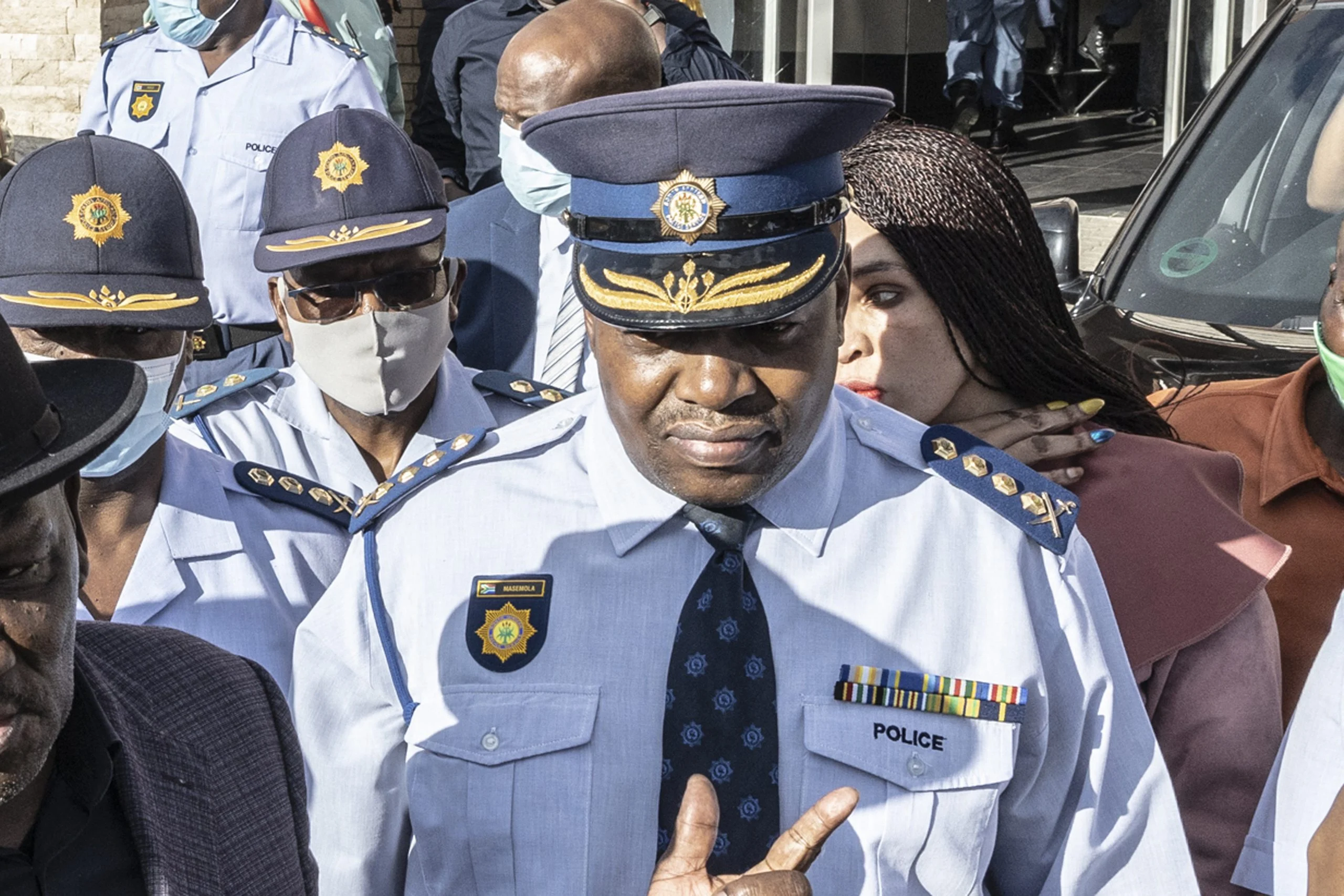
South African Police
Pretoria, South Africa
More than a year after a provincial police commissioner accused South Africa's law enforcement and intelligence apparatus of being captured by organized crime, the judicial commission set up to investigate his claims is entering its final months of testimony with a growing list of implicated officials, a suspended Cabinet minister still in limbo, and mounting questions about whether President Cyril Ramaphosa's coalition government can absorb the fallout before it reaches its own conclusions. On Aug. 12, the Madlanga Commission of Inquiry opened a new phase of hearings — Day 157 of a process that had already stretched past its 150th sitting — with testimony that, by Aug. 19, had commission-watchers describing the proceedings as one that "the more we hear, the worse it gets."
The commission, chaired by Constitutional Court Justice Mbuyiseli Madlanga, exists because of allegations first made public on July 6, 2025, by KwaZulu-Natal police commissioner Lt. Gen. Nhlanhla Mkhwanazi, who said South Africa's criminal justice system had been compromised by a sophisticated criminal syndicate with tentacles inside the South African Police Service (SAPS), the National Prosecuting Authority, the judiciary, Parliament, the State Security Agency and the Department of Correctional Services. Ramaphosa established the commission days later to test the veracity, scope and extent of those claims — a mandate that has since widened to encompass some of the most senior figures in South Africa's security establishment.
The Allegations at the Center
Mkhwanazi's most politically explosive claim was that Police Minister Senzo Mchunu had interfered with sensitive investigations and colluded with businesspeople — including at least one person accused of murder — to engineer the disbandment of KwaZulu-Natal's political killings task team (PKTT), a specialized unit that had been investigating assassinations linked to provincial politics and organized crime. Ramaphosa suspended Mchunu from his Cabinet post shortly after the allegations surfaced, and the minister has remained in limbo ever since, neither reinstated nor formally removed, as the commission has worked through the evidence.
The commission's first interim report, delivered earlier this year, recommended disciplinary proceedings and possible criminal prosecution against suspended Deputy National Police Commissioner Lt. Gen. Shadrack Sibiya, along with Sgt. Fannie Nkosi, an individual identified in proceedings only as Witness G, and an alleged political fixer named Brown Mogotsi. A second interim report, delivered to Ramaphosa around Aug. 6, largely confirmed those findings — with one exception the commission did not fully detail publicly — now that the implicated parties have had the opportunity to testify in their own defense. Presidential spokesperson Vincent Magwenya said the follow-up report revisited and reaffirmed the earlier recommendations on the basis of evidence that had since been tested under questioning. Ramaphosa has since ordered a criminal investigation into Sibiya's alleged corruption links, according to South African reporting on the president's response to the report.
A Businessman, a Cartel, and a Reluctant Witness
The commission's most closely watched recent witness has been Vusimuzi "Cat" Matlala, a businessman identified in earlier Crime Intelligence testimony as a leading figure in what witnesses have described as a "Big Five" cartel allegedly operating with influence inside SAPS structures. Matlala appeared under subpoena at the Brigitte Mabandla Justice College in Pretoria but declined to answer most of the questions put to him — a posture that has become a recurring feature of the inquiry, with several implicated figures appearing only reluctantly and offering limited cooperation even when compelled by subpoena.
The commission's proceedings have not spared the man whose allegations triggered the whole process. On Aug. 19, businessman Fadiel Adams turned the tables during testimony, accusing both Mkhwanazi and a co-implicated figure, Khumalo, of abusing power themselves — an allegation that, whatever its ultimate merit, illustrates how the inquiry has evolved from a straightforward vindication narrative into a far messier accounting in which even the original whistleblower faces scrutiny. Separately, testimony in mid-August examined whether Mchunu had violated protocol by sharing a confidential report with an oversight body, adding another procedural allegation to the substantive corruption claims already before the commission.
The result is a political landscape more complicated than the commission's early days suggested. A parliamentary ad hoc committee investigating the same underlying allegations cleared Mchunu of direct links to the criminal underworld in a report issued in July, even as the Madlanga Commission's own findings continued to implicate people in his immediate orbit, including his former deputy national commissioner. That divergence — one oversight body clearing the minister, a judicial commission implicating those around him — has left Ramaphosa without a clean political off-ramp: reinstating Mchunu risks appearing to disregard the commission's ongoing work, while leaving him suspended indefinitely raises separate questions about due process and the stability of his own Cabinet.
Stakes for the Government of National Unity
The timing matters. South Africa's Government of National Unity (GNU), the multiparty coalition Ramaphosa's African National Congress formed with the Democratic Alliance and smaller parties after the ANC lost its outright majority in 2024, has by most accounts held together better than many analysts predicted, maintaining policy continuity and fiscal credibility through its first two years. Real GDP growth reached 1.1% in 2025, up from 0.7% in 2023, and unemployment eased slightly to 31.9% in the third quarter of last year — modest gains the coalition has pointed to as evidence of stability. But the Madlanga Commission's findings, alongside friction points like national health insurance policy and disagreements over foreign policy positioning among coalition partners, represent exactly the kind of sustained institutional crisis that could test whether the GNU's constituent parties stay unified once local government elections — expected between November 2026 and February 2027, with November considered likely — put every coalition partner's local performance under direct voter scrutiny.
Corruption within the security services carries particular political weight in South Africa, where memories of the "state capture" era under former President Jacob Zuma, documented in exhaustive detail by the earlier Zondo Commission, remain fresh. Commentators drawing comparisons between the two inquiries have noted that while the Zondo Commission's findings led to relatively few successful prosecutions despite years of damning testimony, the Madlanga process has already produced faster-moving consequences — suspensions, at least one ordered criminal investigation, and a minister sidelined for more than a year — even before its final report is complete. Whether that pace holds, or whether Madlanga ultimately follows Zondo's pattern of extensive documentation without matching accountability, is likely to shape public trust in South Africa's post-apartheid institutions well beyond this single inquiry.
What Comes Next
The Madlanga Commission's final report is due to be submitted to Ramaphosa on Nov. 16, 2026, giving the inquiry roughly three more months to complete testimony, including further evidence expected from senior SAPS, State Security Agency and prosecutorial witnesses. Ramaphosa faces a parallel political clock: mounting pressure from opposition parties and civil society to make a definitive decision on Mchunu's Cabinet future rather than allowing the suspension to drift indefinitely, a decision he has so far said he wants to make only once the commission's work is complete.
What to Watch
Three threads will determine how much lasting damage the inquiry does to South African governance. First, whether the criminal investigation Ramaphosa ordered into Sibiya translates into an actual prosecution, which would mark a meaningful departure from the Zondo Commission's largely unrealized recommendations for criminal accountability. Second, whether Ramaphosa moves on Mchunu's status before or only after the Nov. 16 final report, a decision that will be read as a signal of how seriously the presidency treats the commission's findings versus the political cost of alienating factions within the ANC aligned with the minister. Third, whether the emerging cross-accusations — Adams against Mkhwanazi, questions about Mchunu's own conduct with confidential reports — end up diluting public confidence in the commission's central findings or are seen as evidence the inquiry is functioning as intended, following the evidence wherever it leads rather than simply validating the whistleblower who started it all. With local elections approaching and the GNU's cohesion already tested on multiple fronts, how Ramaphosa handles the commission's conclusion may prove as consequential for South African politics as the underlying corruption allegations themselves.



