Written By | International News Agencies
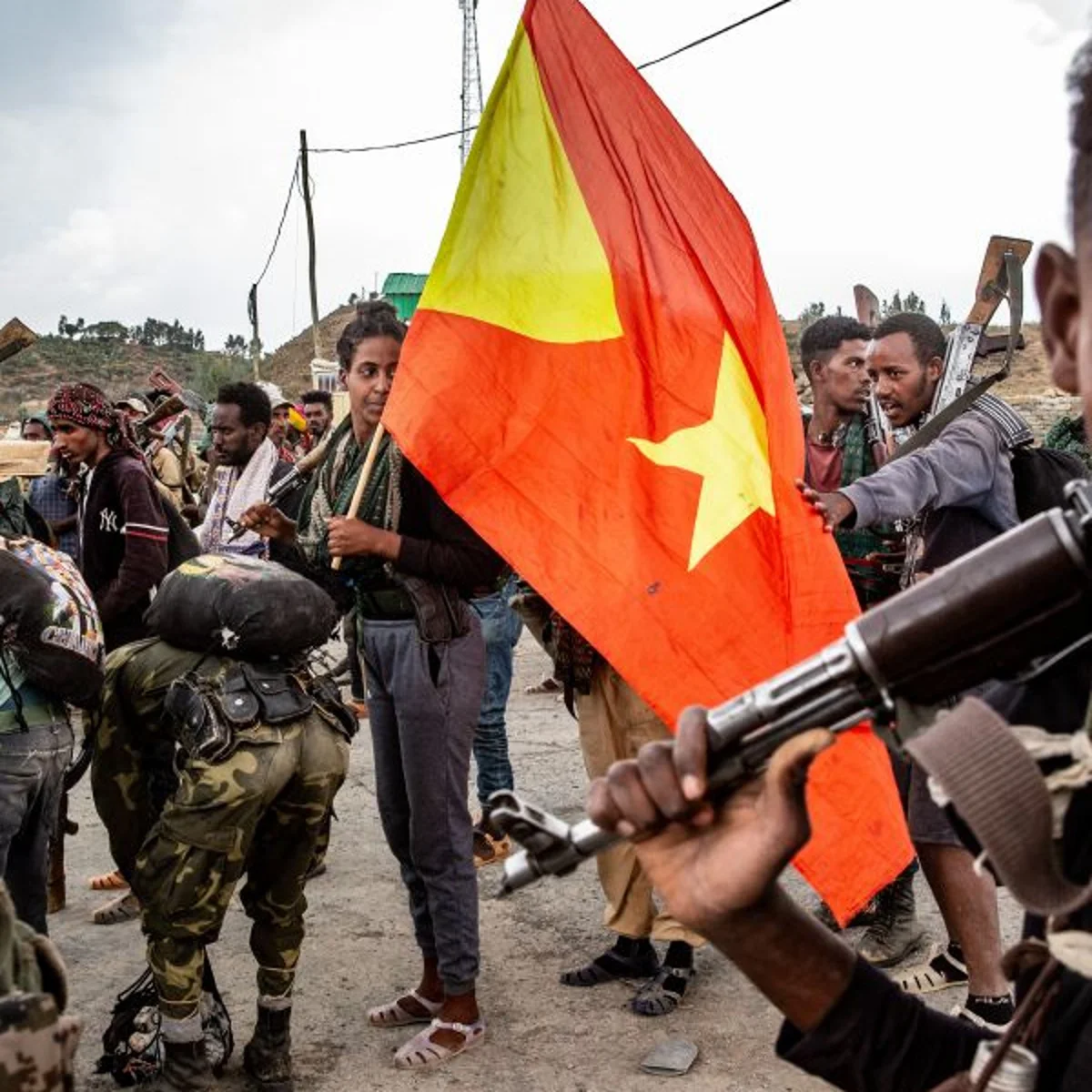
Addis Ababa says Eritrean soldiers have crossed into Tigray, and Asmara says it is the target of a "declaration of war."
POLITICS
Ethiopian federal forces and allied militias have driven a rebel coalition out of Mekelle, the Tigray regional capital, and pushed on to Adigrat, a town roughly 25 to 30 kilometers (15 to 19 miles) from the Eritrean border. The advance has coincided with a dangerous diplomatic escalation. Addis Ababa says Eritrean soldiers have crossed into Tigray, and Asmara says it is the target of a "declaration of war." Both governments have now taken their cases to the United Nations Security Council.
In a letter to the council last Friday, Ethiopian Foreign Minister Gedion Timothewos said Eritrean troops had advanced up to 60 kilometers into Tigray, calling it "a blatant act of aggression that engages Ethiopia's inherent right to self-defence," invoking Article 51 of the UN Charter, according to Al Jazeera's account of the letter. He did not say what measures Ethiopia might take. Eritrean Foreign Minister Osman Saleh replied on Saturday, urging the council to condemn what he called Ethiopia's "deplorable declaration of war" and to take "deterrent measures."
Most claims about Eritrean troop movements remain unverified, and the military picture has shifted from day to day.
How the Pretoria peace came apart
The current war grows out of the unraveling of the November 2022 Pretoria agreement, which ended a two-year conflict between the federal government and the Tigray People's Liberation Front (TPLF). That war killed hundreds of thousands of people, according to Al Jazeera. Eritrea fought alongside federal forces against the TPLF, but it was not a party to the Pretoria deal. Relations between Addis Ababa and Asmara soured afterward, and the two governments disagree over the agreement and over Ethiopia's demand for access to the Red Sea.
Several disputes were never resolved. Wikipedia's timeline of the 2026 clashes, which compiles reporting from outlets such as ACLED, notes that Amhara officials continued to occupy Western Tigray, and that the TPLF installed Debretsion Gebremichael as Tigray's regional president in May 2025, creating a rival to the pro-government interim administration. Days-long fighting between the TPLF and the Ethiopian National Defense Force (ENDF) erupted in late January and early February. By mid-July the TPLF was calling the Pretoria agreement "effectively dead." In August, federal drone strikes hit Tigray, including an Aug. 20 strike in Mekelle that Human Rights Watch called "unlawfully indiscriminate."
On Sept. 20, a coalition calling itself the Ethiopian Peoples' Forces Alliance for Survival was formally announced. Al Jazeera reports that it includes seven armed groups, among them the TPLF and groups from the Amhara, Afar, Somali and Benishangul-Gumuz regions, with the stated aim of removing Abiy's government. On Sept. 23, the alliance launched a large offensive across Tigray, Amhara and Afar. The TPLF describes its campaign as a "defensive war" against federal drone and artillery strikes.
Two weeks of fighting
The coalition made quick early gains. By Sept. 27, according to the Critical Threats Project, the Afar Revolutionary Democratic Unity Front and the TPLF's military wing, the Tigray Defense Forces, had taken the towns of Abala and Erebti from federally backed forces.
Then the tide turned. Critical Threats reported that federal and allied forces retook Abala and Erebti on Oct. 1, and that the ENDF advanced more than 20 miles along the A2 highway toward Mekelle between Sept. 28 and Oct. 2, capturing Korem on Sept. 30. Al Jazeera reported on Oct. 1 that government troops were within about 40 kilometers of Mekelle, that some TPLF leaders had left the city, and that electricity and internet service across the region had been cut.
The war also reached the capital. Three diplomatic sources told Reuters that blasts were heard in Addis Ababa overnight on Sept. 30 and Oct. 1, hours after the government banned drone flights over the city. A source linked to the alliance told Reuters that it had carried out the drone strikes, some aimed at military headquarters. Al Jazeera noted that it could not independently verify that claim.
On Monday, Oct. 5, Ethiopian forces captured Mekelle, according to Reuters reporting carried by Al Jazeera. The TPLF confirmed that it had withdrawn and moved its regional administration "temporarily." Debretsion said the movement would "confront the enemy on our terms and where we choose." Days earlier, he told TPLF-aligned Tigrai Television that his forces were making "strategic" withdrawals and shifting to "mobile" fighting, according to Critical Threats.
The human cost is only partly documented. Reporting summarized by Wikipedia, citing the BBC and Al Jazeera, says a federal drone strike on a school in Alamata on Sept. 22 killed 14 civilians and wounded 22, and that at least 52 civilians were killed when the town was captured on Sept. 28, according to a medic cited by the BBC. Al Jazeera reported that thousands of civilians fled Mekelle and that more than 80,000 Afar residents were reportedly trapped in a contested area. That figure comes from reporting on the ground and has not been confirmed by independent authorities.
The Eritrean front
The most consequential allegation is that Eritrean forces have re-entered Ethiopia. On Oct. 7, Reuters reported that at least two witnesses saw dozens of Eritrean soldiers pass through Adigrat in two trucks, and that a third resident said relatives had seen them too. Reuters could not verify the accounts. Gebreigziabher Beyene, a commander of the pro-government Tigray Peace Force, said: "The Eritrean army has entered Tigray in uniform, equipped with heavy weaponry."
ACLED, the conflict-monitoring group, reported that Eritrean troops crossed near Zalambessa and were hit by Ethiopian drones as they advanced toward Idaga Hamus, according to Al Jazeera. Eritrea has not formally addressed those reports. Its information minister, Yemane Meskel, did not deny that troops had crossed the border. He called Ethiopia's "self-defense" framing a "fallacious narrative" designed to disguise what he described as a war of aggression. Asmara denies backing the alliance and says the incursion claims are a pretext for an Ethiopian offensive.
Diplomatic relations collapsed in the first days of October. Ethiopia said it would close its embassy in Asmara and ordered 10 Eritrean diplomats to leave within 48 hours, accusing Eritrea of "direct and indirect acts of hostility and belligerence." Eritrea responded by severing ties and said it had "no option but to reciprocate in kind."
Egypt, Sudan and the regional alignment
Ethiopia has also accused Egypt and Sudan of enabling the rebels; both deny it. Critical Threats reported that Ethiopia expelled an Egyptian diplomat on Oct. 1 and that Egypt retaliated in kind. Around Oct. 4, the leaders of Egypt, Eritrea, Sudan and Somalia, meeting in New Alamein, Egypt, issued a joint declaration calling for sovereignty, noninterference and peaceful resolution of disputes. Al Jazeera stressed that this is not a formal military alliance and that its members' interests differ, but the timing and the signatories were pointed. Analyst Hossamaldeen Ibrahim of the Bloomsbury Intelligence and Security Institute said Egypt sees the Renaissance Dam, and any Ethiopian move toward the Red Sea, as a strategic threat.
Bloomberg reported on Sept. 30, as cited by Critical Threats, that Ethiopia plans to withdraw about 3,000 troops from Somalia, where they support operations against al-Shabab.
Red Sea ambitions and domestic stakes
Abiy was sworn in on Oct. 5 for a second five-year term after his party's win in the June 1 election, Al Jazeera reported. He told parliament Ethiopia would work to secure a sea outlet on the basis of "give and take." Ethiopia has been landlocked since Eritrea's independence in 1991 and depends heavily on Djibouti, and Abiy has made Red Sea access a priority since 2023. The Economist's Tom Gardner said Ethiopia's top strategic goal is Red Sea access and that it also seeks to remove Eritrea's government, calling this "the most dangerous moment for the region since" the 1998 to 2000 border war.
At home, the TPLF, the Amhara Fano militia and the Oromo Liberation Army all challenge Addis Ababa, Al Jazeera notes. Capturing Mekelle gives Abiy a political victory, but not a settlement.
Analysis: a victory that resembles 2020
The central lesson is in the history. In November 2020, federal forces also took Mekelle and declared victory. The TPLF regrouped, and the war ran for nearly a year and a half, Al Jazeera's Zecharias Zelalem noted. Debretsion's language about fighting "where we choose" suggests that the TPLF is planning for the same scenario. The coalition is also an unstable arrangement: some members fought each other in the earlier war, according to Wikipedia's summary, and its cohesion will be tested in a guerrilla campaign.
The Eritrean dimension is what turns a civil war into a regional one. Analysts offer competing readings. Ibrahim described a "high-risk phase of limited but direct military confrontation" and said the end of diplomatic ties removed the "last formal mechanism for crisis management." Matthias Rompel of Justus Liebig University Giessen said Ethiopia's claims "remain difficult to substantiate independently," but that "the danger of a wider interstate conflict is real" and that diplomatic space is "rapidly narrowing."
Ibrahim added that each side "now treats the other's narrative as existential." Etana Dinka of the University of Miami said the army's advance "directly threatens" Eritrean President Isaias Afwerki and the Eritrean state, which helps explain why Asmara and Cairo are aligning.
What to watch
Four developments will show where this goes. First, whether independent evidence emerges of Eritrean units inside Tigray, and whether Ethiopian drones strike across the border. Second, whether the Security Council acts on either letter, or whether the African Union or a mediator steps into the vacuum left by the Pretoria framework. Third, whether the TPLF can sustain a mobile insurgency. Fourth, the humanitarian picture in a region under a communications blackout.
For now, the facts that are verified are narrow: the city has changed hands, diplomatic ties have been cut, and two governments are accusing each other of aggression before the world's top security body. The facts that are not verified are the ones that matter most.



