Written By |
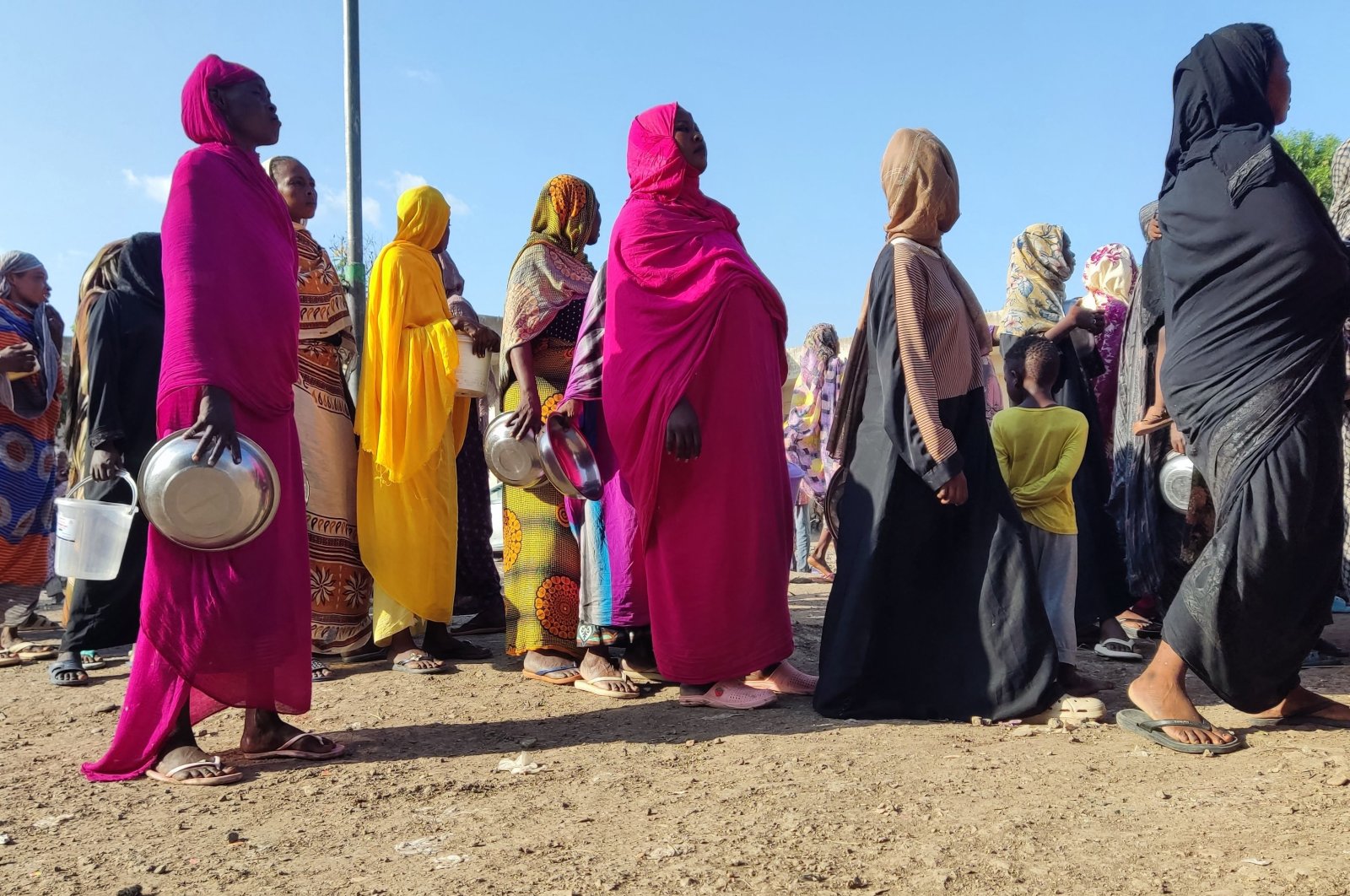
Displaced Sudanese wait in line for food aid at a camp in the eastern city of Gedaref, Sudan (AFP Photo)
KHARTOUM - Sudan is being ravaged by foreign interference, with external powers exploiting the nation’s resources and geopolitical position in a high-stakes battle for control. These forces, working with local militias, pursue self-serving, often criminal goals, disregarding the severe humanitarian crisis affecting the country's 48 million people. An estimated 10 million people are now refugees or internally displaced, living in dire conditions that risk destabilizing the wider region.
A struggle for power
Sudan urgently needs a functioning central government to end the conflict and address the humanitarian disaster. The Sudanese Armed Forces (SAF), led by Gen. Abdel-Fattah al-Burhan, are locked in a fierce struggle with the paramilitary Rapid Support Forces (RSF), headed by Mohamed Hamdan Dagalo, also known as Hemedti. The SAF's victory over the RSF could pave the way for peace and reconciliation.
Neighboring nations' stakes
Sudan’s strategic location bordering the Red Sea, Sahel region, and Horn of Africa makes it vital to regional powers like Egypt and Saudi Arabia. These countries, driven by security and geopolitical interests, must play a pragmatic role in Sudan's peace efforts.
A history of turmoil
Sudan's internal power struggle intensified after the military ousted President Omar al-Bashir in April 2019 following mass protests. Al-Bashir’s 30-year rule saw the rise of the RSF, born from the Darfur conflict, and led to a power struggle between Hemedti and al-Burhan. This rivalry has plunged the country into chaos since April 2023.
Foreign influence and accusations
Foreign actors, particularly the United Arab Emirates (UAE) and the Russian-linked Wagner Group, have been accused of backing the RSF. Sudan’s U.N. representative accused the UAE of supplying arms to the RSF, allegations the UAE denied, pointing to its humanitarian efforts. Despite these denials, the UAE’s stance of recognizing both the SAF and RSF as legitimate factions complicates the conflict.
The Path to Peace
Efforts to broker a ceasefire, including those led by Saudi Arabia and the U.S., have stalled. With Khartoum devastated, the Sudanese government has relocated its administrative operations to Port Sudan.
For peace to prevail, Sudan’s government must decisively defeat the RSF, with support from key regional players like Egypt, Saudi Arabia, and Turkey. Only a unified effort can restore stability and prevent the continued exploitation of Sudan by foreign powers. The longer instability persists, the more elusive the desired control and influence of external actors will become.
Source: Daily Sabah



