Written By |
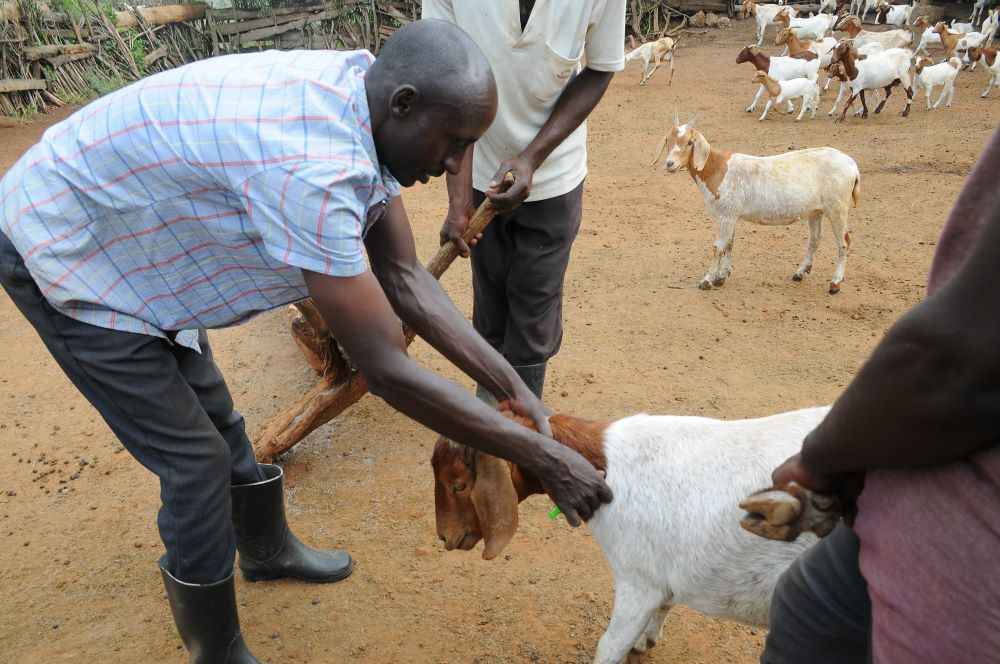
A veterinary worker vaccinating Boer goats at Dr. Baram Kasisi's farm in Sanga, Kiruhura district.(Photo by Fred Kabango)
The government, through the Ministry of Agriculture, Animal Industry, and Fisheries (MAAIF), has announced plans to have farmers pay for the mandatory vaccination of livestock against Foot and Mouth Disease (FMD).
State Minister for Animal Industry, Lt. Col. Bright Rwamirama, said this while dispatching a consignment of 900,000 doses of FMD vaccine.
The first batch of FMD vaccine was dispatched last week to 23 affected districts at the National Animal Disease Diagnostics and Epidemiology Centre (NADDEC) in Entebbe.
Rwamirama noted that, with effect from next month, the government has decided to change the policy of the FMD vaccine from being free and compulsory to being compulsory but at the farmers' cost.
"The cost of the vaccine will be borne by the farmer, while the cost of administration and the services will be borne by the government. This means we shall vaccinate any susceptible animal twice a year, and we remain optimistic that it will mark the end of FMD in this country," Rwamirama said.
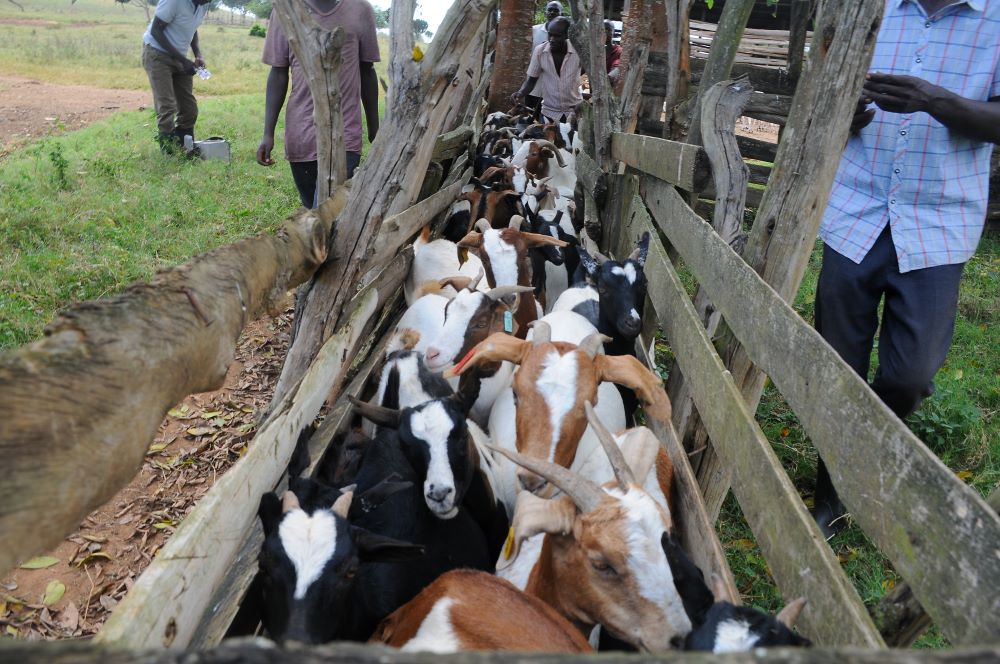
Goats being lined for vaccination at Dr.Baram Kasisi's farm in Sanga, Kiruhura district recently. Photo by Fred Kabango/ Torch Media Africa.
Maj. Gen. (Rtd) David Kasura Kyomukama, the MAAIF permanent secretary, explained that the cost of vaccines will not exceed sh8,000 (about $2) to be met by the farmer, whereas the government shall cater for other services in the vaccination process, such as paying for cold chain, transportation, and veterinary officers.
"We hope that if the vaccination is done consecutively in two years, we shall have blocked transmission and also created hard immunity among the livestock," Kyomukama said, also revealing that the government is in the advanced stages of starting to manufacture FMD vaccines.
First Consignment
The first consignment of 900,000 doses of FMD vaccine, which was handed over to chief administrative officers and district veterinary officers from 23 districts, was part of the 9.8 million doses procured by the government. The vaccines were procured from Boehringer Ingelheim in Germany, while others are to be obtained from Egypt, Kenya, and Botswana. The next consignment is expected in Uganda this week, whereas the last batch will be delivered on June 15, 2024.
Rwamirama noted that the first districts were selected based on high infection rates, high-risk areas, and transit areas. "So for this first phase, we have targeted districts along the Tanzania-Uganda border like Kyotera, Rakai, Isingiro, and Ntungamo. Others are Kiruhura, Lyantonde, Mbarara, Kazo, Lwengo, and Sembabule, which border the game parks," he said.
Dr. James Kakungulu, the assistant commissioner for animal health, said 40 districts across the country have reported FMD outbreaks since October 2023. "We had managed to stay for almost a full year without any FMD outbreaks because of the vaccinations we did in late 2022. We had taken a risk-based vaccination with 2.5 million doses of the FMD vaccine, which had kept us safe for some time, but the FMD immunity lasts only for about six months. Therefore, if we had vaccinated again around June last year, we would have avoided this big challenge," Kakungulu explained.
Dr. Andrew Akashaba, the president of the Uganda Veterinary Association, noted that less funding for the vaccination exercise remains a challenge. He called upon livestock farmers to desist from grazing animals within the confines of national parks, saying diseases can easily spread from wildlife to domestic livestock.
Frank Tumwebaze, the minister for agriculture, animal industry, and fisheries, emphasised that private firms and individuals are not allowed to import FMD vaccines. "All FMD vaccines that we know of in this country are imported through MAAIF, and therefore, anyone who claims to be importing or selling the vaccine in this country must be arrested and charged accordingly," Tumwebaze warned.
He explained that there are different strains of foot and mouth disease across the world. "If private firms and individuals are allowed to import the vaccine, they will more likely import vaccines that do not suit the strains that we have here, hence exacerbating the problem," Tumwebaze explained.
The Monday consignment was dispatched with 260 refrigerators and freezers to all the districts for purposes of storing the vaccines at the recommended temperatures for the vaccines to remain effective until they are inoculated into the animals.



