World Politics
Overview
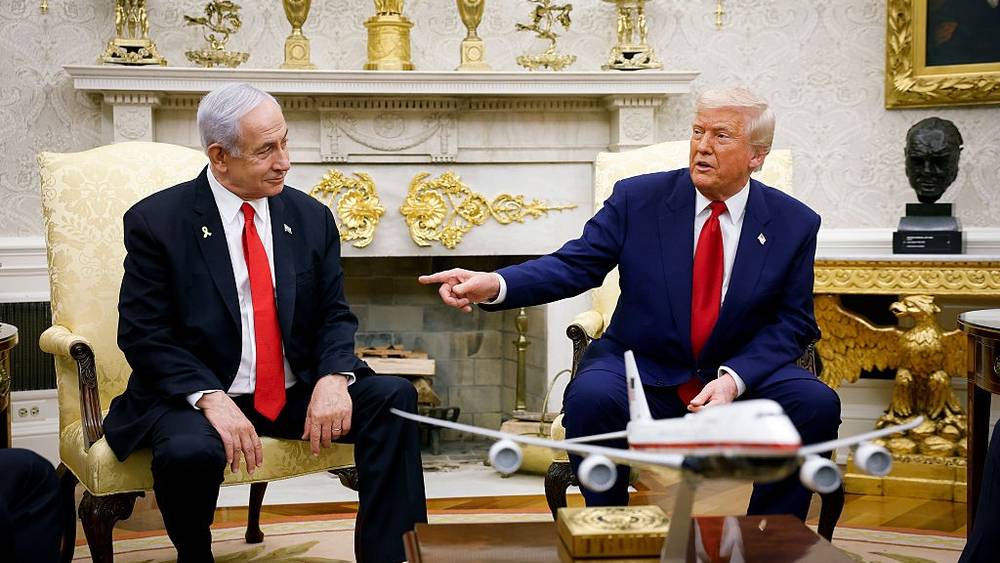
On Election Day, November 3, 2026, President Donald Trump told Fox News that the United States will stop its roughly four billion dollars in annual military assistance to Israel at the end of the year. He said he had agreed to the move with Prime Minister Benjamin Netanyahu months earlier, and he framed it as both a recognition of Israel's self-sufficiency and a way to deny Democrats a political talking point. Israeli officials appeared surprised, the legal and budgetary mechanics were left unexplained, and the announcement landed in the middle of a week that also saw Israel's inconclusive election and American midterms that went badly for Republicans.
The statement, if carried out, would be the most significant change to the US-Israel security relationship in decades. But the gap between the president's words and the machinery of law and treaty-like commitments that governs aid to Israel is wide, and as of Wednesday no formal policy documents had been released.
Background: How US Aid to Israel Works
Most US military aid to Israel flows through a ten-year memorandum of understanding negotiated near the end of the Obama administration. It took effect in 2019, runs through fiscal year 2028, and provides about 3.8 billion dollars a year, including roughly 3.3 billion dollars in Foreign Military Financing, which Israel mainly uses to buy US-made defense equipment. ABC News reported that Israel must spend 92 percent of that financing on American products in 2026 and 2027 and 100 percent in 2028. Trump's four billion dollar figure therefore differs somewhat from the actual MOU amount, and he did not specify which forms of assistance he meant.
An MOU is not legally binding, but Congress effectively wrote the annual financing levels into law in the National Defense Authorization Act for Fiscal Year 2021, a bipartisan measure. That means ending the assistance by year's end would plausibly require congressional action, or at minimum an executive decision to withhold funds appropriated by Congress, which would invite legal and political disputes. The Jewish Telegraph Agency noted it was unclear how the White House could stop the funding this year.
The idea of tapering aid is not new in Israeli politics. Netanyahu said in January that he wanted aid phased down to zero at some point, favoring joint investment and technology partnerships over a traditional aid relationship. Axios reported in late 2025 that Israel had been seeking a longer-term follow-on arrangement with so-called America First adjustments. Meanwhile, American public opinion has moved: an ABC News/Washington Post/Ipsos poll from October found that 58 percent of Americans say the US should reduce or end military support for Israel, and many Democratic congressional candidates ran this year on cutting or conditioning aid. In April, dozens of senators, nearly all Democrats, voted for a failed motion to block certain weapons sales to Israel.

Key Developments: What Trump Said
Speaking on Fox & Friends on Tuesday, Trump said, according to the Jewish Telegraph Agency: "We were giving them $4 billion. We are. But it gets cut off at the end of the year." ABC News quoted him as saying, "we made a deal months ago that we're stopping," and he said Netanyahu "brought it up," adding that ending the aid would be "appropriate."
The president's remarks were explicitly political. He said Republicans face attacks from Democrats over the issue and that he does not want to hand them a talking point, calling the criticism a "bad talking point." Asked why, he said Israel "doesn't need it," and that Republicans should not "suffer the slings from lunatics like an El-Sayed," a reference to Abdul El-Sayed, the Democratic Senate candidate in Michigan, who faced Republican Mike Rogers in a close race and has rejected accusations of antisemitism. Trump made the comments in response to a question about rising antisemitism and the views of younger Americans on arming Israel. He did not say whether the cut would cover cash, equipment or both, and he suggested the move was part of a broader effort to balance the budget. He also indicated that the US would still help Israel if needed.
The announcement came as the United States and Iran remain locked in a standoff over a draft agreement, with US forces having carried out limited strikes on Iranian targets, including on Qeshm Island, in recent days. Israel has been a central party to the Iran war since US and Israeli strikes killed Supreme Leader Khamenei on February 28. Whether a reduction in assistance would affect the supply of interceptors and munitions, which Israel depends on heavily, was not addressed in the reports reviewed.
Reactions
Netanyahu had not issued a public statement as of the reports reviewed, and his office and the Defense Ministry did not immediately respond to ABC News. Two anonymous Finance Ministry sources told the network they were surprised; one pointed to the Obama-era MOU, and the other said next year's budget had already been drafted on the assumption the current agreement would stand. Other Israeli officials did not immediately confirm that any such deal had been reached.
The reaction from the Israeli opposition was sharp, and it was colored by the country's unresolved election. Final results from last week's vote gave Netanyahu's bloc 53 seats, short of the 61 needed for a majority, while the Jewish opposition bloc led by Gadi Eisenkot won 48 and Arab parties 19. Eisenkot said the US relationship is key to Israel's national security and that Israelis learned of the change through the media. He demanded that Netanyahu answer to citizens immediately and said Israel "must replace" him. Yair Golan, chair of the Democrats party, called the end of US aid "heavy damage to Israel's security" and criticized Netanyahu directly. The opposition is trying to assemble a coalition to unseat him.
In the United States, the article sources reviewed did not report an official response from congressional leaders. The timing, hours before polls closed, has fueled speculation about the political intent. Trump's own explanation, that he wished to remove an issue from Democratic hands, suggests an effort to blunt attacks in close races such as Michigan, though Democrats ended up having a strong night regardless.
Analysis: Why Now, and Can It Happen?
Three questions dominate analysis of the announcement: whether it is real, why it was made now, and what it would mean.
On whether it is real, the evidence is thin. No formal order, notification to Congress, or joint statement has been reported, and Israeli officials seemed unaware of any firm agreement. The existence of a prior understanding is asserted by Trump alone. Because the statutory financing levels were codified in 2021 and the MOU runs until 2028, ending payments this year would require either legislation, which now faces a Democratic House beginning in January, or a contested executive decision. It is conceivable that Trump was describing a longer-term tapering, consistent with Netanyahu's January remarks, and compressing it into a headline.
On timing, the political calculus appears straightforward. Public support for continued military assistance has fallen, particularly among younger voters, and Republicans faced pressure from both the left and from restrained-minded voices on the right. By pre-empting the issue, Trump sought to shift the debate. But the move also exposes a tension: Republicans have long positioned themselves as the party of unconditional support for Israel, and ending aid unilaterally in the middle of a regional war strikes some allies as risky.
On consequences, Israel's defense establishment has long argued that while the aid is a shrinking share of its large defense budget, it underwrites procurement of advanced aircraft and munitions and provides strategic leverage. A sudden end would force budget changes in Jerusalem, where a new government is not yet formed, and could be used by Netanyahu's critics, and by his defenders alike, as evidence for competing narratives about his stewardship of the alliance.
What's Next
The most immediate step is clarification. Observers will watch for a statement from Netanyahu's office, for any Pentagon or State Department guidance on how the aid would be wound down, and for responses from the leaders of the congressional armed services and appropriations committees. Israeli President Isaac Herzog is also expected to begin the process of tasking a candidate with forming a government after the election, and the aid question will become part of coalition and campaign politics.
In Washington, the Democratic takeover of the House in January will give the party leverage over appropriations. Some Democrats favor conditions on assistance and may welcome a reduction, while others, along with many Republicans, will resist an abrupt cutoff that could weaken a close ally during the Iran conflict. Legal challenges are possible if the executive branch attempts to withhold appropriated funds.
Finally, the announcement will reverberate in the broader Middle East diplomacy now under way, with Qatar mediating between Washington and Tehran and China seeking a larger role. Adversaries may read a reduction in US support as a shift in the regional balance, while partners will seek reassurance. Until the White House publishes details, the central fact is a presidential statement whose scope, legality and timing remain unclear.
Published By | News Editor




