Written By | International News Desk
How a country entered formal debt distress in the same quarter that the largest private investment in its history went back to work
On 29 January 2026, TotalEnergies chairman and chief executive Patrick Pouyanné stood at Afungi, on the Cabo Delgado peninsula, alongside President Daniel Chapo to announce the full restart of Mozambique LNG. The consortium had lifted the force majeure declared in April 2021 on 7 November 2025; by the January ceremony more than 4,000 workers had been remobilised, and by April 2026 the site count had passed 6,000. Three weeks after that ceremony, on 19 February 2026, the International Monetary Fund published its 2025 Article IV consultation for Mozambique. Its verdict was that public debt is in distress and unsustainable, because debt-service arrears had exceeded one percent of GDP at end-2025 — and that since October 2025 those arrears had begun to touch short-term securities for the first time.
Those two facts describe the central problem of Mozambican economic policy in 2026. The country holds one of the most valuable undeveloped gas positions in the world, and the machinery to monetise it is finally moving again. But first cargoes from Mozambique LNG are not expected before 2029, and meaningful fiscal receipts come later still. The state has to survive the intervening years on a revenue base that is shrinking, with a wage bill and interest burden that, according to the World Bank, already absorb 87 percent of tax revenue.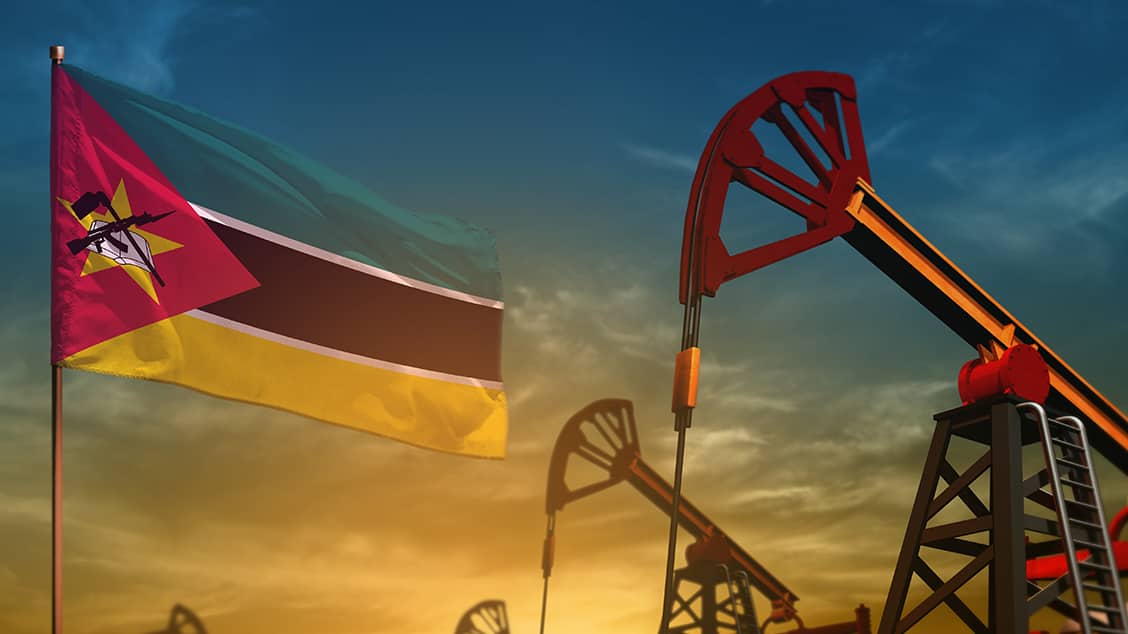
Three forecasts, one economy
The institutions do not agree on what happens next, and the spread is unusually wide. Economic activity contracted by 0.5 percent in 2025 — the World Bank attributes the downturn to post-election unrest following the October 2024 vote, compounded by fiscal pressure and foreign exchange shortages, with the sharpest falls in manufacturing, transport, hotels and restaurants, and electricity and water. For 2026 the World Bank’s April Macro Poverty Outlook projects growth of just 0.9 percent, strengthening to 1.6 percent in 2027 and 2.5 percent in 2028. The African Development Bank, which recorded 2025 growth at 0.2 percent rather than a contraction, projects 2.1 percent for 2026 and 3.5 percent for 2027. The IMF has revised its own 2026 figure to 3.5 percent.
The gap is not a rounding difference; it is a disagreement about how quickly gas construction spending reaches the domestic economy, and about how much of the non-extractive economy is still being suppressed by the foreign exchange squeeze. What the three institutions do agree on is composition: whatever growth arrives in 2026 comes from extractives and construction, not from the sectors that employ Mozambicans.
The fiscal arithmetic
Mozambique’s fiscal crisis in 2025 was a revenue crisis met with a capital-spending cut. Tax revenue fell to 18.7 percent of GDP from 20.3 percent the year before, and total revenue slid from 27.1 to 26.2 percent of GDP on lower grants and higher VAT refunds. Expenditure was compressed from 33.3 to 30.3 percent of GDP, largely through public investment. The headline deficit duly narrowed from 6.1 to 4.1 percent of GDP — but the adjustment fell on the capital budget and on service delivery rather than on the recurrent bill, and it was financed by domestic borrowing that pushed public debt to 91 percent of GDP.
The World Bank now projects the deficit widening again to 5.2 percent of GDP in 2026, 5.7 percent in 2027 and 6.1 percent in 2028, with debt reaching 108 percent of GDP by 2028 on rising domestic interest costs. The joint World Bank–IMF Debt Sustainability Analysis published in early 2026 classified the debt as in distress and unsustainable, citing arrears to both external and domestic creditors estimated at 1.3 percent of GDP at end-2025, with solvency indicators expected to stay above sustainability thresholds for several years. Domestic borrowing on this scale has a second cost: private-sector credit is stuck at around 16 percent of GDP, crowded out and priced out.
Monetary policy has been the one loosening lever. Inflation averaged 4.4 percent in 2025 and fell to 3.2 percent year-on-year in February 2026, below the central bank’s five percent target. The Bank of Mozambique cut its policy rate to 9.25 percent in January 2026, from 17.25 percent two years earlier, and reduced reserve requirements on local-currency deposits from 39 to 29 percent during 2025. Yet the external side tightened rather than eased: the current account deficit widened from 11.0 percent of GDP in 2024 to 14.2 percent in 2025, and a foreign exchange backlog estimated at US$800 million (excluding dividends) persisted alongside a parallel-market premium of around 10 percent as of January 2026, even with reserves at roughly five months of non-megaproject imports.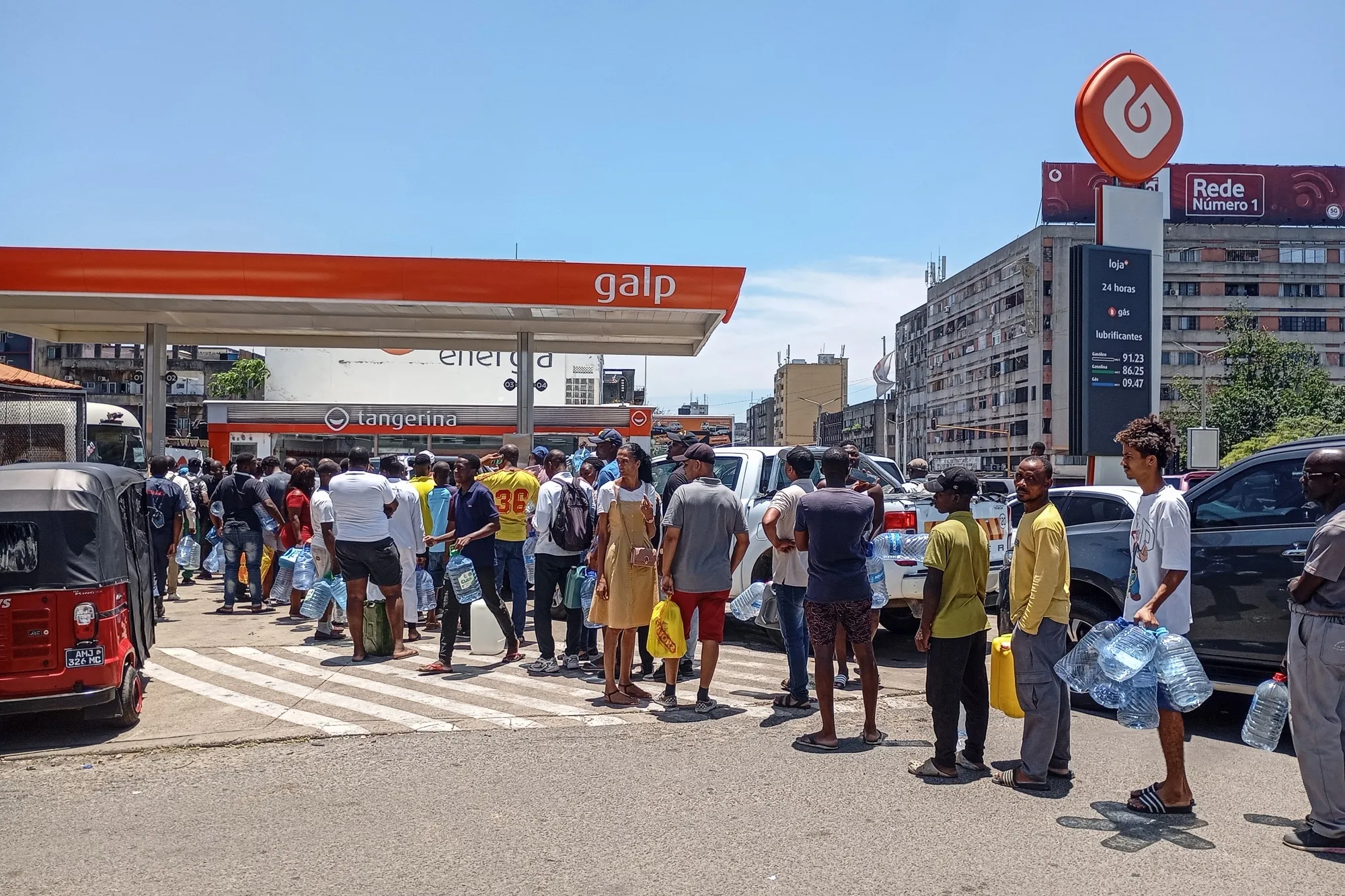
The gas ledger
Against that, the project pipeline is genuinely large. Mozambique LNG is roughly 40 percent complete, with a revised budget of about US$20.5 billion after roughly US$4.5 billion of incremental costs accumulated during the four-year suspension, and first LNG targeted for 2029. In October 2025, President Chapo and Eni chief executive Claudio Descalzi signed the final investment decision for Coral Norte in Maputo — a second floating LNG unit on the northern part of the Area 4 Coral reservoir in the Rovuma basin, with 3.6 million tonnes per year of liquefaction capacity. That single decision doubles Mozambique’s eventual LNG capacity to about 7 million tonnes a year and would place it third in Africa by LNG export capacity. The Coral Norte hull was launched at Geoje in South Korea on 16 January 2026, and Technip Energies secured an engineering and procurement contract in June 2026. A third scheme, ExxonMobil-led Rovuma LNG, has seen its own investment decision timetable slip through 2026.
The macroeconomic signature of all this is a balance of payments that looks alarming and is, in a narrow sense, benign. LNG-related capital imports push the projected current account deficit to 22.7 percent of GDP in 2026 and an average of roughly 23 percent across 2026–28 — financed largely by the foreign direct investment inflows associated with the same gas projects, which the World Bank puts at 32 percent of GDP in 2026. The risk is not that the deficit is unfinanced; it is that almost nothing in it touches the domestic wage economy.
The MOZAL warning
The clearest sign that gas revenue has not yet arrived is what happened to the country’s largest industrial employer of the pre-gas era. Mozal Aluminium, the Maputo-province smelter operated by South32, was placed on care and maintenance from 15 March 2026 after six years of negotiations with the government, Hidroeléctrica de Cahora Bassa and Eskom failed to secure a sustainable and affordable electricity supply beyond March 2026 — a failure compounded by drought-constrained hydropower. The smelter accounted for around three percent of GDP and consumed a very large share of national electricity output. The World Bank estimates the closure alone removes US$1.1 billion of megaproject export revenue.
A gas-rich, hydro-rich country losing its flagship industrial plant over the price and reliability of electricity is a pointed lesson about sequencing. Announced replacements — the 450 MW Temane thermal plant, and the 1,500 MW Mphanda Nkuwa hydropower scheme, now targeting a 2034 start-up — are measured in years, not quarters.
The floor that has not moved
Beneath the megaproject arithmetic sits a social ledger that has barely improved in a decade. Poverty at the US$3-a-day (2021 PPP) line affects about 82 percent of Mozambique’s population, and the World Bank projects it staying at that level through 2027 and 2028. Because population growth outruns the weak recovery, the number of people living below the line is projected to rise by 1.8 million to about 32 million by 2028. Agriculture employs more than 70 percent of workers at low productivity and with high climate exposure; informality dominates the labour market, which is one reason revenue mobilisation is so difficult.
Two shocks compounded that in 2026. The January 2026 floods — which the World Bank compares in scale to the catastrophic floods of 2000 — damaged agriculture, transport corridors and basic infrastructure just as services were resuming after the post-election disruption, and are the main reason inflation is expected to rise to 7.5 percent this year. And in Cabo Delgado, the province that hosts the gas, roughly 945,000 people remain displaced; the IOM’s Displacement Tracking Matrix recorded a further 15,286 individuals in host communities and temporary sites as of 20 May 2026, following the sharp escalation in insurgent violence since early May 2025. The security environment that forced the 2021 force majeure has been managed, not resolved.
What to watch
Three things will determine whether the two clocks converge. The first is arrears: whether the government can stop accumulating them, particularly on domestic securities, since that is the specific trigger behind the distress classification. The second is electricity: whether Mozambique can price and deliver power reliably enough to keep industrial load — the Mozal decision suggests it currently cannot, and the same constraint will apply to any downstream gas processing. The third is Cabo Delgado, where the construction ramp-up at Afungi and the displacement figures are now moving in opposite directions within the same district.
The gas will come. The question Mozambican policymakers face in 2026 is an unglamorous one about the intervening four years: how to run a state whose recurrent costs already consume 87 percent of tax revenue, without borrowing so heavily at home that the private economy which is supposed to absorb a young and growing workforce is squeezed out of existence before the first cargo sails.