SCIENCE
Somewhere in America right now, an oncology nurse is loading a syringe with a weaponized strain of herpes simplex virus — the same family of pathogen behind cold sores — and preparing to inject it directly into a tumor growing under a patient's skin. It sounds like the plot of a B-movie. It is, in fact, the newest FDA-approved cancer treatment in the country, and doctors who've spent years watching patients run out of options are calling it a lifeline.
On August 6, 2026, the Food and Drug Administration granted accelerated approval to Tudriqev (vusolimogene oderparepvec-wtpg) — known for years in labs and clinical trials simply as "RP1" — for use alongside the blockbuster immunotherapy drug nivolumab (Opdivo) in adults with advanced, unresectable melanoma that has already fought off and beaten standard PD-1 immunotherapy. It is the first oncolytic viral immunotherapy approved for melanoma, and only the second cancer-killing virus therapy ever cleared by U.S. regulators.
For the roughly 8,000 Americans a year whose melanoma progresses even after frontline immunotherapy — a group facing a median survival of just over seven months, according to published outcomes data — the approval lands as both a scientific milestone and a moment of very real hope.
Third Time's the Charm
What makes this approval so remarkable isn't just the therapy itself — it's how hard-won it was. The FDA rejected Replimune's application for RP1 twice before this month, both times raising concerns that the pivotal IGNYTE trial was a single-arm study without a randomized control group, a structure regulators worried made it difficult to definitively attribute patient improvement to the drug itself rather than chance or bias in patient selection.
Replimune, a Massachusetts-based biotech, refused to fold. The company pushed for a third review, and on July 30, 2026, an FDA advisory committee voted 10-3 that the IGNYTE data were, in fact, evaluable and showed a clinically meaningful benefit. A week later, the agency reversed course and granted accelerated approval — a regulatory pathway reserved for serious conditions where a therapy shows promise on a stand-in measure, like tumor shrinkage, ahead of definitive proof of longer-term survival benefit.
"For patients with advanced melanoma that has stopped responding to PD-1 blocking therapy, the prognosis is often devastating, and options have been far too limited," said Karim Mikhail, B.Pharm., M.S., acting director of the FDA's Center for Biologics Evaluation and Research, in the agency's announcement. "Clinicians managing these patients know this urgency firsthand. Today's important milestone gives oncologists a meaningful new tool — and more patients a fighting chance."
How Do You Fight Cancer With Herpes?
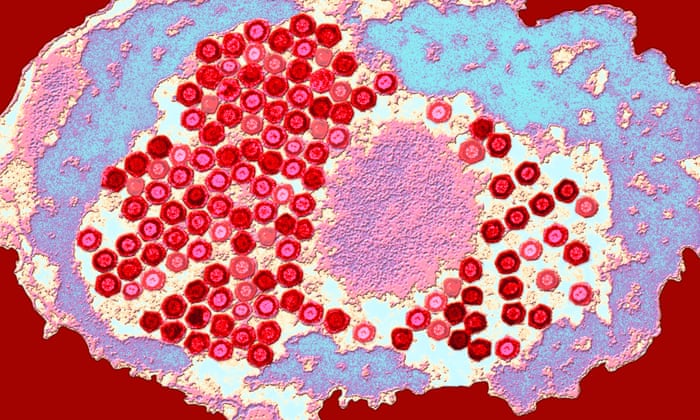
The science behind Tudriqev sounds almost too strange to be real, but it's rooted in decades of virology research. Scientists took a strain of herpes simplex virus type 1 (HSV-1) — the common virus responsible for oral cold sores — and stripped out the genes that let it cause disease in healthy tissue. In their place, they inserted genes for GM-CSF, an immune-signaling protein, and a fusogenic protein called GALV-GP-R that helps burst open cancer cells.
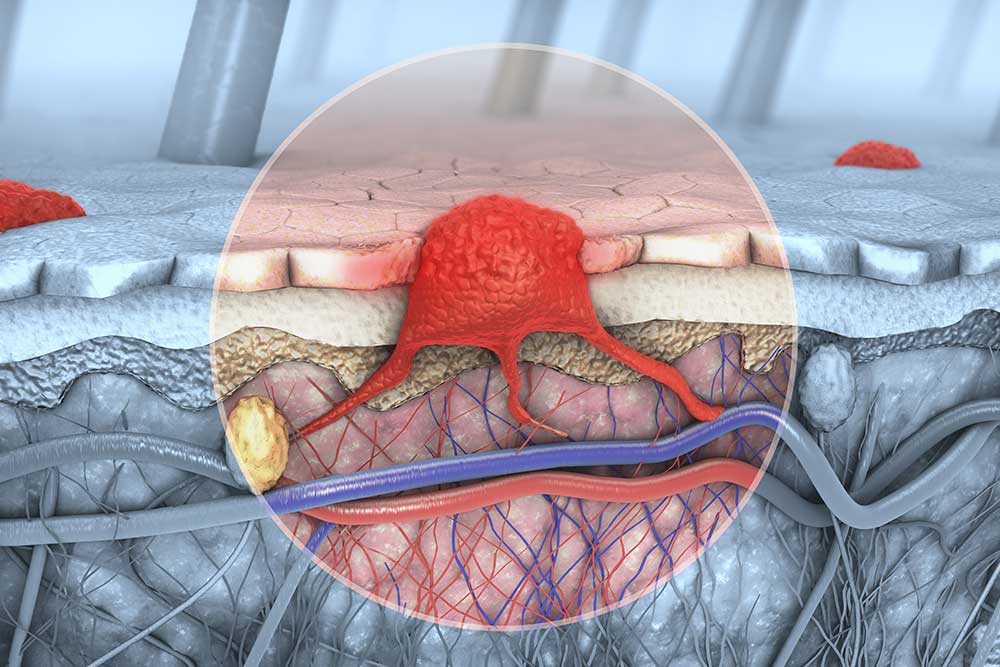
Doctors inject the modified virus directly into visible or palpable tumor lesions. Once inside a cancer cell, the virus does what viruses do: it replicates rapidly, and in doing so it ruptures — or "lyses" — the cell from the inside out. That destruction spills tumor debris and cancer-specific proteins into the surrounding tissue, which acts like a flare, alerting the immune system to a threat it had previously been ignoring. Paired with nivolumab, a checkpoint inhibitor that releases the brakes on immune T-cells, the combination appears to re-arm a patient's own immune system against a cancer that had learned to hide from it.
Because the modified virus targets cancer cells preferentially and cannot cause a herpes infection in healthy tissue, it has earned the nickname "smart virus" therapy among oncologists — though patients undergoing treatment are still advised to take precautions, since low levels of viral shedding are possible.
What the Data Actually Shows
In the pivotal IGNYTE trial, patients who received Tudriqev plus nivolumab after their melanoma stopped responding to standard PD-1 therapy achieved an objective response rate of 24.2% among the FDA's efficacy-evaluable population of 91 patients — meaning roughly one in four saw their tumors meaningfully shrink. The median duration of response was 14.1 months, an unusually durable window for patients this heavily pretreated.
Longer-term data presented separately at the 2026 American Society of Clinical Oncology meeting painted an even more striking picture: across the full treated population, 47.8% of patients were alive at three years, a figure that jumped to 83.5% among patients who responded to treatment at all. The objective response rate in that broader dataset climbed to 33.6%, with a median duration of response of 24.8 months — meaning that for the roughly one-third of patients who respond, the benefit can last two years or longer, a near-eternity in advanced melanoma terms.
Safety-wise, the regimen was tolerable by the standards of modern cancer therapy. Serious grade 3 or 4 treatment-related side effects occurred in about 12.9% of patients, and while rare but severe reactions, including cytokine release syndrome and myocarditis, were reported, there were no treatment-related deaths in the trial.
"Advanced melanoma patients have few options after anti-PD-1 therapy and face high morbidity and poor survival outcomes," said Michael K. Wong, MD, PhD, the IGNYTE trial's primary investigator and a former physician-in-chief at Roswell Park Comprehensive Cancer Center. "With the approval of Tudriqev, we have a potent oncolytic immunotherapy that can be used in a broad population, including BRAF-naive or pretreated, and adjuvant relapsed patients."
The Price Tag Behind the Promise
The excitement comes with sticker shock. Replimune has set Tudriqev's list price at $450,000 for a full course of treatment, before rebates, discounts, or insurance negotiations — a figure that places it among the most expensive cancer therapies on the market, alongside CAR-T cell treatments and some gene therapies. The company says it is launching alongside "ReplimuneConnect Plus," a patient assistance and reimbursement support program intended to help offset out-of-pocket costs for eligible patients.
Because Tudriqev was granted accelerated approval rather than full approval, Replimune is required to run additional confirmatory trials to verify the clinical benefit seen in IGNYTE. If those trials fail to confirm meaningful benefit, the FDA retains the authority to withdraw the approval — a real, if historically uncommon, risk built into the accelerated pathway.
What This Means for You
If you or someone you love is living with advanced melanoma that has progressed despite immunotherapy, Tudriqev represents the first genuinely new mechanism of action to reach the market for this specific, difficult population in years. It is not a cure, and it is not for everyone — the therapy requires injectable, accessible tumor lesions, and response rates, while meaningful, still leave the majority of patients without significant tumor shrinkage. But for the roughly one in three who do respond, the data suggests a shot at years, not months, of disease control.
Patients and caregivers should talk to their oncology team about whether their melanoma and its specific lesions make them eligible, and should ask directly about ReplimuneConnect Plus and other financial assistance programs given the treatment's steep price. Because it involves a live, replicating virus, patients undergoing treatment are also typically counseled on precautions for close contacts, including pregnant partners, newborns, and immunocompromised household members, to minimize any risk of viral transmission.
The Bigger Picture
Tudriqev's approval is also being watched closely as a bellwether for the broader field of oncolytic virus therapy — using modified, cancer-targeting viruses as a distinct pillar of cancer treatment alongside chemotherapy, radiation, and immunotherapy. Only one other oncolytic virus therapy, T-VEC (talimogene laherparepvec, brand name Imlygic), has previously won FDA approval, also for melanoma, back in 2015. Tudriqev's approval, more than a decade later, suggests the concept is finally maturing from a scientific curiosity into a genuine treatment category — one that dozens of biotech companies are now racing to expand into lung, bladder, and pancreatic cancers.
For a disease that kills more than 55,000 people worldwide each year and whose global incidence keeps climbing by as much as 5% annually, even a modest new option carries outsized weight. Tudriqev won't replace existing melanoma treatment. But for patients who've run out of road, doctors say it finally gives them somewhere new to turn.
A Company That Bet Everything on a Virus
Replimune's win is as much a business story as a medical one. The company, founded in the UK and now headquartered in Woburn, Massachusetts, has spent more than a decade almost entirely focused on RP1 and its oncolytic platform, with little in the way of a diversified pipeline to fall back on if the drug failed. When the FDA issued its first Complete Response Letter rejecting the application, and then a second one shortly after, some biotech analysts openly speculated the company might not survive a third rejection. Shares swung wildly through 2025 and early 2026 as investors tried to price in the odds of eventual approval.
That gamble is why the July 30 advisory committee vote landed as such a turning point. A 10-3 vote in favor of the data being "evaluable" gave the FDA the political and scientific cover to reverse itself, and when the accelerated approval came through on August 6, it validated not just a drug but a company's entire reason for existing. Wall Street reaction was swift, with Replimune's stock jumping on the news — a reminder that in biotech, a single regulatory decision can be the difference between collapse and a new chapter.
Timeline: How We Got Here
The road to Tudriqev's approval stretched back years. The Phase 1/2 IGNYTE trial that ultimately supported approval began enrolling patients well before the pandemic reshaped clinical trial timelines industry-wide. Replimune's first Biologics License Application submission ran into trouble over the single-arm trial design; a resubmission fared no better. It was only after the company agreed to commit to rigorous, FDA-mandated confirmatory trials as a condition of accelerated approval — essentially promising to prove the drug works in a more traditional, controlled study after the fact — that regulators were willing to let patients access it now rather than making them wait years for that proof up front.
That trade-off, weighing earlier access against lingering uncertainty, sits at the heart of the FDA's accelerated approval pathway, and it's one oncologists say is worth it for a patient population with few other options and a median survival measured in months, not years.
Published By | Features Editor