OSAKA, Japan
Somewhere in Japan right now, there are people well into their second century of life who still have immune systems quietly hunting down threats most of us never even develop. Scientists just found out why — and the discovery is turning a decades-old assumption about aging on its head.
For as long as immunologists have studied aging, the story has been one of slow, grinding decline. The immune system, they believed, wears down like an old engine: fewer new T cells, weaker responses to infection, higher susceptibility to cancer and disease as the years pile on. It's why elderly patients get flu shots with extra adjuvant, why grandma's pneumonia hits so much harder than a twenty-year-old's. Aging, in this telling, is entropy — a system running out of steam.
But a study published August 19 in the Cell Press journal *Cell Reports* has found something that doesn't fit that story at all. In the oldest humans on Earth — supercentenarians, people who've lived past their 110th birthday — one very specific, very rare category of immune cell isn't declining. It's exploding in number, and it appears to be armed for a fight.
The Cell That Shouldn't Be There in Such Numbers
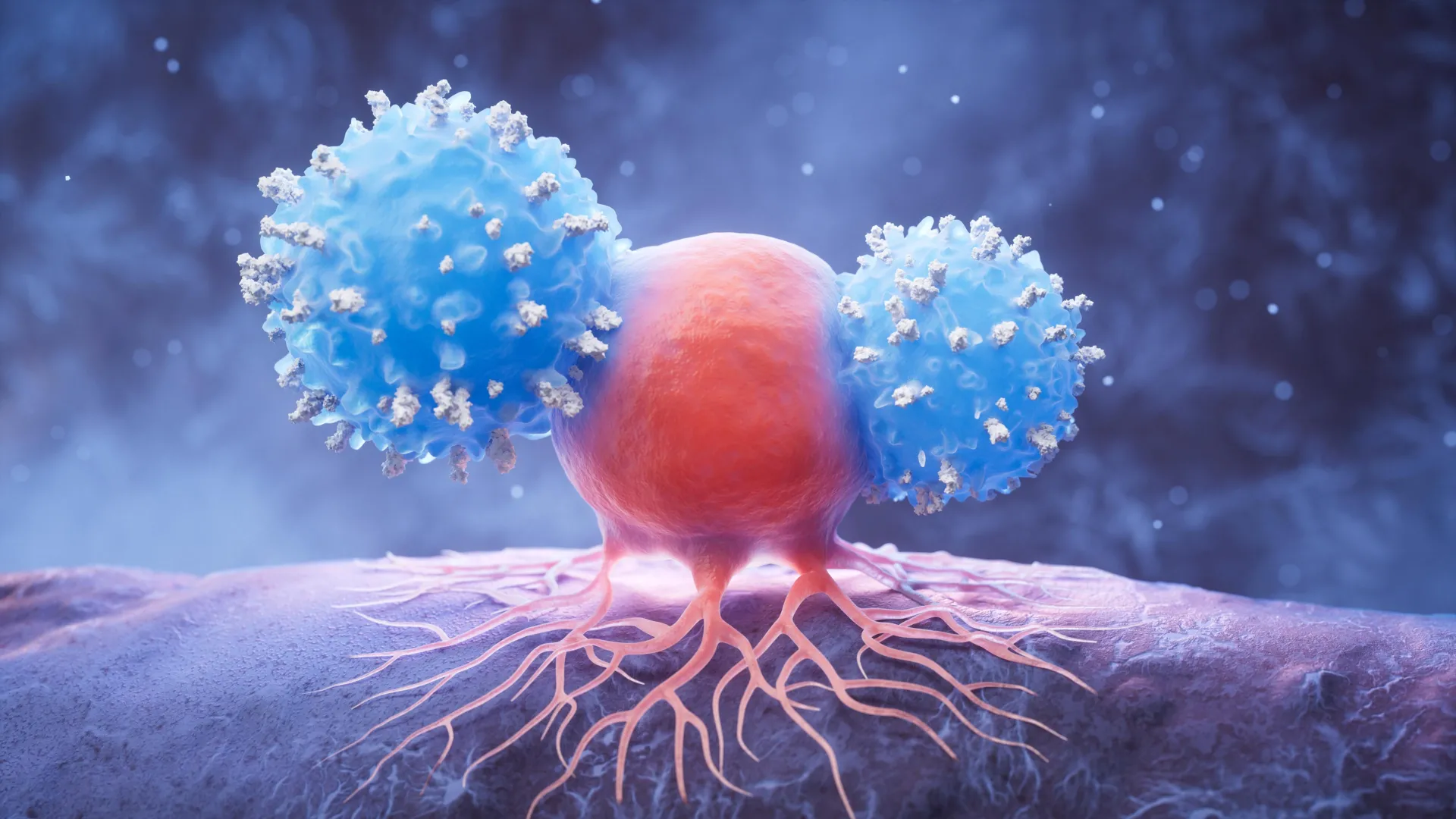
The cell in question is called a CD4 cytotoxic T lymphocyte, or CD4 CTL for short. To understand why its abundance in supercentenarians is so strange, you need a quick primer on how the immune system normally divides labor.
Most T cells fall into two broad camps. CD8 T cells are the immune system's assassins — they directly recognize and kill infected or cancerous cells. CD4 T cells, meanwhile, are usually cast as "helper" cells: they coordinate the immune response, signaling to other cells what to attack, without doing much killing themselves. CD4 CTLs are the oddball exception — a small, unusual subset of CD4 cells that have picked up the assassin's toolkit typically reserved for their CD8 cousins. In a healthy young adult, these cells are vanishingly rare, typically making up less than 5% of the T cell population.
A research team spanning Osaka University, RIKEN, Keio University, and several other Japanese institutions — led by first author Kosuke Hashimoto, an associate professor at the University of Osaka — set out to map exactly how the immune systems of the very old differ from those of the merely old. They drew blood samples from three groups: eight people aged 70 to 90, ten people aged 100 to 109 (centenarians), and ten people aged 110 and older (supercentenarians), then ran single-cell immune profiling to catalog exactly what kinds of T cells were present and in what proportions.
The results were striking. Median CD4 CTL levels rose from about 4% of T cells in the 70-to-90 age group — a broadly normal baseline — to 9.6% in centenarians, and then to a remarkable 17.6% in supercentenarians. In other words, by the time someone crosses the 110-year threshold, nearly one in every five of their T cells belongs to this rare killer subtype that barely registers in most people's blood at all.
A System That Adapts Rather Than Collapses
What makes the finding even more provocative is *how* these cells were behaving, not just how many of them there were.
Using detailed molecular profiling, the researchers found that CD4 CTLs in the oldest participants showed a distinctive maturation signature — a sequential loss of two surface markers called CD27 and CD28 — that typically signals a cell has been through many rounds of activation. Crucially, though, these cells showed no signs of "exhaustion," the burned-out, dysfunctional state that T cells often slide into after prolonged activation in chronic disease or advanced age. They looked less like cells that had been ground down by decades of use, and more like a battle-hardened unit still fully combat-ready.
The team also found evidence of dramatic clonal expansion — meaning specific lineages of these CD4 CTLs had multiplied repeatedly from a shared ancestor cell, a pattern typically seen when the immune system mounts a sustained, focused response against a persistent target. In the supercentenarians studied, the single largest clone of CD4 CTLs made up an average of 33.3% of all CD4 CTLs in that person's blood — a huge share for one lineage to command, suggesting these cells have been repeatedly called into action against something specific over the decades, rather than accumulating passively.
CD4 CTLs of this general type have previously been documented attacking tumor cells directly in certain cancers, giving researchers a strong hypothesis for what all that expansion might be doing: quietly suppressing cancer, again and again, across a lifetime long enough that most people never reach it.
"Their marked increase in supercentenarians may provide important clues as to how the immune system is maintained in extreme old age," Hashimoto said of the findings.
Rewriting the "Decline" Model of Aging
The philosophical implication of the study may end up mattering as much as the biology. For decades, immunosenescence research — the study of how immune function changes with age — has been framed almost entirely around loss: loss of naive T cells, loss of vaccine responsiveness, loss of the ability to fight off novel pathogens.
This study suggests that framing may be incomplete, at least for the small sliver of humanity that makes it to the far end of the lifespan. Rather than simply eroding, the immune system in supercentenarians appears to actively remodel itself — shedding some capabilities while dramatically reinforcing others, honing in on a specialized, highly expanded killer-cell population that may be doing outsized work protecting against the diseases, especially cancer, that kill nearly everyone else long before they reach 110.
It's a reframing that echoes a broader shift happening across longevity science more generally: away from "aging is decay" and toward "aging is a set of specific, identifiable, and potentially modifiable failure points." If CD4 CTL expansion is one of the mechanisms separating supercentenarians from the rest of us, it becomes at least conceivable — though the researchers are careful to stress this is not yet proven — that boosting or preserving this specific cell population earlier in life could be a target for future interventions aimed at extending healthy lifespan.
Expert Perspective
The research team was notably cautious about overselling the finding's immediate implications, and outside observers covering the study echoed that caution. The sample size, by necessity, is tiny — people who live past 110 are so rare that only ten were available for the oldest cohort — meaning the findings, while statistically striking, will need to be replicated in larger cohorts before anyone treats them as settled science.
Just as importantly, the study is observational and correlational. It documents that supercentenarians have unusually abundant, unusually active CD4 CTLs; it does not prove that those cells are the *reason* these people lived so long, as opposed to simply being a downstream consequence of some other, still-unidentified trait that both extends lifespan and happens to drive this particular immune signature. The researchers were explicit on this point: the study does not establish that having more CD4 CTLs prevents cancer or causes anyone to live longer — only that the association exists, and that it's worth investigating further.
Still, the "clonal expansion without exhaustion" pattern is exactly the kind of signature that catches the attention of cancer immunologists, given how central T cell exhaustion has become to understanding why the immune system eventually loses its fight against tumors in most people. A cell population that keeps expanding and keeps functioning, seemingly indefinitely, is close to a holy grail description in that field.
What This Means for You
No one should expect a "supercentenarian pill" anytime soon — this is fundamental biology research, years if not decades away from any clinical application, and the researchers themselves have not proposed one. There is no supplement, diet, or lifestyle intervention that current science can point to as reliably boosting CD4 CTL populations in the way seen in this study's oldest participants.
What the research does offer is a genuinely new direction for scientists hunting for the biological underpinnings of exceptional longevity — a field that has spent years chasing genetic variants, caloric restriction pathways, and cellular senescence markers with mixed results. An immune cell population that appears to expand specifically in the ultra-old, and that shows a functional signature associated with cancer suppression, gives researchers a concrete new thread to pull on, in a field that badly needed one.
For the average reader, the more grounded takeaway is this: general immune health — through vaccination, management of chronic infections and inflammation, and treatment of underlying conditions — remains one of the better-understood levers we currently have for supporting healthy aging, even as scientists work out whether findings like this one can eventually be turned into something more targeted.
The Bottom Line
The oldest people alive aren't just lucky survivors coasting on good genes and clean living — at least, not entirely. Buried in their blood is a rare, powerful, and until now poorly understood population of killer immune cells that seems to grow more abundant and more active the longer these remarkable individuals live. Scientists don't yet know if the cells are a cause of extreme longevity, a consequence of it, or simply a marker that travels alongside it. But for a field that has long assumed aging immune systems can only decline, the discovery that some of them instead appear to be quietly reinforcing their best defenses is the kind of finding that reshapes a whole research agenda — and maybe, eventually, reshapes how the rest of us age too.
Published By | Features Editor