Background
Hungary's political order has been undergoing its most significant transformation in over a decade since Prime Minister Péter Magyar's centrist Tisza party swept to power in the country's April 2026 parliamentary election, ending 16 consecutive years of rule by Viktor Orbán's Fidesz party. Tisza's landslide win delivered Magyar not just a governing majority but a two-thirds parliamentary supermajority, the threshold required under Hungarian law to amend the constitution — a tool Orbán himself relied on extensively during his own time in power to reshape courts, media and electoral rules in Fidesz's favor.
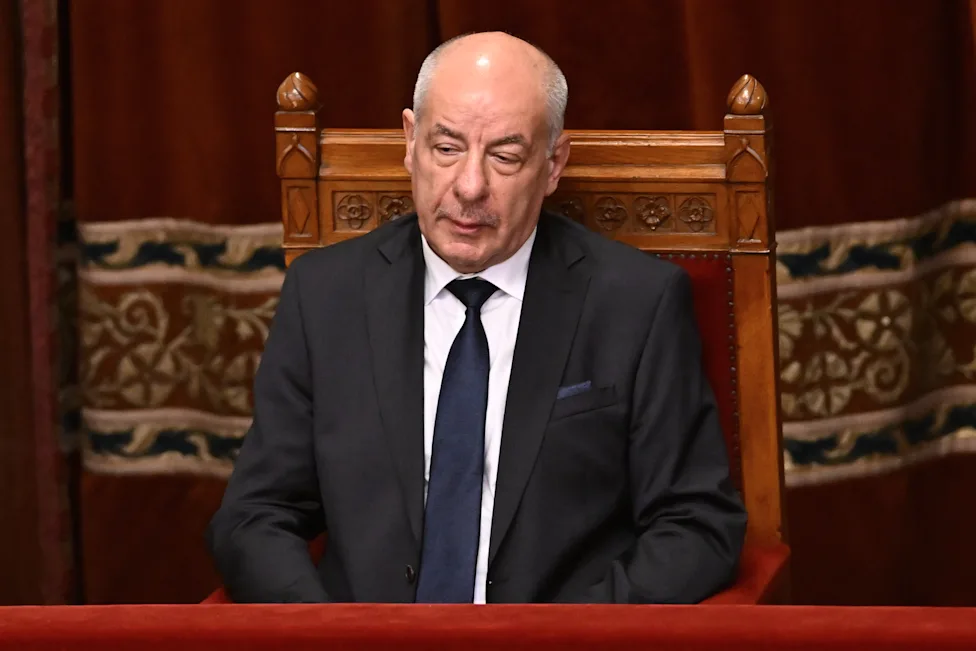
Since taking office, Magyar has pursued a program he has dubbed "Operation Cleansing Fire," aimed at unwinding institutional structures built up over the Orbán era and installing a new constitutional order. Central to that effort has been President Tamás Sulyok, who was appointed to Hungary's largely ceremonial but symbolically important presidency by the old Fidesz-dominated parliament and who Magyar has repeatedly described as a holdover loyal to Orbán rather than to the country's new governing majority.
Key Developments
On July 13, Hungary's parliament passed the 17th amendment to the country's Fundamental Law by a vote of 139 to 6, with Fidesz lawmakers boycotting the session rather than taking part. The amendment does two things simultaneously: it ends the current term of President Sulyok, and it forces out Péter Polt, the head of Hungary's Constitutional Court, by reintroducing a mandatory retirement age of 70 for constitutional judges. Beyond the personnel changes, the amendment restores the Constitutional Court's power to review government budget legislation — an authority curtailed under Orbán — introduces term limits for members of parliament, and creates a new National Asset Recovery and Protection Office with broad powers to investigate corruption.
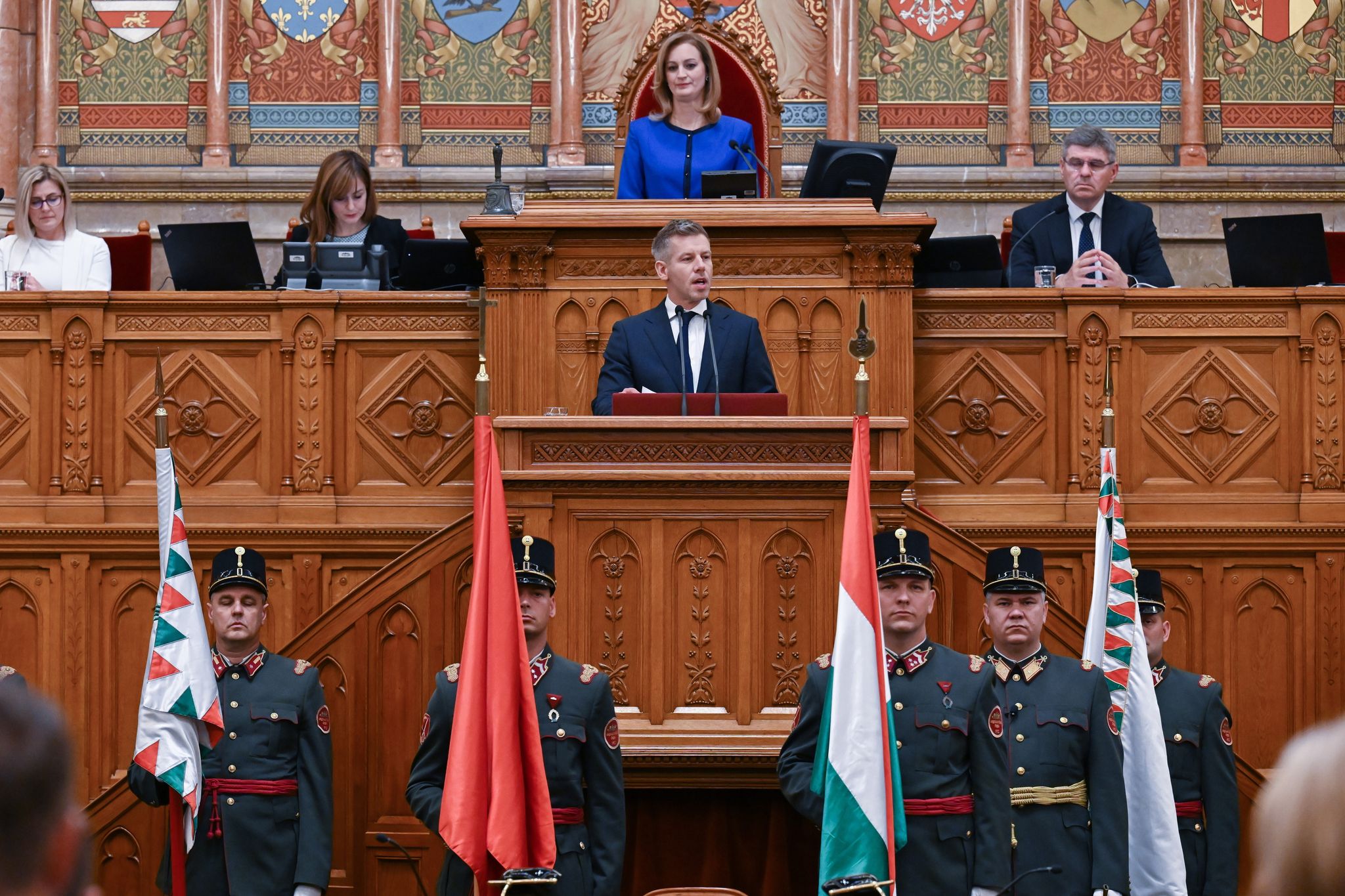
Sulyok initially faced parliamentary pressure to resign but ultimately chose to comply with the legislative mechanism rather than fight it, announcing he would sign the amendment that terminates his own mandate. He formally signed the measure on July 18. Under its terms, parliamentary speaker Ágnes Forsthoffer will serve as acting head of state on an interim basis, while lawmakers are required to elect a permanent successor within 30 days; that successor will serve for no more than five years, pending the adoption of an entirely new Hungarian constitution that Magyar's government has signaled it intends to draft.
Magyar has defended the move by pointing to a list of episodes in which he says Sulyok stayed silent in the face of abuses carried out under the prior government, including police investigations and secret-service surveillance opened against information-technology staff working for Tisza on what Magyar's government characterizes as fabricated charges. Magyar has gone as far as to call Sulyok "unworthy to embody the unity of the Hungarian nation" and, in blunter public remarks, a "puppet" left behind by Orbán to check the new government's authority from within a nominally neutral office.
The mechanism itself is notable because it mirrors, almost precisely, the kind of supermajority constitutional engineering Orbán's Fidesz used for over a decade to entrench its own power — rewriting electoral maps, restructuring the judiciary and altering the constitutional court's composition well within the letter of the law. Magyar's government has openly acknowledged the irony, framing its use of the same two-thirds mechanism not as hypocrisy but as the only available tool to dismantle institutions that were themselves built undemocratically, given that ordinary legislation could not touch a sitting president's term or a constitutional judge's tenure.
Reactions
Orbán and Fidesz have reacted with alarm bordering on apocalyptic language. Orbán declared that "the last barrier has fallen" and that "tyranny is no longer a threat, but a reality," posting an image of Magyar on social media captioned "Democratic Hungary: 1990–2026" — implicitly framing the amendment as the end of Hungary's three-and-a-half-decade post-communist democratic era. Fidesz's parliamentary caucus leader, Gergely Gulyás, said the amendment "breaks up the legal system, undermines the rule of law and restricts democracy" and announced his own resignation as caucus leader in protest. Fidesz-aligned supporters have staged street protests against the ouster in the days surrounding the vote.

International human-rights organizations have offered a more measured but still critical response. Amnesty International said Sulyok was "entitled to due process" regardless of the political case against him, while Human Rights Watch described the maneuver as "reminiscent of" the institutional tactics used during the Fidesz era itself — a pointed comparison given that Magyar's stated goal is to dismantle exactly that legacy. Not all legal commentary has been unfavorable to Magyar, however: retired senior jurist András Baka, a former head of Hungary's supreme court, argued that such extraordinary constitutional measures, while normally inappropriate in a state governed by the rule of law, can be justified as a path out of what he called a "captured state" left behind by Orbán's years in power.
Ordinary Hungarians appear divided along familiar lines. Tisza's April landslide suggests a large share of voters were prepared to back sweeping institutional change to clear out officials they regarded as illegitimate remnants of the old system, while Fidesz's remaining base — smaller than it once was but still substantial — has treated the amendment as confirmation of exactly the kind of power grab Orbán has long warned his opponents would attempt if given the chance. That divide was visible in the street protests organized by Orbán allies in the days around the vote, even as Fidesz's own boycott of the parliamentary session limited its ability to shape the amendment's final terms.
The broader European reaction has been more muted than the domestic one, reflecting the awkward position European institutions find themselves in: Brussels spent years criticizing Orbán's own constitutional maneuvering and rule-of-law record, which complicates any full-throated defense of the ousted, Orbán-appointed president now that a government the EU broadly welcomes is using similar supermajority mechanisms against him. Commentary from legal observers, including at outlets like Verfassungsblog, has focused on whether Magyar's approach — using a constitutional supermajority to remove sitting officeholders rather than waiting out their terms — sets a precedent that could someday be turned against a future, less liberal Hungarian government.
The new National Asset Recovery and Protection Office created by the amendment is also likely to become a significant flashpoint in its own right. Its mandate to investigate corruption gives Magyar's government a formal instrument to pursue Fidesz-era officials and business figures who benefited from 16 years of Orbán-aligned patronage networks, and Fidesz figures have already warned it could be used selectively against political opponents rather than even-handedly, a concern that mirrors criticisms Orbán himself faced over the use of state institutions against critics and independent media during his time in office.
What's Next
The most immediate procedural question is who parliament elects as Hungary's next head of state within the 30-day window set by the amendment, and whether that person is seen as a genuinely independent figure or a Magyar loyalist — a choice likely to shape perceptions of whether "Operation Cleansing Fire" is a good-faith democratic renewal or simply a change in whose allies hold the levers of power. Longer term, Magyar's government has signaled its ultimate ambition is a wholesale rewrite of Hungary's constitution, of which this amendment is presented as a first step; the interim presidential term is explicitly capped to last only until that new constitution takes effect.
Fidesz, now stripped of its supermajority and reduced to boycotts and street protests, is likely to continue framing every subsequent Magyar reform — particularly changes to the judiciary, media regulation, and the new anti-corruption asset-recovery office — as further evidence of democratic backsliding, seeking to rebuild public sympathy ahead of future elections. Whether that argument gains traction with Hungarian voters, many of whom backed Tisza precisely to unwind Fidesz-era institutions, will be one of the key political tests of Magyar's early tenure. Also worth watching is how the European Union and rule-of-law monitors ultimately characterize the episode: a favorable read could accelerate Hungary's rehabilitation within the EU after years of friction under Orbán, while a skeptical read could complicate that process regardless of Magyar's pro-EU orientation.
Published By | News Editor