Written By | Entertainment Desk
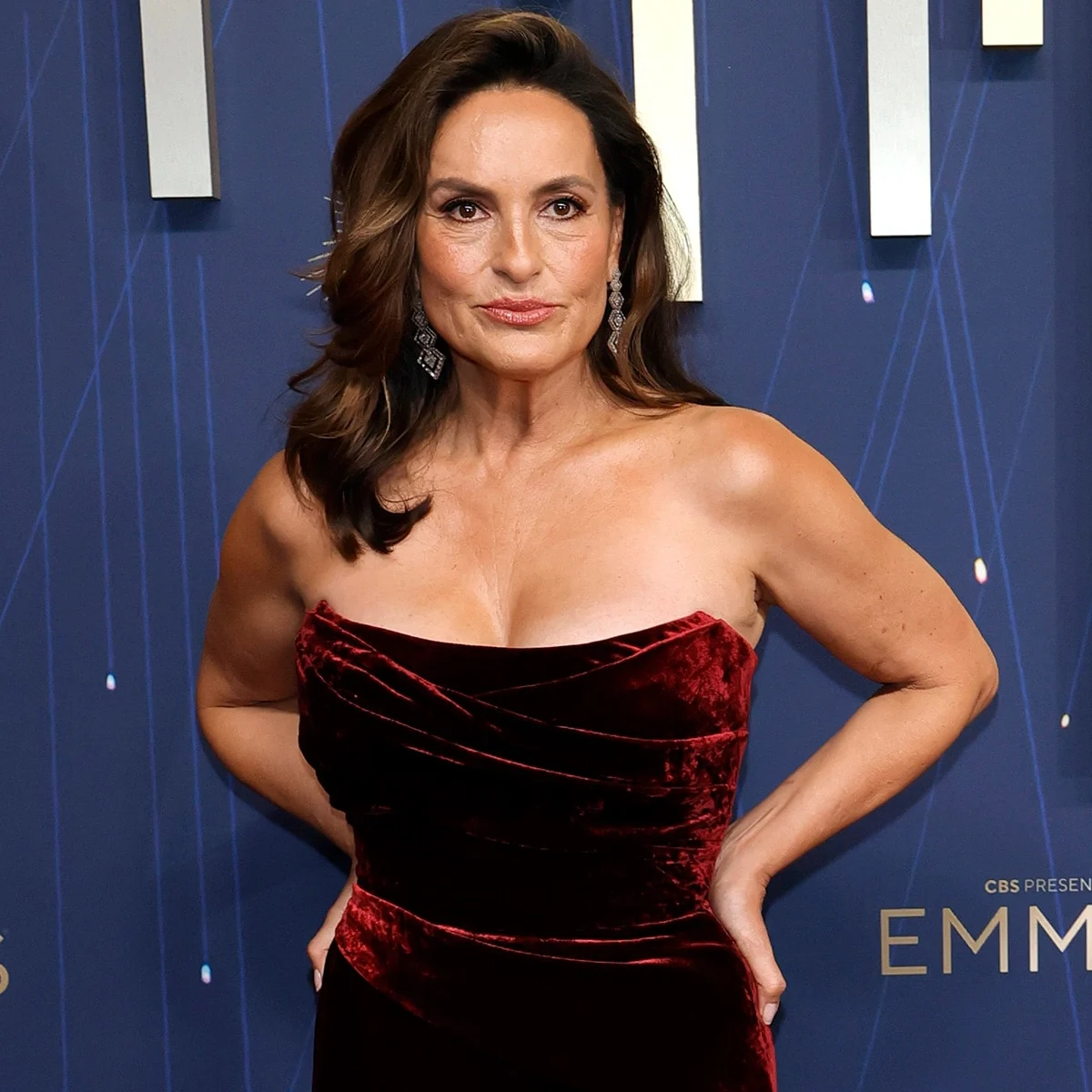
NBC taps the Law & Order: SVU star and longtime advocate to lead the 78th Emmy Awards this September, a symbolic pick in the network's own centennial year.
Los Angeles, California
It has been fifteen years since a woman last stood at the Emmy Awards podium as sole host. That changes this September: NBC announced this week that Mariska Hargitay, the Emmy-winning star and executive producer of Law & Order: Special Victims Unit, will host the 78th Emmy Awards, ending a run of male hosts and men's late-night-adjacent comedy duos that has defined the ceremony since Jane Lynch's turn in 2011.
A Milestone Booking
The announcement, confirmed by NBC and the Television Academy this week, places Hargitay at the center of television's biggest night of self-celebration. The ceremony airs live from the Peacock Theater at L.A. Live on Monday, September 14, at 8 p.m. ET on NBC and Peacock. For a network marking its 100th anniversary this year, the choice of Hargitay — a face closely associated with NBC for more than a quarter-century through SVU's record-setting run — was framed internally as a full-circle moment.
“It's my great honor to host the 78th Emmy Awards — in the 100th birthday year of my beloved NBC — and celebrate this extraordinary community of storytellers,” Hargitay said in a statement accompanying the announcement, striking a tone that mixed genuine sentiment with the kind of showbiz enthusiasm expected of an incoming awards host.
Why the 15-Year Gap Matters
The optics of the announcement are hard to separate from the numbers behind it. Since Jane Lynch's 2011 hosting stint, the Emmys podium has been occupied by a rotating cast of hosts skewing heavily male and comedic: late-night figures, sitcom stars, and in several recent years, hosting duos or ensemble bits rather than a single dedicated emcee. Hargitay's solo booking bucks that trend in two ways at once — she is a woman, and she is a dramatic actress best known not for stand-up or sketch comedy but for eighteen-plus seasons of unbroken procedural drama work, a genre rarely associated with awards-show hosting duties.
Jen Neal, NBC and Peacock's executive vice president of live events and specials, tied the choice explicitly to the network's centennial celebrations, noting that bringing in “a defining voice of NBC's modern era” fit the spirit of the anniversary programming slate the network has been rolling out all year.
The Hargitay Factor
Beyond the acting résumé, Hargitay's selection carries weight because of who she has become off-screen. Through her Joyful Heart Foundation, founded in 2004, she has spent two decades as one of Hollywood's most visible advocates for survivors of sexual assault and domestic violence — work that has often overlapped thematically with her fictional role as Captain Olivia Benson. That dual identity, as both an industry insider with nearly universal goodwill and a public-facing advocate, gives NBC a host who can plausibly balance the ceremony's usual mix of comedy, sentiment, and moments of real gravity.
Awards-show veterans note that hosting is one of the most thankless jobs in entertainment — heavily scrutinized, rarely rewarded — which makes NBC's bet on a first-time solo host notable in itself.
Hargitay has hosted segments and presented at award shows before but has never anchored a major ceremony solo, making this as much a career pivot as a symbolic booking. Industry observers point out that successful hosting turns can meaningfully boost a star's standing in Hollywood's upper echelon of “trusted institutional voices,” a status previously cemented for figures like Neil Patrick Harris and Jimmy Kimmel through their own multi-year hosting runs.
What to Expect from the Broadcast
Details of this year's format — whether Hargitay will host solo throughout or bring in comedic support for bits and sketches — have not yet been released. The Television Academy typically announces nominees in mid-July, meaning the nominations themselves, expected within days of this host announcement, will set the storylines for the September ceremony: which streaming platform notches the most nominations, which limited series breaks through, and which veteran performers might finally collect overdue trophies.
This year's ceremony arrives against a backdrop of an increasingly fragmented television landscape, with the major nomination hauls now routinely split between traditional broadcast networks, premium cable, and streaming giants. How Hargitay navigates hosting a show that must please an audience watching across dozens of platforms — while also being a comfortable, unifying presence — will be one of the more closely watched storylines of the fall awards season.
There is also a generational subtext to the booking. Hargitay, now in her early sixties, represents a different kind of star power than the young comedians and social-media-native personalities networks have increasingly courted for live events aimed at younger audiences. NBC's bet appears to be that authenticity and institutional credibility can still draw eyeballs in an era of algorithm-driven attention, particularly for a ceremony whose core audience skews toward loyal, longtime television viewers rather than casual scrollers.
What This Means for You
If awards season is appointment viewing for you, mark September 14 on the calendar. Beyond the novelty of the first female solo host in 15 years, expect the ceremony to lean into NBC's centennial framing throughout the broadcast, with retrospective packages and legacy-network nostalgia likely woven into the night's segments. For fans of Hargitay specifically, this is also a rare chance to see one of television's most enduring dramatic stars step fully into comedic, off-script territory.
Conclusion
Mariska Hargitay's appointment as Emmys host is being read across the industry as more than a scheduling footnote — it's a statement about who gets to lead television's biggest self-congratulatory night, and when. Whether her turn at the podium reshapes expectations for future hosts remains to be seen, but for one September evening at least, the fifteen-year wait for a woman to run the show solo will finally be over.



