Written By | Health Agencies
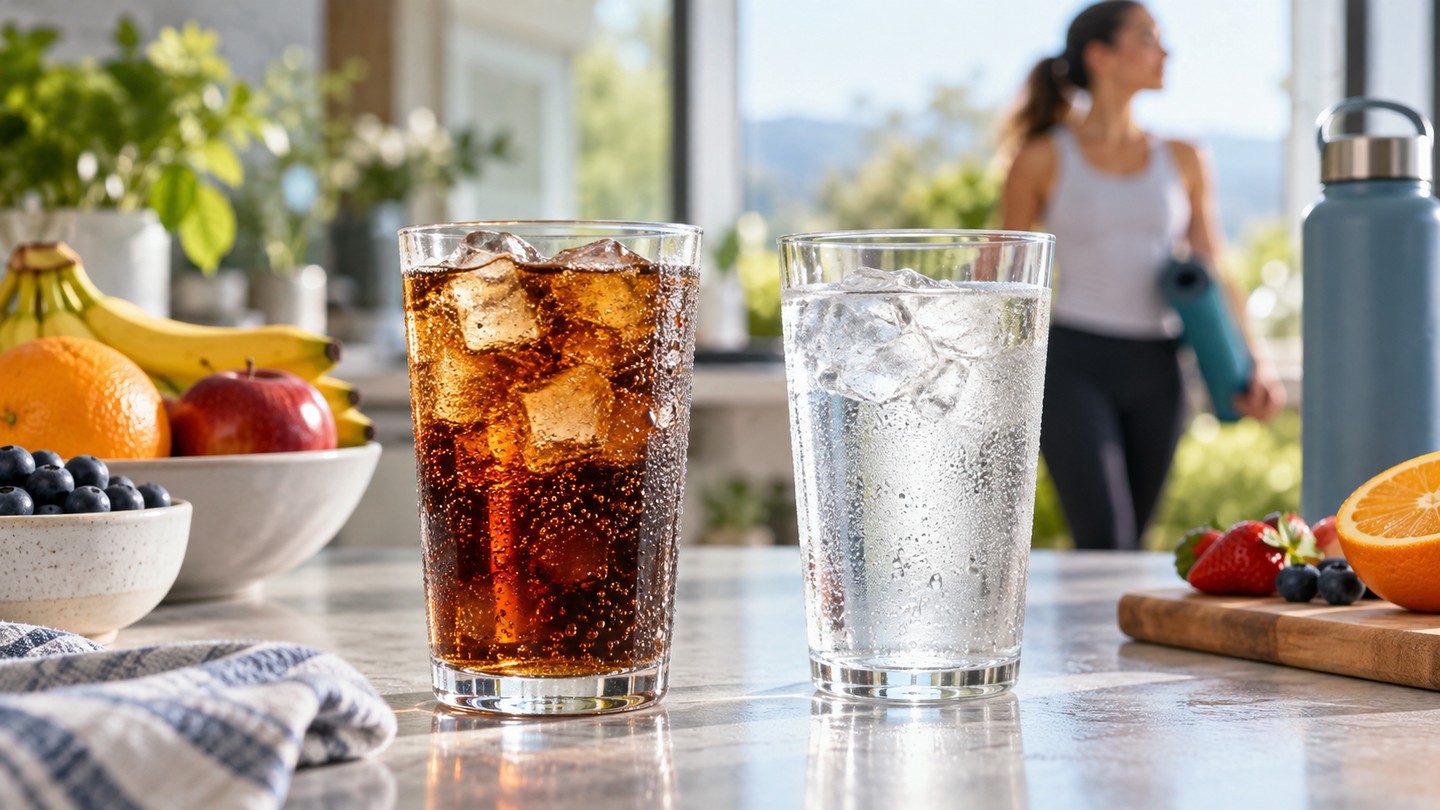
Dieters who drank diet drinks every day lost as much weight as those who drank water in one of the longest trials of its kind.
LIVERPOOL
It is the question that has divided dieters, doctors and dinner tables for decades: is a can of diet cola a harmless swap for sugar, or a sneaky saboteur that keeps you hungry and fat?
Now a two-year British trial says that, for people trying to lose weight, diet drinks did about as well as plain water.
Researchers from the University of Liverpool and the University of Leeds followed 493 adults with overweight or obesity through a weight-loss programme. Half were told to drink water. The other half drank commercially available diet drinks sweetened with aspartame, acesulfame potassium (acesulfame-K) or sucralose.
After 104 weeks, the diet-drink group had lost an average of 4.8 kilograms (about 10.6 pounds). The water group had lost 3.7 kilograms (about 8.2 pounds). The difference was not statistically significant, which means it could easily be down to chance. The researchers say the two drinks performed equivalently.
The results, published in the British Journal of Nutrition and publicised by the University of Liverpool this week, land squarely in the middle of a global row over artificial sweeteners. They also come with some big caveats, which we'll get to.
Inside the SWITCH trial
The study has a mouthful of a name: the effectS of non-nutritive sWeetened beverages on appetITe during aCtive weigHt loss trial, or SWITCH for short. It was led by Professor Jo Harrold, Dean of Psychology at the University of Liverpool, and Professor Jason Halford of the University of Leeds, formerly of Liverpool.
Volunteers were aged 18 to 65 with a body mass index (BMI) between 27 and 35, the range from overweight to moderate obesity. Everyone got the same healthy-eating and sugar-reduction advice.
The difference was in the glass. According to the published paper, as reported by The Brighter Side of News:
The trial ran in three stages. The first 12 weeks were all about losing weight, with weekly group sessions. That was followed by 40 weeks of "assisted maintenance" with monthly meetings. The final year was voluntary and came with no routine support at all, a real-world test of whether people could keep the weight off on their own.
The amount of sweetener people consumed stayed well within the safety limits set by the European Food Safety Authority, the researchers said.
The results: a dead heat
Most of the weight came off in the first three months. Both groups hit their lowest average weight during the first year, then slowly put a little back on, the familiar pattern for almost every diet. But even after two years, both groups were still significantly lighter than when they started.
Key findings reported by the University of Liverpool include:
What about the claim that sweet tastes without calories confuse the brain and make you ravenous? Self-reported hunger crept up slightly over two years in both groups. The rise reached statistical significance within the diet-drink group, but the difference between diet drinks and water did not.
"These latest findings show that concerns about sweeteners disrupting appetite or causing weight gain are not supported when tested in a rigorous, long-term randomised trial," Professor Harrold said. "We hope this evidence informs future WHO guidance and public health policy."
Professor Halford added: "This study provides the long-term clinical evidence that has been missing from international discussions. For people trying to manage their weight, non-nutritive sweetened beverages offer an effective alternative to sugar-sweetened drinks, and perform equivalently to water over two years."
The catches you need to know about
Before you stock the fridge with diet cola, there are several important reasons for caution.
Who paid for it. The trial was funded by the American Beverage Association, the trade group for the US soft-drink industry. The researchers say they worked independently of the funder and kept full control over the analysis and publication. Even so, industry funding is a reason for readers to look closely.
The drop-outs. Of the 493 people who started, only 220 were still in the study at 104 weeks: 117 in the water group and 103 in the diet-drink group. That means more than half the volunteers did not finish. The authors themselves say the low completion rate limits the study. They ran extra statistical analyses to account for the missing data and still found no significant difference between the groups, but heavy drop-out always makes results less certain.
One place, one programme. The trial was run at a single centre in England, and the team did not collect information on race or ethnicity, so it is unclear how well the findings apply to other populations. The COVID-19 pandemic disrupted some measurements, forcing some volunteers to weigh and measure themselves at home. The voluntary final year was added to the study partway through, through a change to the protocol.
What it does not prove. The trial was designed to look at weight management, not to prove the long-term safety of individual sweeteners for every possible health outcome. Volunteers drank a mix of real-world products rather than a single sweetener. And everyone was on a structured weight-loss programme, which is not how most people drink diet soda.
In other words, the trial shows that diet drinks did not make weight loss worse than water within this programme. It does not show that diet drinks themselves cause weight loss.
The bigger battle: the World Health Organization
The study is a direct challenge to the World Health Organization (WHO). In 2023 the WHO issued guidance advising against using non-sugar sweeteners as a way to control body weight or reduce the risk of chronic disease.
That recommendation was labelled "conditional", and it leaned heavily on observational studies, research that tracks what people eat and what happens to them rather than randomly assigning them to a drink. Some of those studies linked long-term sweetener use to higher rates of obesity, heart disease and type 2 diabetes.
The problem with that kind of evidence is chicken-and-egg. People who are already heavier, or already worried about diabetes, are more likely to reach for diet drinks in the first place. So it is hard to tell whether the sweetener caused the health problem or the health problem led to the sweetener.
Randomised trials like SWITCH get around that problem by deciding at random who drinks what. But most previous trials lasted only weeks or months. This one lasted two years, which is why its authors argue it should feed into future WHO advice.
Earlier reviews broadly point the same way. A 2022 analysis of 17 randomised trials in JAMA Network Open found small improvements in weight and heart-health markers when low- and no-calorie drinks replaced sugary ones, with effects broadly similar to water.
But the debate is far from over. Other research continues to raise questions about sweeteners and health, from liver health to blood sugar control, and the SWITCH team's own results do not address those wider concerns.
Expert perspective
Independent science writers who examined the paper reached a measured verdict. The Brighter Side of News, reviewing the published trial, concluded that the study "provides unusually long randomized evidence, but its interpretation is tempered by substantial dropout, a single study site and funding from the American Beverage Association."
"Those caveats make the study an important piece of evidence rather than a final verdict on non-nutritive sweeteners," it added.
That is probably the fairest reading. For years, the case against diet drinks has rested mostly on studies that cannot separate cause from effect. SWITCH adds a long, randomised test, and in that test, diet drinks did not perform worse than water. But a single industry-funded study with heavy drop-out is not going to settle the matter on its own.
What this means for you
If you are trying to lose weight and you love fizzy drinks, here is the practical takeaway:
The bottom line
After two years, the diet-drink dieters and the water dieters ended up in roughly the same place: several kilos lighter, with slimmer waists and slightly better health markers.
For the millions who can't face life without a fizzy drink, that is welcome news. But the study was paid for by the drinks industry, and more than half its volunteers dropped out, so it is unlikely to be the last word in the war over sweeteners. For now, the message is this: cutting out sugar matters more than whether your glass holds water or diet cola.



