Written By | International News Agencies
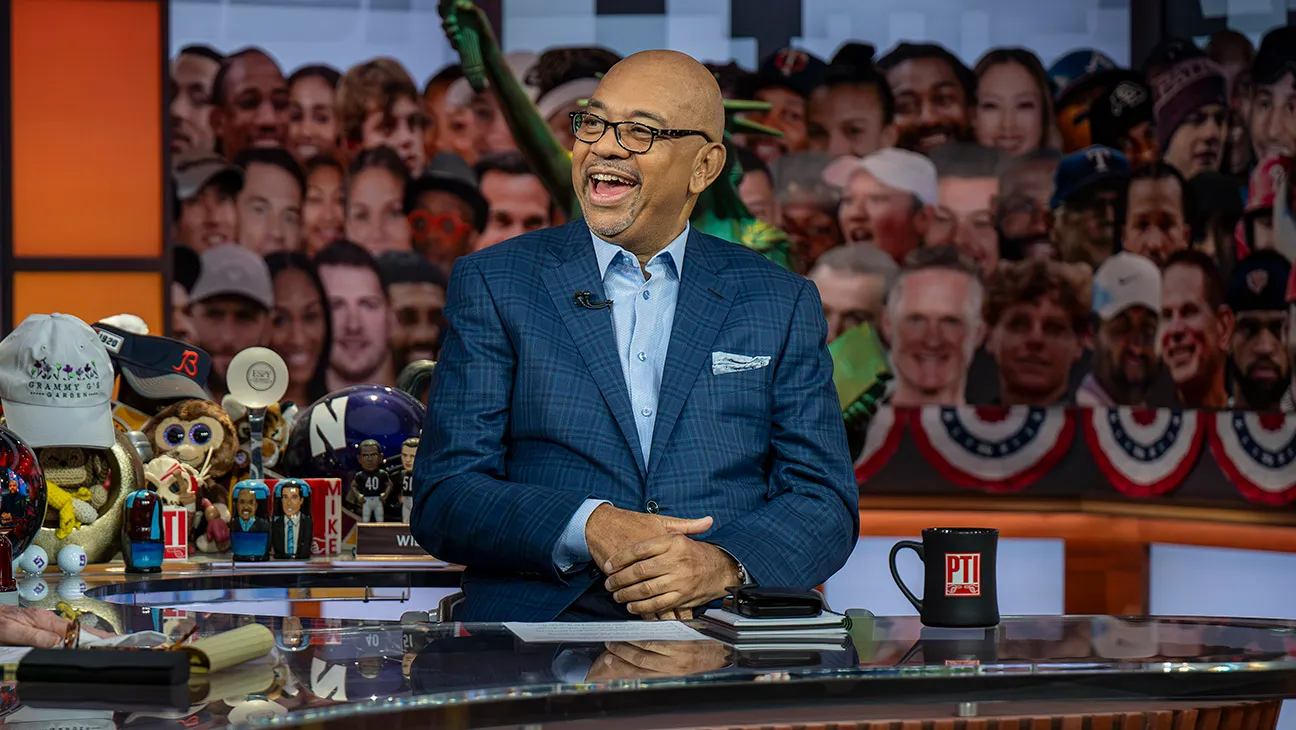
Michael Wilbon has taken an indefinite leave from ESPN for health reasons, leaving Pardon the Interruption without one of the most recognizable voices in sports television.
NEW YORK
For a quarter of a century, the rhythm of a weekday afternoon in American sports has had a familiar soundtrack: two men arguing, interrupting and laughing, with a timer ticking down in the corner of the screen. This week, one half of that duo has gone quiet. Michael Wilbon, the co-host of ESPN's Pardon the Interruption and a regular on NBA Today, announced Monday that he is taking an indefinite leave of absence from his ESPN roles because of what he described as "multiple health issues."
The news, first reported by Sports Media Watch, lands with particular weight because of how recently the show celebrated itself. PTI marked its 25th anniversary with a special episode with Wilbon and Tony Kornheiser only a couple of weeks ago. Now the show faces, in the report's words, the prospect of losing one half of its long-running pairing for the foreseeable future.
What Wilbon said
In his statement, Wilbon, who is 67, said the problems had been building for years. He called the absence a "trip to the injured list" and said he hopes it will not be "an extended one." He was candid about the uncertainty: "I have no idea exactly how this part of my journey will end up." His stated goal is simple. He wants to feel much better and be ready to return to sparring with Kornheiser.
The announcement followed a worrying few days. Wilbon hosted PTI the Monday before the announcement, then missed the rest of that week. Appearing on The Tony Kornheiser Show, he explained that he had been "just exhausted, beyond exhausted, lifeless," and indicated that he had been hospitalized. He tied his condition to accumulated strain, saying that "the bill has come due" after years of red-eye flights and of ignoring health problems. As a diabetic, he noted, ignoring such issues makes the eventual cost higher. He had a heart attack in 2008 but was not away from work for a substantial period at the time.
ESPN has not, according to the Sports Media Watch report, said who will replace Wilbon on PTI or in his other roles.
Why this matters beyond one show
It is hard to overstate how much Wilbon and Kornheiser changed the job of the sports columnist. Both came out of newspapers, Wilbon from The Washington Post, and PTI turned the print columnist into a central television entertainer. The Sports Media Watch report compares their impact to what Roger Ebert and Gene Siskel did for film critics: they made opinion a performance, and made the argument itself the product.
Wilbon's own television career grew from his work as a panelist on ESPN's The Sports Reporters before PTI launched, and he went on to host ABC's NBA Finals coverage at one point. Today PTI remains ESPN's most-watched daily talk show by a comfortable margin, even as the network's talk lineup has tilted toward First Take and The Pat McAfee Show. That is a remarkable record for a format built on two middle-aged columnists and a rundown of topics.
The timing is also awkward for the network, which has had a busy few weeks of talent news. Troy Aikman's uncertain future on ESPN's lead NFL booth has been a running story, and Ernie Johnson's decision to make this season his last on Inside the NBA has stirred its own conversation. Sports television's long-serving faces are, one by one, becoming a subject of coverage themselves.
The fill-in problem
PTI's format is its strength and its challenge. The show depends on a specific chemistry, a long-married-couple dynamic that cannot easily be replicated by a rotating guest host. Networks have handled absences of this kind in different ways over the years: some bring in a single steady replacement, others rotate several voices to avoid forcing a comparison. Which path ESPN chooses is not yet known, and the report does not say.
What can be said is that the audience for PTI is loyal and habitual. Viewers who tune in at the same time every day are not looking for a new concept; they are looking for two particular voices. Any stand-in will be measured against that expectation, and ESPN has every incentive to protect the show's identity while Wilbon is away.
A human moment in a business story
It is easy to treat a story like this as a programming note. It is more than that. Wilbon's willingness to describe his exhaustion, his hospitalization and his years of neglecting his own health in plain language is the kind of candor that sports audiences, many of whom are his age and older, rarely hear from the figures they follow. His admission that red-eye flights and deferred check-ups eventually come due is a story about a working life as much as a broadcasting one.
Many of the people who grew up watching him argue about the Bulls and the Redskins are now dealing with the same realities: long careers, long hours, chronic conditions managed imperfectly. The response he has received in the sports media world so far has been, by all appearances, one of concern rather than curiosity.
What this means for you
If you are a PTI regular, expect the next several weeks to feel different. The show will go on, but with a hole at its center, and the daily ritual of the Wilbon and Kornheiser back-and-forth will be missing. It is a good time to watch how ESPN handles it, because the decision will say a lot about how the network values chemistry versus continuity.
If you are simply a sports fan, there is a wider lesson in Wilbon's own words. His reflections on ignoring health issues, and on diabetes in particular, are a reminder that the costs of neglect compound quietly. Regular check-ups are not glamorous, but they are cheaper than the alternative, as Wilbon himself pointed out.
The road back
For now, there is no timetable. Wilbon has said he hopes to return, and he has framed his absence as a stint on the injured list rather than a farewell. Those who have followed his career will take him at his word: he has spent decades arguing with conviction, and he evidently intends to argue again.
Until then, PTI will carry on without him, and the sports world will wait. Tony Kornheiser, on whose program Wilbon explained his condition, has the unenviable job of keeping the show's spirit alive while its other half recovers. Fans, in turn, have a simple wish that needs no debate: that the man who spent 25 years interrupting everyone gets all the time he needs to get well, and then gets back to it.



