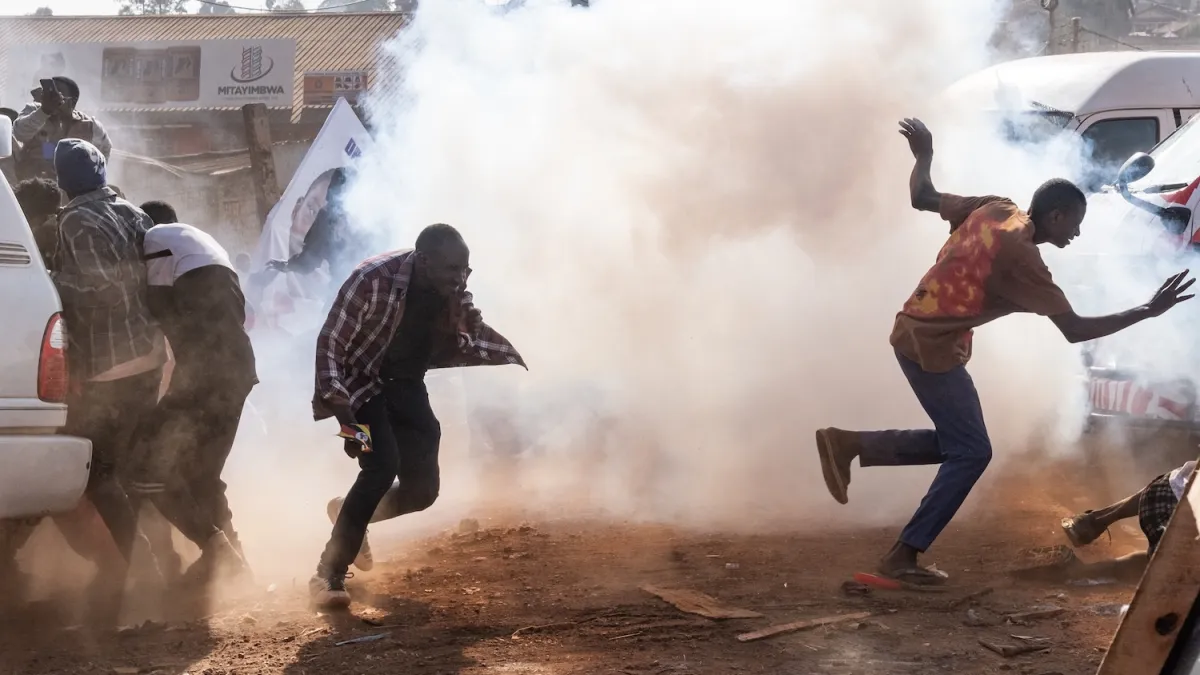
A Nation on Edge: Uganda's Post-Election Crackdown on Dissent Widens
July 8, 2026
Six months after President Yoweri Museveni secured a seventh term in the 2026 general election, Uganda's political atmosphere has grown markedly tenser rather than calmer. Opposition figures describe an intensifying climate of fear, with detentions of government critics, the suspension of independent media outlets, and a widening set of criminal charges against activists that rights groups say have narrowed the space for dissent to its smallest point in years.
The story dominating headlines this week is the ordeal of Miria Matembe, a 72-year-old former ethics and integrity minister and one of the most recognisable veterans of Uganda's political life. On June 24, security operatives raided Matembe's home in Kampala. According to her husband, Nehemiah Matembe, the operatives searched the house, including the couple's bedroom, without identifying themselves or explaining why they had come, before leaving with electronic gadgets and no formal charges filed on the spot.
The raid followed a video in which Matembe sharply criticised General Muhoozi Kainerugaba, the Chief of Defence Forces and eldest son of President Museveni, over what she described as human rights violations carried out under his command. Four days later, on June 28, Muhoozi himself confirmed that he was behind the operation. Responding on X (formerly Twitter) to a comment naming Matembe, he wrote simply: "That one. I have her too." The remark, characteristic of Muhoozi's blunt and often provocative social media presence, left little doubt that the country's top military officer had personally directed the action against a private citizen and former Cabinet minister.
Matembe was subsequently charged with sectarianism at the Luzira Magistrates Grade One Court. Following a wave of public pressure and condemnation from civil society, she was released on bail the next day. But the episode has become a flashpoint, cited repeatedly by human rights organisations, opposition leaders and independent commentators as emblematic of a broader pattern rather than an isolated incident.
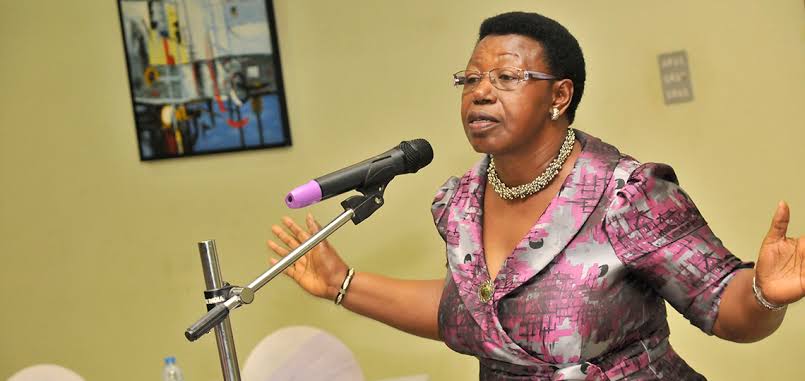
Miria Matembe
Amnesty International issued a statement in early July calling on Ugandan authorities to "immediately end the harassment of activists" and to allow the media to operate freely, pointing to a string of similar cases over recent months. The organisation's intervention adds international weight to concerns that have been building domestically since the election, concerns that Uganda's post-poll period has been marked less by a return to normal politics and more by an entrenchment of security-driven control over public life.
Matembe's case is not standing alone. On July 3, several members of the opposition National Unity Platform (NUP), the party led by musician-turned-politician Robert Kyagulanyi (Bobi Wine), appeared before the Kanyanya Magistrates Court seeking bail on charges of "unlawful drilling" — a charge historically used in Uganda against opposition supporters accused of undergoing informal paramilitary-style training. The magistrate rejected the bail application, citing the risk of witness interference, leaving the NUP members in custody pending further proceedings. NUP figures and their lawyers argue the charges are a mechanism for keeping organisers off the streets rather than a genuine security concern, a claim the state disputes.
Independent media has come under parallel pressure. Journalists and media houses covering the crackdown say they are increasingly being targeted online, with the military stepping up scrutiny of outlets seen as sympathetic to the opposition or critical of the security establishment. Several independent outlets have been suspended or had their operations curtailed in recent months, according to reporting from local press freedom monitors, a trend that press advocates say is deliberately timed to the post-election period when international attention on Uganda typically wanes.
Underlying all of this is a succession contest that has increasingly defined Ugandan politics. Muhoozi Kainerugaba, now in his early fifties, has spent the past several years building an independent political identity distinct from his father's ruling National Resistance Movement (NRM). He chairs the Patriotic League of Uganda (PLU), a movement that has been steadily expanding its footprint within government and security structures and is widely viewed by analysts as his vehicle for an eventual presidential run. His willingness to publicly claim credit for detaining a 72-year-old former minister — rather than distancing himself from the operation — is being read by many observers as a display of power aimed as much at domestic and international audiences as at Matembe herself.
President Museveni, who has led Uganda since 1986 and is now 81, has not directly commented on the Matembe case. His government has historically defended similar actions as necessary responses to threats of instability, sectarianism, or unlawful organising, framing critics' accounts of a crackdown as exaggerated or externally driven. Government spokespeople have in the past pointed to Uganda's relative stability compared to some regional neighbours as justification for a firm security posture.

Why this matters extends beyond the individual cases. Uganda is a key security and economic partner for Western governments in East Africa, hosting one of the region's largest refugee populations and playing a significant role in regional peacekeeping deployments, including in Somalia. Its relationship with the United States and European donors has periodically been strained by human rights concerns, and a documented pattern of high-profile detentions risks reviving those tensions at a moment when Uganda is also trying to attract major foreign investment tied to its emerging oil sector.
For ordinary Ugandans, the immediate significance is more visceral: a sense, reinforced by cases like Matembe's, that criticism of the country's most powerful military figure carries direct personal risk regardless of one's age, stature, or history of service to the state. Civil society groups warn that this chilling effect could suppress the kind of public debate and scrutiny that typically follows a contested general election, particularly around allegations of electoral violence that accompanied the 2026 vote.
What to watch next includes the outcome of Matembe's sectarianism case, which rights lawyers say could set an important precedent for how the charge is applied to public commentary about military leadership. Also worth monitoring are the bail proceedings for the detained NUP members and whether additional opposition figures face similar "unlawful drilling" charges in the coming weeks. Internationally, further statements from Amnesty International, other rights bodies, or Western governments could raise the diplomatic cost of continued crackdowns. And domestically, the trajectory of Muhoozi's public profile and the PLU's institutional growth will remain a central storyline as Uganda works through the early stages of what many expect to be a prolonged succession contest around an aging president.
Published By | Features Editor