Written By | Health News Agencies
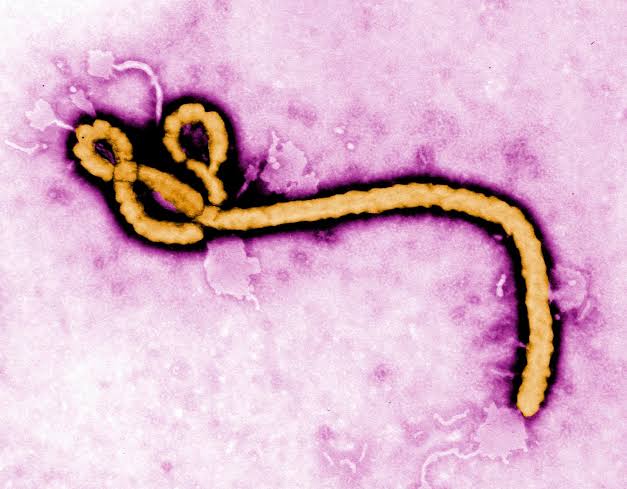
625 Dead and Rising: Inside the Rare Ebola Strain That's Outrunning Modern Medicine in Congo and Uganda
KINSHASA / KAMPALA
Nearly two months after the World Health Organization declared it a global emergency, a rare and vicious strain of Ebola is still tearing through the forests and border towns of the Democratic Republic of the Congo and Uganda — and this time, the world's best weapons against Ebola are sitting uselessly on the shelf.
As of July 9, the Democratic Republic of the Congo has confirmed 1,792 cases and 625 deaths from Ebola disease caused by Bundibugyo virus, according to the World Health Organization's latest Disease Outbreak News bulletin. Another 764 patients are currently hospitalized in isolation wards, fighting for their lives. Only 295 people have recovered. New cases keep appearing — 33 more confirmed in the most recent reporting window alone, with 25 additional deaths.
And the virus is on the move. What began as a remote outbreak in Ituri Province has now reached North Kivu, and cases have surfaced as far away as Kisangani, capital of Tshopo province — a city of more than a million people. Two infected travelers have already been evacuated to hospitals in Germany and France. Uganda, which shares a porous, heavily trafficked border with the DRC's outbreak zone, has recorded its own cluster of cases, most linked to people who crossed over from Congo.
This is not the Ebola the world learned to fear during the catastrophic 2014–2016 West Africa epidemic. That outbreak, which killed more than 11,000 people, was caused by the Zaire strain of the virus — the strain for which scientists eventually built two working vaccines and two licensed antibody treatments. This outbreak is different. It's caused by Bundibugyo virus, a rare cousin of Zaire ebolavirus first identified in 2007, and it comes with a terrifying catch: none of the tools that finally tamed Ebola actually work against it.
The Strain Nobody Prepared For
“What makes this outbreak different and significantly harder to fight is the type of virus that causes Ebola disease,” Doctors Without Borders (MSF) explained in a briefing on the crisis. Bundibugyo virus is one of six known species in the Orthoebolavirus genus, alongside Zaire, Sudan, Taï Forest, Reston and Bombali viruses. It has only caused two confirmed human outbreaks in recorded history before this one — in Uganda in 2007 and in the DRC in 2012 — making it far rarer, and far less studied, than its infamous Zaire relative.
That obscurity has become a matter of life and death. “There are currently two approved vaccines against Ebola disease, but neither is approved for use in cases of infection with the Bundibugyo virus,” MSF said. The two monoclonal antibody treatments that transformed Ebola from an almost-certain death sentence into a survivable illness during recent Zaire-strain outbreaks — the drugs that saved thousands of lives in the DRC between 2018 and 2020 — are also strain-specific. They don't recognize Bundibugyo virus, and so they don't stop it.
That leaves doctors on the front lines with essentially nothing but supportive care: IV fluids, electrolyte replacement, fever control, and prayer. “In the absence of a specific treatment, care relies primarily on symptom management,” MSF confirmed.
Behind WHO's clinical language, the disease itself is horrifying. Early symptoms mimic the flu — a sudden, violent headache, high fever, crushing body aches, and exhaustion. But within days, patients often spiral into intense vomiting and diarrhea severe enough to cause life-threatening dehydration on its own. In the worst cases, the virus infects the immune cells that are supposed to protect the body, triggering a runaway inflammatory storm that leads to internal bleeding and multi-organ failure — the “hemorrhagic fever” that has made Ebola a household name for terror since the 1970s.
Historical fatality rates for Bundibugyo virus have ranged from roughly 25% in the 2007 Uganda outbreak up to a horrifying 40–75% in other contexts, depending on how quickly patients reach care. With the current outbreak's confirmed death toll already sitting at 625 out of 1,792 confirmed cases — a raw case fatality ratio above 34% — this event is tracking at the deadlier end of that grim spectrum.
A Global Emergency, Declared in May
The outbreak was first confirmed on May 15, 2026, when the DRC's Ministry of Health identified cases in Ituri Province, in the country's remote and conflict-scarred northeast. By June 2, case counts had already climbed to 378 confirmed infections — 363 in the DRC and 15 in Uganda — with 63 confirmed deaths.
Alarmed by the trajectory, and by the outbreak's spread across an international border, the WHO Director-General took the rare step on May 17 of declaring the epidemic a Public Health Emergency of International Concern — the organization's highest level of alarm, a designation used only a handful of times in the agency's history, for crises like the 2014 West Africa Ebola epidemic, COVID-19, and mpox.
Six weeks later, the numbers have more than quadrupled. The outbreak has spread beyond its original epicenter into North Kivu, one of the most conflict-affected and difficult-to-access regions on Earth, where armed groups, displaced populations, and fractured health infrastructure make contact tracing and treatment logistics a nightmare. Health workers themselves have not been spared — secondary transmission to healthcare staff has been documented in both countries, a grim echo of earlier Ebola epidemics where hospitals became amplifiers of the very disease they were trying to contain.
The Race for a Vaccine That Doesn't Exist Yet
With existing vaccines powerless against this strain, WHO and its partners are now scrambling to do something that normally takes years in a matter of weeks: identify, test, and potentially deploy an entirely new emergency vaccine candidate.
“Discussions are underway within the World Health Organization to determine which vaccine candidates could be tested in emergency clinical trials against the Bundibugyo virus, as has been done in previous Ebola disease outbreaks,” MSF reported. It's a strategy with precedent — the ring-vaccination trials conducted in the DRC in 2018–2019 for the Zaire strain were themselves born out of emergency-response desperation, and ultimately produced the Ervebo vaccine that changed the trajectory of Ebola forever. Researchers are hoping for a similarly fast-tracked breakthrough now, but there's no guarantee, and every week without a working vaccine or antibody treatment is a week where the only real strategy is old-fashioned outbreak control: isolate the sick, trace their contacts, and try to break the chains of transmission one household at a time.
The response effort is enormous. The U.S. Centers for Disease Control and Prevention says roughly 400 of its staff are involved in the response, with more than 120 personnel deployed directly to the DRC and Uganda, working alongside WHO and local ministries of health on disease tracking, contact tracing, laboratory testing, virus sequencing, infection control, and border health screening. The CDC has also raised its internal emergency response posture to its highest activation level as the outbreak has grown, according to reporting on the agency's escalating involvement.
Internationally, the response has also triggered new travel restrictions. The CDC issued a Level 3 “avoid nonessential travel” notice for the DRC and a Level 1 notice for Uganda back in May, and has since temporarily restricted U.S. entry for certain travelers who have recently passed through the DRC, Uganda, or South Sudan — though U.S. citizens and nationals can still return home, subject to enhanced screening at the border.
Why This Keeps Happening
For public health experts, the outbreak is a sobering reminder that “Ebola” was never really one disease — and that the world's hard-won progress against one strain doesn't automatically protect against another. The Bundibugyo virus outbreak follows a pattern seen with alarming regularity across Central and East Africa in recent years: a spillover event from an animal reservoir — bats are the leading suspect for Ebola viruses generally, though Bundibugyo's precise natural host has never been definitively confirmed — followed by human-to-human transmission through contact with bodily fluids, and then a race against time to contain the spread before it reaches a major population center.
This time, the virus has already brushed up against exactly that nightmare scenario: Kisangani, a city of over a million people and a major regional transport hub on the Congo River, has now reported confirmed cases. Public health officials are watching that city intensely, because an outbreak that takes hold in a dense urban population behaves very differently — and far more dangerously — than one contained to remote forest villages.
What This Means for You
For readers outside Central Africa, the immediate personal risk remains low. Ebola viruses spread through direct contact with the blood, secretions, organs, or other bodily fluids of infected people (or infected animals), and through contact with contaminated surfaces and materials like used needles — not through casual contact or airborne transmission the way flu or COVID-19 spreads. There is currently no evidence of sustained transmission outside the DRC and Uganda, despite the handful of medically evacuated cases reported in Germany and France, both of which were managed under strict isolation protocols precisely to prevent onward spread.
That said, health officials are urging vigilance from anyone with travel plans to the affected region. The CDC's travel health notices recommend that travelers to Ituri, North Kivu, and South Kivu provinces avoid nonessential trips altogether, and that anyone with recent travel history to the region who develops fever, severe headache, or gastrointestinal symptoms seek medical care immediately and disclose their travel history to providers. Anyone caring for a sick relative or attending a funeral in the affected region — a known high-risk activity for Ebola transmission, given traditional burial practices involving contact with the deceased — faces meaningfully elevated risk and should follow local health guidance closely.
The bigger, slower-burning risk for the rest of the world is the one epidemiologists have been warning about for years: every outbreak that spreads unchecked in a region with fragile health infrastructure is a roll of the dice on whether it stays contained. It took the world's scientific establishment years to build the Ervebo vaccine after the catastrophic 2014–2016 epidemic. Whether it can build a Bundibugyo-specific countermeasure fast enough to blunt this one — before it reaches another major city, another international border, another continent — is the question hanging over every WHO briefing right now.
The Bottom Line
Six hundred and twenty-five people are dead. Nearly eighteen hundred have been infected. The strain responsible has no vaccine and no approved treatment. And the outbreak, nearly two months after being declared a global emergency, is still growing. For the health workers on the ground in Ituri, North Kivu, and Uganda's border districts, the fight against Bundibugyo virus is being waged with the most basic tools of 19th-century medicine — isolation, hydration, and hope — while the 21st century's laboratories race to catch up.



