Written By | Health News Agencies
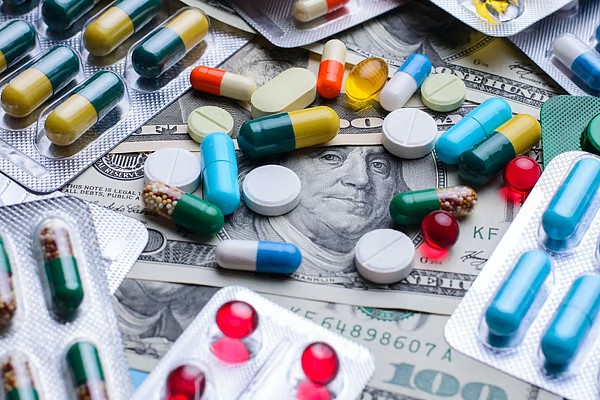
All 50 states have signed up to a $64.3 billion Medicaid price cut built on 26 secret contracts
HEALTH
It is the kind of number that stops a conversation dead. Sixty-four point three billion dollars. That is what the White House says American taxpayers will save over the next decade on the medicines bought for the poorest and sickest people in the country — the 66 million Americans covered by Medicaid.
Last Friday, standing on the strength of a year of closed-door negotiations with the pharmaceutical industry, President Donald J. Trump announced that every single state Medicaid programme in the union had applied to join the scheme. All fifty. Plus the District of Columbia. Plus Puerto Rico. A clean sweep.
It is, on paper, the largest single act of drug-price intervention in the history of the American welfare state.
There is just one problem, and it is a big one. Nobody — not the drug companies, not the federal agency running the programme, not the White House — will tell you which medicines are actually in it.
THE DEAL NOBODY HAS READ
The machinery behind Friday's announcement has a name that reads like it was reverse-engineered from the acronym: the GENEROUS Model, short for GENErating cost Reductions fOr U.S. Medicaid. It is run by the Centers for Medicare & Medicaid Services, it launched in January of this year, and it is scheduled to run for five.
The idea is simple enough to fit on a bumper sticker, which is roughly where it started. Americans have long paid more for branded medicines than patients in comparable wealthy countries — up to three times more for the identical product, by the White House's own accounting. Under a "most-favored-nation" or MFN arrangement, participating manufacturers agree to rebate state Medicaid programmes down to the lowest price that drug fetches in any other developed nation.
The chain of events runs back to 12 May 2025, when the President signed an executive order titled "Delivering Most-Favored-Nation Prescription Drug Pricing to American Patients." On 31 July 2025 he wrote to seventeen of the world's largest drug manufacturers setting out what they would need to do. On 30 September 2025 — almost exactly a year before Friday's announcement — Pfizer became the first to sign, with chief executive Albert Bourla standing alongside the President in the Oval Office.
Twenty-five more followed. The current roster runs to twenty-six companies covering, the administration says, 89 per cent of the branded drug market in the United States: Pfizer, AstraZeneca, EMD Serono, Eli Lilly, Novo Nordisk, Amgen, Bristol Myers Squibb, Boehringer Ingelheim, Genentech, Gilead Sciences, GSK, Merck, Novartis, Sanofi, Johnson & Johnson, AbbVie, Regeneron, Alcon, Astellas Pharma, BeOne Medicines, BridgeBio, CSL, Kyowa Kirin, Sun Pharma, Teva Pharmaceuticals and UCB.
Twenty-six agreements. Not one of them has been made public.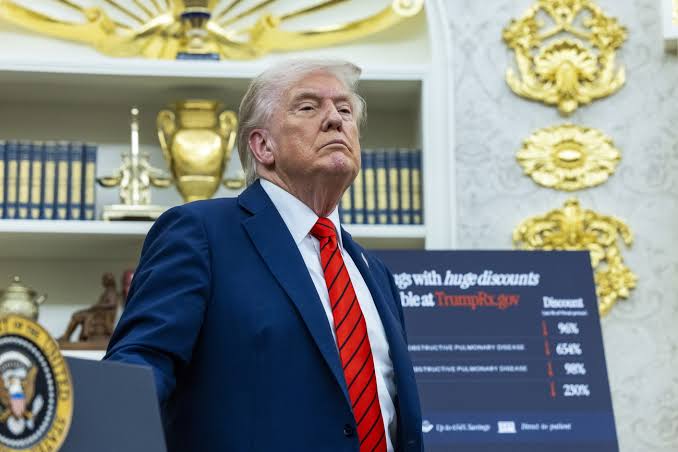
"NONE WOULD CONFIRM"
In the days before Friday's announcement, NPR's Sydney Lupkin did the unglamorous work that turns a press release into journalism. She contacted Pfizer and sixteen other major manufacturers who had struck deals with the administration and asked a question a reasonable person might think had an easy answer: will all of your drugs be discounted for Medicaid, and if not, which ones will?
Not one company would confirm that all of its drugs would be discounted. Not one would supply a list.
The answers that did come back were exercises in the conditional tense. Gilead said it was working with states to make "selected covered products available," naming treatments for hepatitis C, hepatitis B and HIV. Sanofi said it would offer the pricing on "certain wholly owned medicines" in diabetes, cardiovascular and neurological conditions, and cancer. Genentech would say only that "certain medicines" would take part. Eli Lilly said it had no final list but expected "many" of its medicines to be included — with the pointed exception of its GLP-1 weight-loss drugs, which sit inside a separate Medicare pilot. Two companies told NPR the terms were simply confidential.
CMS, the federal regulator administering the whole thing, would not say how many of each company's drugs were in either.
This matters far more than it might sound, and the reason is the oldest one in commerce: if you get to pick which items go on sale, you pick the ones that were never expensive.
THE CHERRY-PICKING PROBLEM
Dr Thomas Hwang of Brigham and Women's Hospital in Boston has spent his career studying how drug pricing policy behaves once it meets the pharmaceutical industry, and he put the danger in plain terms.
"Companies have every incentive to cherry-pick the products for which they already give Medicaid the best discounts and for which the international price may not be that much lower," Hwang said.
Read that twice, because it is the crux of the story. Medicaid already receives statutory rebates on brand-name drugs. For a substantial slice of any company's portfolio, the price the programme pays is already at or near the international benchmark. Put those drugs into GENEROUS and you generate a headline about most-favored-nation pricing while giving up approximately nothing.
"So there would be an incentive for companies to try to limit their liability and pay less to Medicaid," Hwang said. "That gaming is what worries me about this backsliding over the past months — from the initial messaging that all drugs will be offered from participating manufacturers, and now to maybe only certain drugs will be offered."
That word — backsliding — is doing a lot of work. Because what the President said in the Oval Office on 30 September 2025 was not hedged at all.
"Today Pfizer is committing to offer all of their prescription medications to Medicaid," he said then. "And it will be at the most favored nation prices. It's gonna have a huge impact on bringing Medicaid costs down like nothing else."
All of their prescription medications. A year on, Pfizer will not confirm that, and neither will anyone else.
THE DEADLINES THAT KEPT MOVING
Ameet Sarpatwari, a professor of population medicine at Harvard and one of the country's most-cited drug policy researchers, pointed at a different tell: the calendar.
Sign-up deadlines for both manufacturers and states were originally set for the spring, then the summer, then pushed again. CMS issued public notices extending them more than once.
"It's always a bad sign when you keep pushing back your deadline," Sarpatwari said.
The eventual state application deadline landed on 10 September. All fifty states made it — which is the fact the White House led with on Friday. But applying is not the same as signing. States have until 30 September to convert an application into a binding agreement, and as of last Thursday CMS put the number who had actually done so at forty states plus Puerto Rico.
That leaves ten states, and the District of Columbia, still holding the pen. California officials had previously told NPR they intended to apply specifically so they could see more detail before committing to anything — which is a polite way of saying they applied in order to read the contract.
WHY A STATE MIGHT SAY NO TO CHEAPER DRUGS
It sounds absurd. Why would any state hesitate over lower prices?
The answer sits in a trade-off that never makes the podium. Medicaid is jointly funded by Washington and the states, and in most states it is the single largest line in the budget after education. Unlike the federal government, states must balance their books every year. There is no deficit to run.
Jack Rollins, who directs federal policy at the National Association of Medicaid Directors, explained the bind. A drug may well save money over a decade. But a state Medicaid programme has to pay for every patient who needs it this year, out of this year's appropriation.
"Everything in Medicaid is going to be a trade-off," Rollins said. "There's no silver bullet to the drug costs that we're navigating."
And here is the sting in the tail. State Medicaid programmes currently control spending on expensive medicines with tools of their own: prior authorisation requirements, where a doctor must justify the prescription before the state pays; and step therapy, where a patient must try cheaper options first.
Under GENEROUS, a participating state has to surrender those tools and accept a standardised federal coverage system in exchange for the negotiated price.
Sarpatwari spelled out where that leads. A state that previously restricted access to a costly drug may suddenly be required to offer it without restriction.
"Then all of a sudden your state Medicaid plans might be spending a whole lot more because a whole lot more people might be getting the drugs," he said.
A lower unit price multiplied by a much larger number of units is not automatically a saving. It can be the opposite. That is the calculation ten state capitals are running right now against a 30 September clock.
WHAT THE WHITE HOUSE IS COUNTING
The administration's own arithmetic, produced by the Council of Economic Advisers, splits the $64.3 billion decade-long saving into $36.6 billion accruing to the federal government and $27.6 billion to the states. Those state savings, the White House argues, will free up capital for other services.
The fact sheet also points to results already banked. Medicaid programmes, it says, have benefited from one million free prescriptions of Eliquis, the widely used blood thinner. Since its launch on 5 February 2026, the direct-to-consumer site TrumpRx.gov has saved patients more than $700 million. In July 2026 seniors without GLP-1 coverage for obesity gained access at $50 a month; in the two months since, 600,000 of them have saved a combined $216 million. Across everything, the CEA puts total MFN savings at $600 billion over a decade.
Those are the administration's figures, and independent verification is hard when the underlying contracts are sealed.
NPR has previously reported that the drugs available through TrumpRx are limited, and that most consumers will do better paying their insurance copay than using the site at all.
The scale of the underlying problem, at least, is not in dispute. According to KFF, the non-partisan health policy research organisation, Medicaid's net spending on prescription drugs grew 46 per cent between 2019 and 2024, reaching $46 billion in that year alone.
THE POLITICS UNDERNEATH
None of this is happening in a vacuum. Speaking at the midterm Republican National Convention in Dallas on 10 September, the President put drug pricing at the centre of his pitch.
"We went from the highest prescription drug prices, by far, anywhere in the world, to the lowest prescription drug prices anywhere in the world," he said. "And that alone should get us a big victory in our midterms that are coming up."
It is a claim of extraordinary breadth, resting on agreements no voter has been permitted to read, covering a list of drugs no company will disclose, delivered through a pilot programme that ten states have not yet signed.
There is a further wrinkle that rarely surfaces in domestic coverage. On 1 December 2025, the Office of the United States Trade Representative, the Department of Commerce and HHS announced an agreement with the United Kingdom to raise the net price of new prescription drugs there by 25 per cent — on the reasoning that other wealthy nations should pay their fair share for innovation. Since MFN pricing is defined by reference to the lowest price abroad, raising prices abroad is one route to narrowing the gap. Whether American patients experience that as a win depends entirely on which end of the comparison moves.
WHAT THIS MEANS FOR YOU
If you or someone in your family is one of the 66 million Americans on Medicaid, here is the honest picture as of today.
First: nothing in your pharmacy experience changes because of Friday's announcement. Medicaid beneficiaries already pay little or nothing at the counter. GENEROUS changes what your state and the federal government pay the manufacturer — not what you hand over.
Second: the thing to watch is not the price, it is the coverage rules. If your state signs a binding agreement by 30 September, it must adopt a standardised coverage framework in place of its own. For some patients that is unambiguously good news — a prior authorisation that used to block a prescription may simply disappear. For others, a drug their state currently covers under local criteria could land outside the standardised list. Check with your state Medicaid office rather than assuming.
Third: if you are not on Medicaid, this particular programme does not touch you. TrumpRx is the consumer-facing piece, and the advice from reporting so far is unromantic — compare the site's price against your insurance copay before you use it, because the copay usually wins.
Fourth, and most practically: the ten states still deciding are making that decision in the next eight days. If you live in one of them, your state Medicaid director is weighing a lower unit price against the loss of the tools they use to manage utilisation. That is a legitimate policy argument, not foot-dragging, and it deserves to be heard rather than shouted down.
THE BOTTOM LINE
Something real has happened here. Twenty-six manufacturers representing the overwhelming majority of the branded market have signed agreements they were under no legal obligation to sign. Fifty states have applied to a voluntary programme. Those are not nothing, and the reflex to dismiss the whole thing as theatre does not survive contact with the participation numbers.
But the gap between the announcement and the verifiable facts is wide enough to drive a truck through. A promise that every drug from every participating company would come to Medicaid at the world's lowest price has quietly become a promise about "selected covered products" and "certain medicines." The agreements are secret. The drug lists are secret. The regulator will not put a number on it. And the saving, when it is finally measurable, will be measured against a baseline only the manufacturers can see.
Thomas Hwang's warning deserves the last word, because it is not an accusation — it is a prediction that can be tested. If the drugs that end up inside GENEROUS turn out to be the ones Medicaid was already getting cheap, then $64.3 billion is a forecast built on a foundation nobody was allowed to inspect.
The eight days to 30 September will tell us how many states believe it.



