Written By | International News Agencies
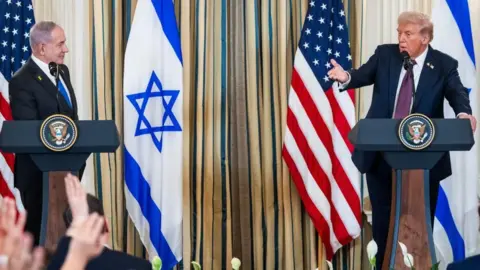
With the Board of Peace's base blocked, its reconstruction plan stalled and the ceasefire fraying, the fight over who moves first in Gaza has become a campaign issue.
Daily World Politics Briefing
Overview
Israeli military intelligence has reportedly told American counterparts that Hamas has no intention of disarming and is rebuilding its tunnels and weapons stockpiles in preparation for a new round of fighting, according to a report relayed by The Times of Israel on Thursday. The assessment, which puts Hamas's strength at 30,000 to 40,000 operatives, around pre-October 7 levels, lands at a delicate moment. US-led talks on a deal under which Hamas would disarm and Israel would withdraw have stalled, and Israel is five days from a general election on October 27 in which security and Gaza are dominant themes.
The intelligence claim has not been independently verified, and Hamas has previously said it accepted a disarmament plan while insisting its "mentality" had not changed. But the report captures the core of the deadlock: Israel says it will not pull back until Hamas is completely disarmed, while the mediators' framework ties disarmament to a phased Israeli withdrawal. Neither side has moved, and the people living in the ruins of Gaza are caught in the middle.
Background: A Ceasefire That Never Became a Settlement
The current arrangement grew out of the October 2025 ceasefire and hostage-release deal, which rested on President Donald Trump's 20-point plan for Gaza. That plan envisioned the disarmament of Hamas, the deployment of an international stabilization force, a technocratic Palestinian administration and large-scale reconstruction overseen by a Trump-chaired Board of Peace. In practice, the later phases have stalled repeatedly. Israel, which accepted the plan last fall, has expanded the territory it controls from about 53 percent of Gaza to more than 60 percent, and by some accounts 60 to 70 percent, extending beyond the "Yellow Line" it held immediately after the ceasefire.
In the summer, mediators from Egypt, Qatar, Turkey and the United States negotiated a disarmament plan with Hamas and the Board of Peace. Hamas accepted it around late July. On August 4, Prime Minister Benjamin Netanyahu said publicly that Israel had not agreed: "We did not agree to it. It was not our draft. We sent back our comments." He said Israel would not withdraw from its current lines until Hamas was "completely disarmed." A senior US official had warned that Trump would be "very disappointed" if Israel blocked the plan, and the Board of Peace indicated it might reopen the terms. Analysts cautioned that if the terms were shifted toward Israel, Hamas might withdraw support that took months to secure.
Key Developments in October
The past three weeks have brought small steps and larger setbacks. On October 12, Israel's Kan broadcaster reported that Israel had approved the entry of an American company working under the Board of Peace to identify possible sites in Israeli-controlled southern Gaza where Hamas weapons could be handed over. A Board official said decommissioning could begin once authorizations and cooperation guarantees are secured, but no weapons handover has been confirmed.
Two days later, The Guardian reported that Israel had blocked a Louisiana-based contractor, Arkel International, from breaking ground on a Board of Peace outpost commissioned in August. The roughly 100-by-100-meter facility, at a former Gaza Humanitarian Foundation site, was meant to host rotating deployments of 150 troops of the International Stabilization Force, drawn from 500 personnel from Morocco and Kosovo. Board officials reportedly expect progress only after Israel's election. The Board's $2.45 billion, six-month recovery plan is stalled over sequencing: Netanyahu wants disarmament first, while the roadmap links it to a phased Israeli pullback.
Governance remains murky. The National Committee for the Administration of Gaza signed a memorandum of understanding with Germany's development agency GIZ in Cairo on October 13, but no funding or timetable was announced, and the committee remains outside Gaza. Hamas, despite announcing in July that it had dissolved its government, continues to run public services and trade. A dispute over commercial imports illustrates the problem: Israel's COGAT said Gazan merchants suspended import coordination over Hamas demands of 10,000 shekels per truck and 30 percent of sales in cash, while Hamas-affiliated authorities denied imposing taxes and called the payments voluntary donations for civil servants' salaries. Commercial imports from Israel reportedly stopped for about two days by October 15, though humanitarian aid and goods from Egypt continued.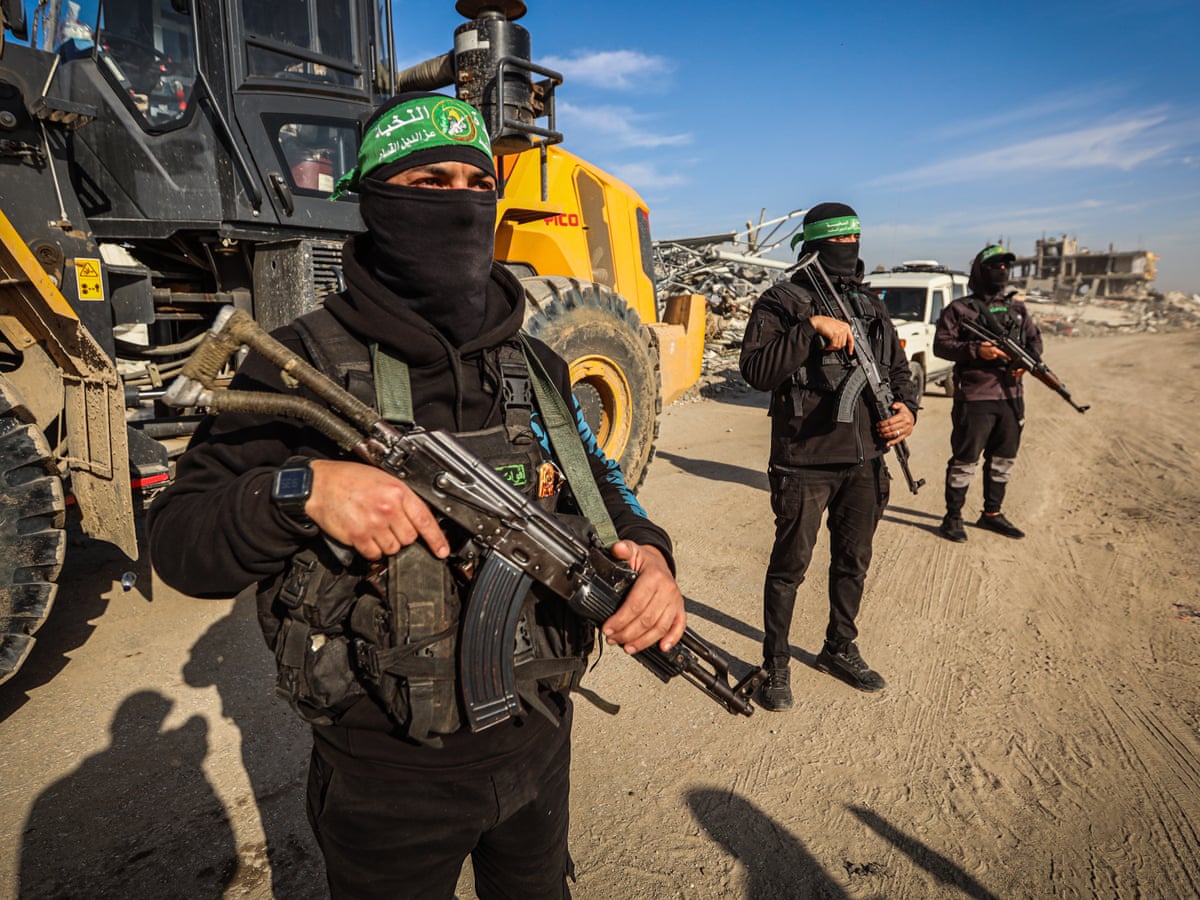
The Ceasefire Under Strain
The Israeli military reported 31 ceasefire violations between October 1 and 15, according to the Long War Journal's summary, and described a series of targeted killings of Hamas, Palestinian Islamic Jihad and Popular Front operatives it said were planning attacks or rebuilding capabilities. Examples included a Hamas platoon commander killed in Gaza City on October 1, a sniper in Khan Younis on October 2, and three PFLP members killed in Khan Younis during a meeting. Many reports also described unidentified operatives crossing the Yellow Line and being treated as an immediate threat. These are Israeli military claims and have not been independently confirmed; Palestinian officials and rights groups have generally framed such strikes as ceasefire violations by Israel and as a cause of civilian casualties.
The pattern is familiar from the past year: low-intensity violence that is rarely acknowledged as a collapse of the truce but steadily erodes it. Israeli officials increasingly argue that the ceasefire has become a cover for Hamas to regroup, while Hamas and its mediators argue that continued Israeli operations and territorial expansion make disarmament politically impossible. The new intelligence assessment is likely to strengthen the first narrative in Washington at exactly the moment when Trump's attention is divided between Gaza, Iran and domestic politics.
The Election Factor
Israelis vote on Tuesday, and the Gaza stalemate is entangled with the campaign. Netanyahu is campaigning in Haifa and has leaned on a hard line on security, while his main challenger, former military chief Gadi Eisenkot of the Yashar party, is described as the frontrunner and has accused the government of "preparing the ground for the next disaster." Defense Minister Israel Katz drew backlash after saying that future attacks would be "licensed in the names" of opposition leaders, a remark Eisenkot and others condemned. Analysts say Arab voter turnout could decide whether Netanyahu is unseated. Trump endorsed Netanyahu on October 18, and the Board of Peace's officials have signaled they expect movement only after the vote.
That waiting game has a cost. If neither side moves before the election, the reconstruction and stabilization timetable slips further into winter, the humanitarian burden on Gaza's population grows, and the credibility of the Board of Peace, which has been criticized since mid-year for stalling in Gaza reconstruction, suffers. Critics of the Board also point to its widening role elsewhere: a UN rapporteur, Francesca Albanese, this week urged Indonesia to rethink joining it, and Indonesia said its talks on joining remain on hold.
Reactions and Competing Narratives
Israeli officials present the intelligence as vindication of their insistence that disarmament must come first. Hamas has long argued the opposite, that it would hand over heavy weapons only in the context of Israeli withdrawal and political guarantees, and in July it said Trump's claims about its disarmament depended on Israel honoring its own commitments. US officials have sent mixed signals, publicly wanting a deal while privately recognizing that Israeli consent is the harder obstacle. Regional mediators in Cairo, Doha and Ankara are watching for any sign that a post-election Israeli government might soften its terms.
It is worth stressing the limits of what is known. The force estimate of 30,000 to 40,000 operatives comes from Israeli intelligence as relayed in press reports; it cannot be checked independently, and earlier Israeli assessments of Hamas strength have varied. Likewise, the claims of Hamas extortion at the border and of ceasefire violations come largely from Israeli sources, while Hamas's own accounts are denials or counter-claims.
What to Watch Next
The most immediate question is the election result and the coalition talks that follow. A Netanyahu return would likely harden the sequence of disarmament first, while an Eisenkot-led government might be more open to a phased deal, though he too has stressed Israel's security demands. The second is whether the Board of Peace can break ground on its outpost and begin a pilot weapons-decommissioning process in Israeli-held southern Gaza, which would be the first concrete test of its model.
The third is whether the ceasefire survives the interim. Reports that the United States and Israel are weighing renewed strikes on Iran after the American midterms add another layer of uncertainty, since a wider regional escalation would almost certainly pull attention and resources away from Gaza. If Hamas is indeed preparing for a new war, as Israeli intelligence now says, and Israel concludes that waiting is more dangerous than acting, the window for the diplomatic path could close quickly after November's votes.



