Written By |
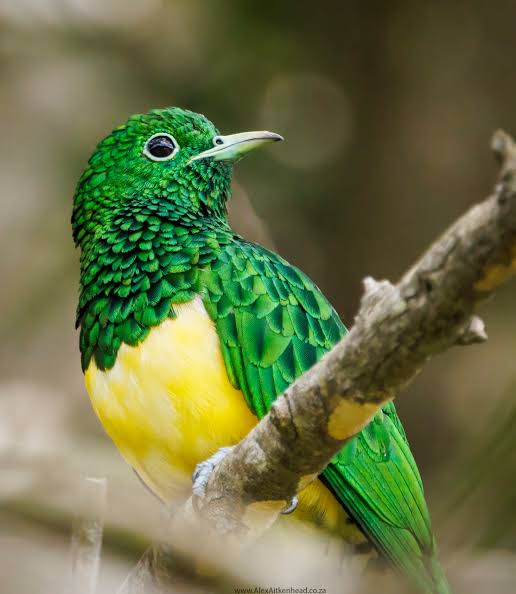
the African Emerald Cuckoo
By Sande Evan Ndahura
Emerald in the Canopy
They say the African Emerald Cuckoo glows like a dream—
the male, a shard of green light,
emerald fire crackling across the upper canopy,
yellow belly bright as noon.
The female quieter, earth-toned,
rufous-backed, barred like ancient script—
beauty written in subtleties rather than declarations.
He calls first—always first—
that unmistakable, forest-piercing “pre-ty… geor-gio!”
a note so confident, it seems to bend branches,
a sound meant not merely to be heard
but to guide, to summon, to promise.
And still, they live a paradox:
brilliant yet hidden,
dressing like royalty but dwelling in shadows,
masters of slipping through foliage unseen.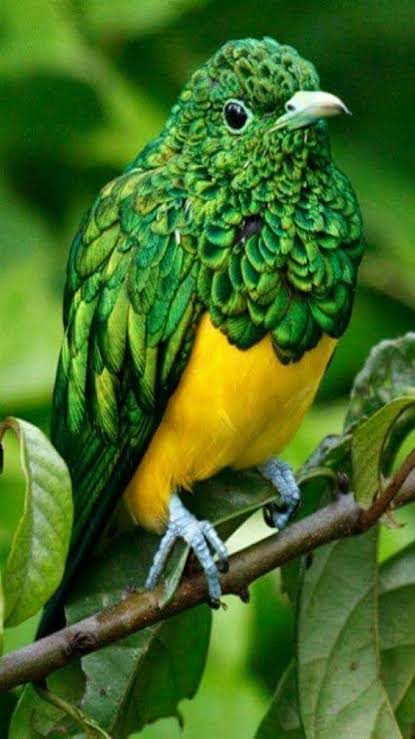
They build nothing of their own—
a brood parasite, the scientist says—
placing their future inside another’s nest.
But forget the textbook for a moment:
see instead the metaphor—
how sometimes love arrives unannounced,
lands in the quiet of your soul,
and lays a longing you were not prepared to nurture
but now cannot imagine abandoning.
Like humans:
one partner blazing, flamboyant,
the other steady, earth-warm—
yet both needing a witness
who understands the difference between noise and meaning,
between a call and a calling.
Now listen to me, love—
for I have become that emerald bird
every time I think of you.
My voice searching trees for the one
who hears my timbre through the wind;
my heart a bright plumage
reserved only for the eyes that can read colour in honesty.
You, the quiet strength—
a beauty not of performance
but of presence,
like the cuckoo hen whose back glows rufous
only when sunlight chooses to tell the truth.
Your soul is that sunlight;
your patience that forest canopy
that holds what it cannot always see.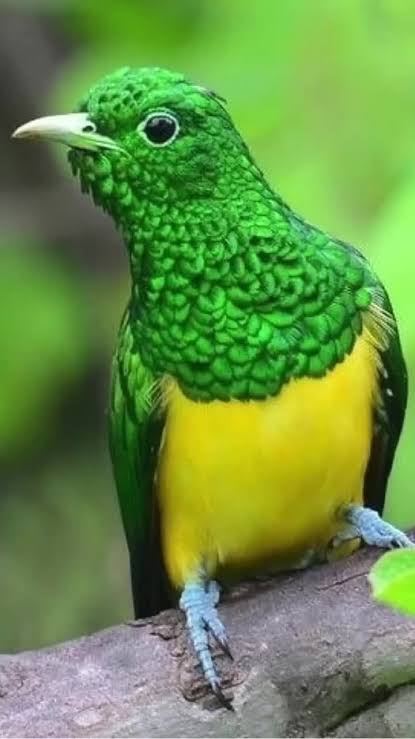
And I—
I call to you across distances
as the male calls through mist:
“Pre-ty… geor-gio…”
which in my human tongue means:
Come find me where certainty meets wonder.
Come claim the green fire that rises only for you.
If relationships were forests,
then let ours be the moist evergreen—
dense with mystery,
alive with hidden pathways,
rich enough to hide us when the world grows loud,
yet open enough to let our colours flash
when the moment demands truth.
Let us be like the cuckoos:
hard to spot by those who don’t listen,
but unmistakable to each other—
two beings whose calls align,
whose plumage contrasts yet completes,
whose love, parasitic to no one,
grows instead in the borrowed nests of hope
until the entire canopy
learns our names.
For in the hush between the trees
and the echo after the call,
I have learned this simple truth:
emeralds are not precious because they shine—
they are precious because they are rare.
And you, my love,
are the rarest thing the forest of my life
has ever allowed me to find.
Let us be like the cuckoos: Chiquitita.
Author’s Note:
This poem draws on ethology, symbolism, and emotional metaphor to explore how the behaviours and contrasting plumage of the African Emerald Cuckoo echo the dynamics of human desire, vulnerability, and attachment. The bird’s ecology becomes a lens through which love is examined: brilliant yet hidden, disruptive yet transformative, rare yet unmistakable when found.



