South Africa
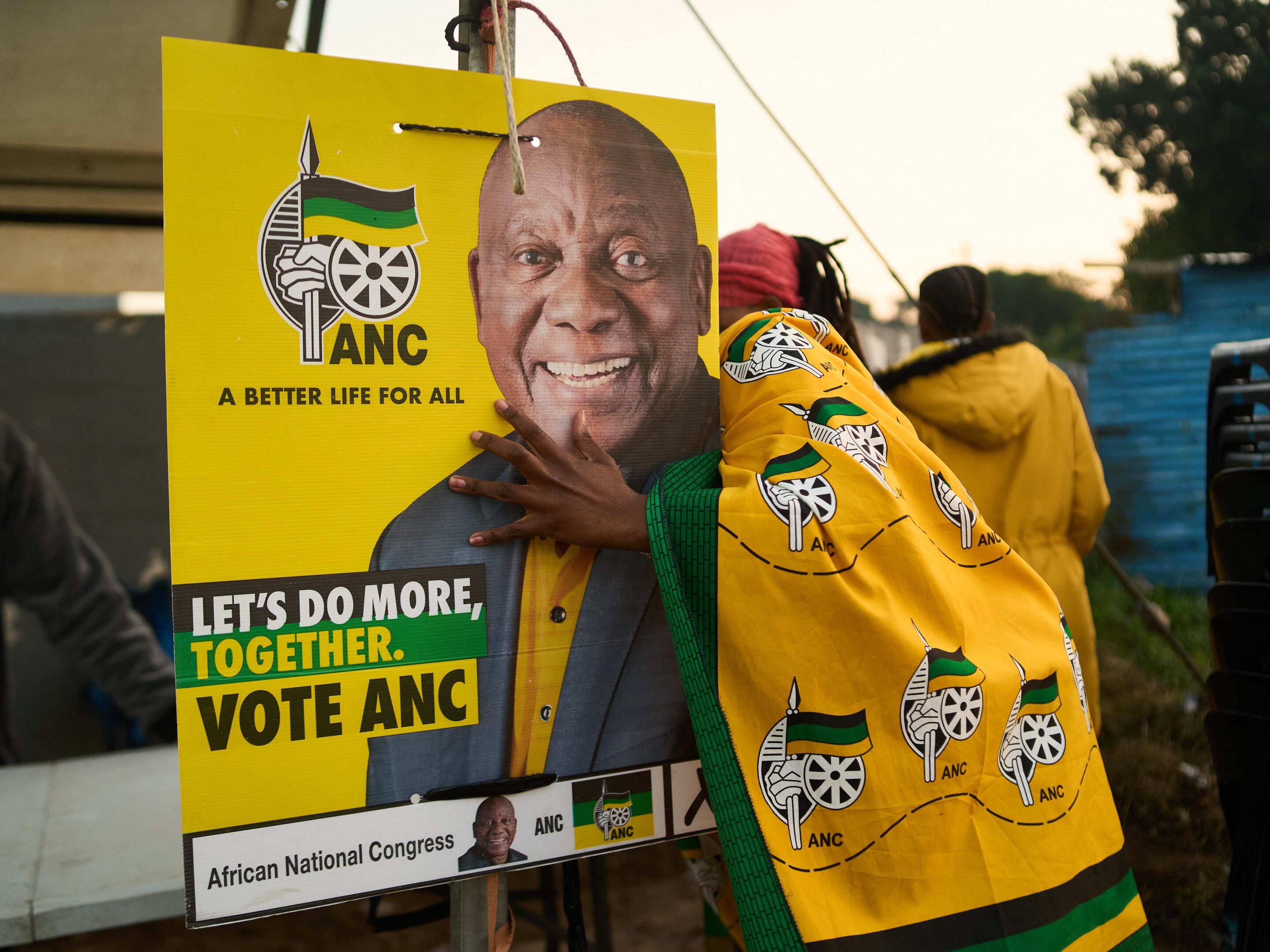
With four weeks to go until South Africans choose their municipal councils on November 4, the governing African National Congress is trailing its own past performance by a wide margin and, in several of the country's biggest cities, is locked in races it cannot take for granted. The vote will not change who governs nationally, but it will test whether the ANC can still hold its urban strongholds, whether the Democratic Alliance (DA) can convert its coalition role into city halls, and whether the uMkhonto weSizwe (MK) Party, formed less than three years ago, can win a major metropolis outright.
The numbers that frame the contest
The election will fill 10,526 council seats across eight metropolitan municipalities and 249 other municipalities, according to The Rio Times. About 29 million South Africans are registered to vote, including 754,000 new registrations during weekend drives between June and August, Wikipedia's account of the contest says, and a record 620 parties have registered to contest.
The ANC's long slide is the backdrop. The party's share of the vote in local elections fell from 62% in 2011 to 53.9% in 2016 and 47.5% in 2021, according to a Daily Maverick report on the ANC's candidate selection (Wikipedia gives 45.59% for 2021 on a different base). In the 2024 national election it won 40.18%, The Rio Times reported, and lost its parliamentary majority; the DA is now the second-largest party in the ruling coalition, Semafor noted.
The most recent national polling suggests the decline has not stopped. An Ipsos Pulse of the People survey of 3,500 people, reported by Daily Maverick on September 4, put the ANC at 31%, the DA at 25%, MK at 14%, the Economic Freedom Fighters (EFF) at 11%, ActionSA at 6%, the Inkatha Freedom Party at 3% and the Patriotic Alliance at 2%. The margin of error was plus or minus 1.77 percentage points. National numbers are an imperfect guide to a municipal vote, however, since turnout, local candidates and local service delivery all shape the result. "Party contestation over the next two months in almost every province will be fierce," Mari Harris, Ipsos's director of public affairs, said, according to Daily Maverick.
Johannesburg: the biggest prize, and a poll dispute
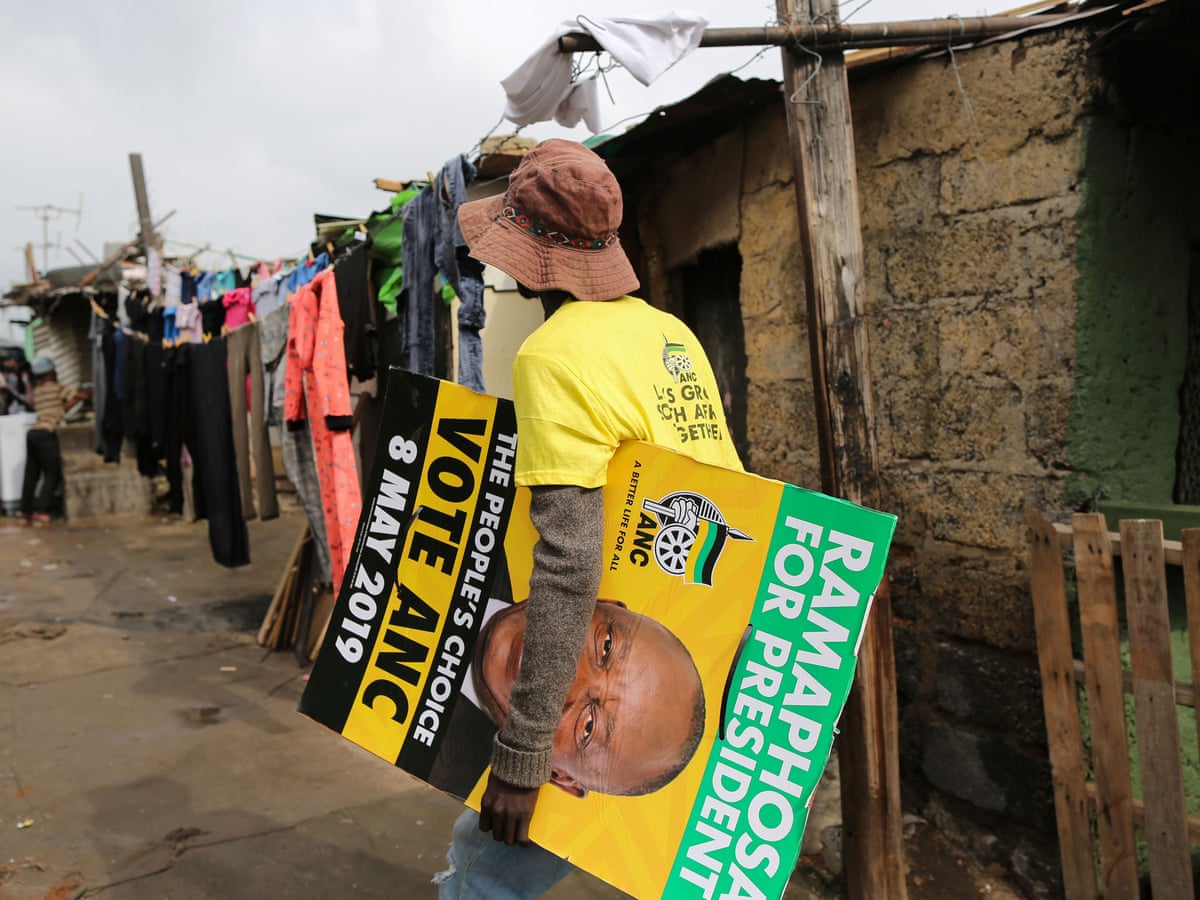
Johannesburg, Africa's financial hub, generates about 16% of South Africa's gross domestic product, Semafor reported, and it has been the country's most closely watched municipal battleground, in part because of persistent power outages and water failures that Semafor described as worsening.
The two sets of polling available for the city tell very different stories, and readers should treat both with caution. The Ipsos survey put the ANC at 31% in Johannesburg and the DA at 27%, according to Daily Maverick. A separate poll by Victory Research with The Common Sense and the Social Research Foundation, conducted July 8 to 31 among 504 registered voters with a margin of error of plus or minus 4.4 points, found the DA at 42%, the ANC at 18%, MK at 13%, ActionSA at 10% and the EFF at 8%, according to Inside Metros. That poll also showed the ANC down from 30% in March while the DA rose from 39%.
The gap is too large to be explained by the margin of error alone, and the polls differ in sample size, methodology and, evidently, in how they treat undecided voters. A sample of 504 is small for a city of this size. The honest conclusion is that Johannesburg is competitive but that the polling cannot yet say who leads. Dr. Siyabonga Ntombela of the University of KwaZulu-Natal told IOL the DA is "making inroads with Zille's mayoral candidacy placing it neck and neck against ANC."
That is a reference to Helen Zille, the veteran DA politician whose bid to become Johannesburg's mayor has been reported since 2025, and who now faces ActionSA's Herman Mashaba, the city's former mayor, as Sunday World headlined. The ANC's position is less clear. On August 22, Daily Maverick reported that the party had named 42 possible mayoral candidates for the eight metros, narrowed from 226 nominees, with a final selection expected in September. For Johannesburg, the names reported included the incumbent mayor Dada Morero and deputy mayor Loyiso Masuku, two figures with what the newspaper described as "no love lost" between them after a contested 2025 regional leadership race. A third contender, the Rev. Frank Chikane, who had been seen as the frontrunner, withdrew. I could not confirm in the sources reviewed which candidate the ANC ultimately chose.
The DA's pitch
The DA's leader, Geordin Hill-Lewis, took over the party in April 2026 and is a former mayor of Cape Town, where the party points to clean audits and the highest credit rating, according to Semafor. His campaign message leans on service failures. "Ordinary life in South Africa has become an extraordinary privilege," he told supporters, Semafor reported. The party has pledged to ban "cadre deployment," the ANC practice of placing party loyalists in state jobs, and to direct water and electricity tariff revenue into maintaining infrastructure.
The DA has a strong base in Cape Town, where Ipsos found it at 46%, and in Tshwane, where the same survey put it at 31% against the ANC's 22%, according to IOL and Daily Maverick. The challenge for the party is that it must now campaign against a government it sits in, which blunts the argument that voters need only change the guard.
Durban and the MK factor
The most dramatic contest may be in eThekwini, the municipality that includes Durban. Ipsos found MK at 55% among voters who named a party, according to IOL. If that holds, MK, founded in December 2023, would win a major city that the ANC took with 42.02% in 2021, when the DA had 26.62% and the EFF 10.48%.
The context is KwaZulu-Natal. In the 2024 national election MK captured 45.35% of the vote in the province and pushed the ANC down from 54.22% to 16.99%, The Rio Times reported. Analysts see the municipal vote as an extension of that shift. Ntombela told IOL that MK "will have the lion's share, but will need one or two smaller parties to co-govern with." Professor Theo Neethling of the University of the Free State argued that "no single party can assume or take for granted an outright majority in most major metros."
That prospect of hung councils is the central structural fact of the election. The ANC, the DA and MK all have realistic paths to the largest share in at least one metro, and none appears able to govern alone in many. A more fragmented result would make coalition governance in the metros, which has often been unstable, the norm rather than the exception. IOL reported that Ipsos found the ANC and DA close in Ekurhuleni and Nelson Mandela Bay, and the EFF at 27% in Buffalo City.
The ANC's organizational stumbles
The ANC has also been undone by administrative failures. The party missed deadlines to submit candidates in six municipalities, and the Electoral Court rejected its appeals on September 16, according to Wikipedia's account of the election. Without a candidate list, the party cannot contest those councils. How many voters this affects is unclear from the sources reviewed, but the episode reinforces a narrative about an organization struggling to run its own campaign.
President Cyril Ramaphosa, who leads the ANC, said of the party's electoral decline: "These are realities that, as the ANC, we refuse to shy away from," Daily Maverick reported. Its coalition partners, meanwhile, are campaigning against it in the cities, a tension that has not so far broken the national arrangement.
Immigration enters the campaign
One issue with potential to inflame the campaign is migration. According to an allAfrica summary published Wednesday, anti-immigrant vigilantes carrying sticks harassed asylum seekers outside a Home Affairs office in Durban, shouting xenophobic insults. The office had reopened asylum applications after a six-year closure, and only 20 of hundreds of applicants were processed in one day. The episode, whatever its scale, shows how service backlogs and anti-foreigner sentiment can feed each other in an election season, and parties may be tempted to exploit it.
Analysis and outlook
Three questions will define the next four weeks. The first is whether the ANC's decline is uniform or concentrated. The polls cited above show it weakest in Johannesburg, Tshwane and eThekwini, the cities where its urban machine has the most to lose.
The second is whether the DA can carry its Cape Town record to other cities while sharing power in Pretoria. Its Tshwane numbers are encouraging, while Johannesburg depends on whether the 42% figure or the 27% figure is closer to reality.
The third is whether MK's apparent strength in Durban is repeated elsewhere. Its 13% in the Victory Research Johannesburg poll and 14% nationally in Ipsos suggest limited reach outside KwaZulu-Natal, but a win in eThekwini would give a young party control of a port city's budget and a platform for the next national contest.
After November 4, the work of forming councils will begin. In metros where no party commands a majority, the real outcome may not be known for weeks, and the bargaining will test the unity government's cohesion. Voters, meanwhile, will be asking a simpler question: whether the lights, the water and the roads work. On that measure, every party on the ballot will be judged.
Published By | News Editor